

Learn how to use Google Trends for SEO to find trending keywords, analyze search interest, plan content, and improve your search rankings. Keyword research is one of the most important parts of search engine optimization (SEO). However, search volume is not the only factor in choosing the appropriate terms. It also involves knowing what individuals are looking for now, how their interests evolve over time, and what subjects are gaining popularity. Google Trends becomes a useful SEO tool in this situation.
Google Trends is a free tool that displays the evolution of search interest. It helps marketers, bloggers, and business owners discover trending topics, compare keywords, identify seasonal patterns, and create content that matches current user demand. Instead of guessing what your audience wants, you can use real search data to make smarter SEO decisions.
What Are Google Trends?
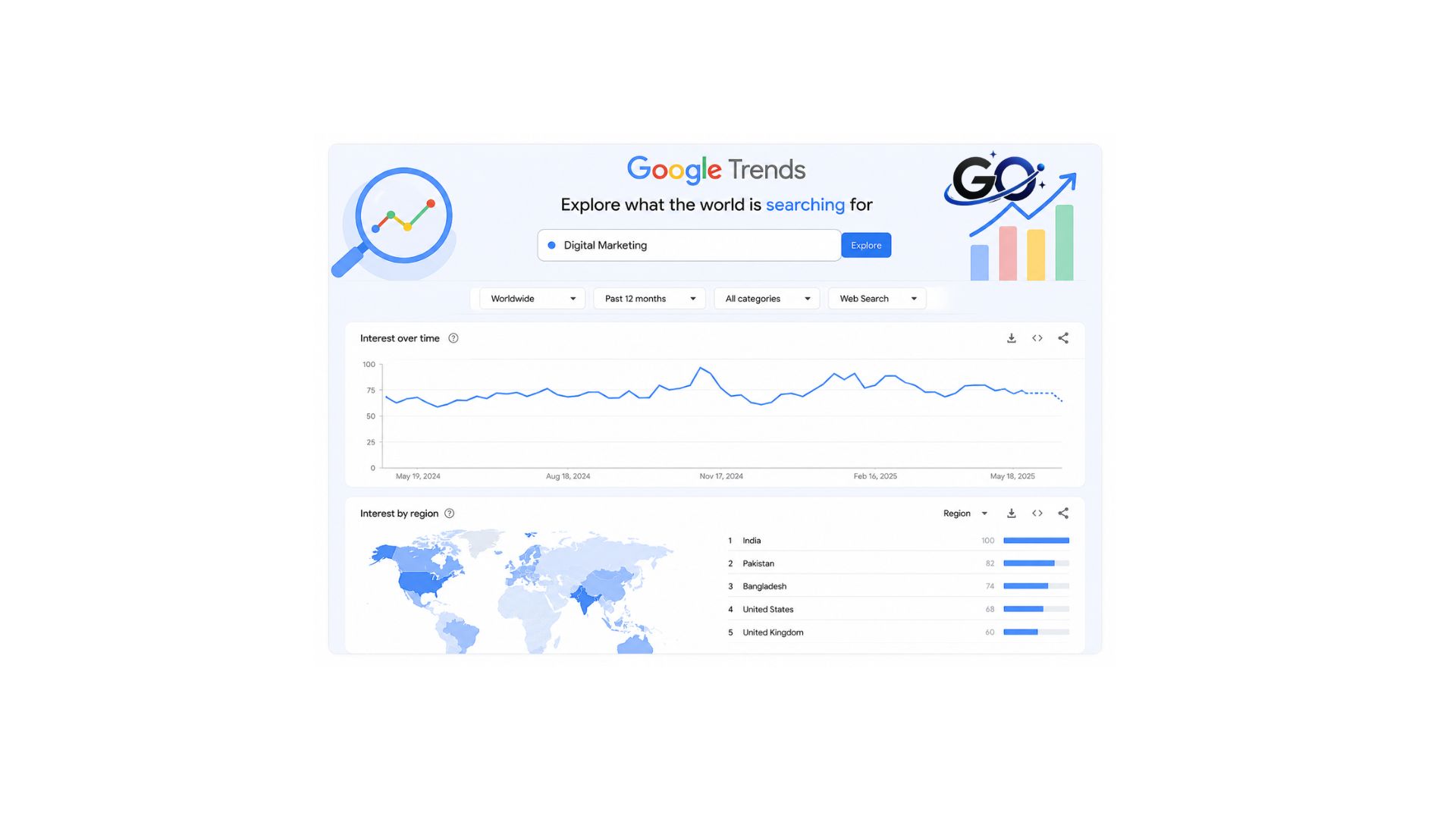
Google created a free tool called Google Trends that examines the popularity of search terms in various nations and eras. It displays search interest on a scale from 0 to 100 instead of the precise number of searches. The highest level of popularity for a particular keyword within the chosen time period is represented by a score of 100.
This information allows SEO professionals to identify whether a keyword is growing, declining, or maintaining consistent popularity. By understanding these trends, you can choose topics that are more likely to attract visitors and remain relevant over time.
Why Google Trends Is Important for SEO
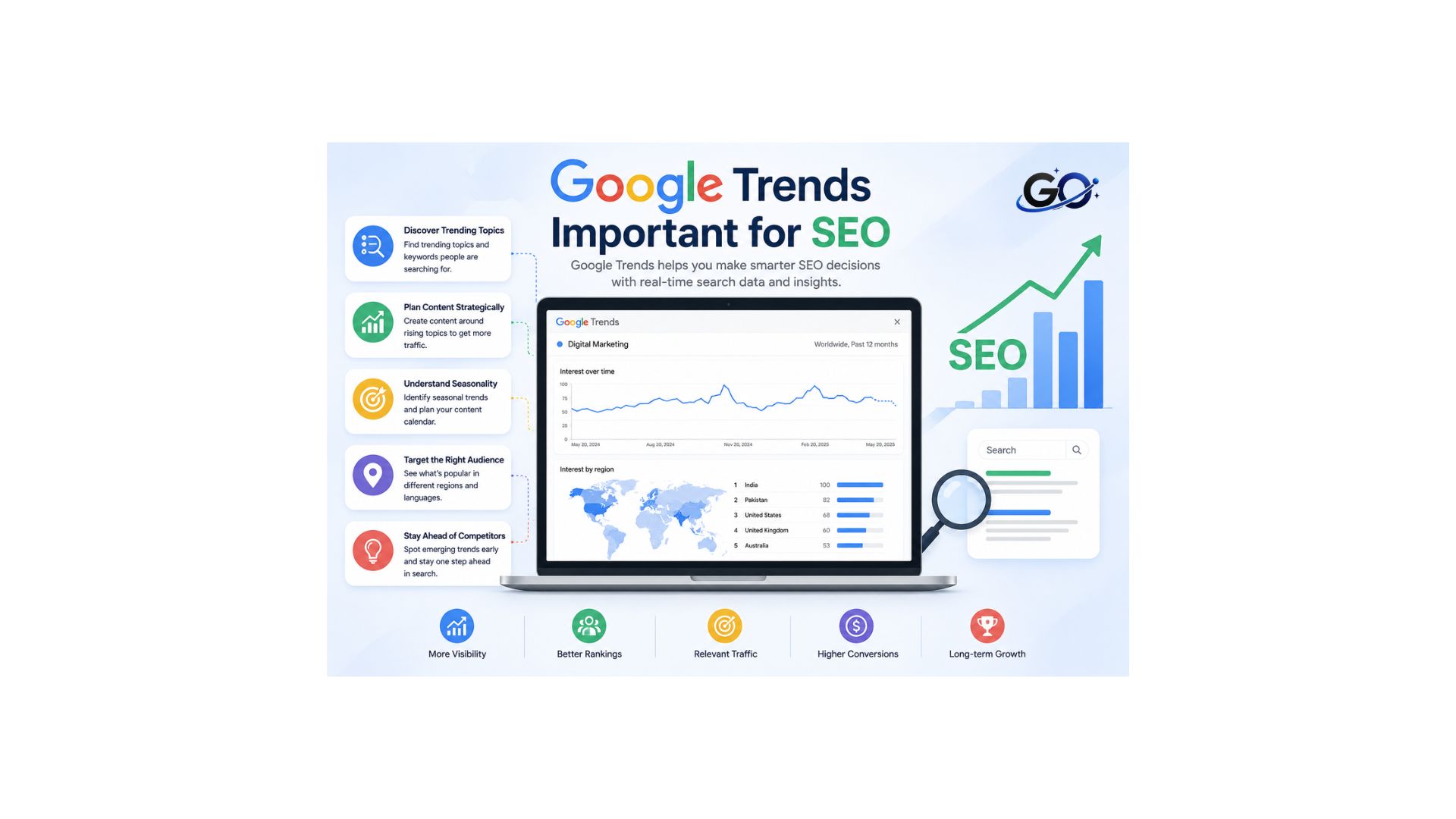
Google Trends provides valuable insights that many traditional keyword research tools cannot offer. While search volume tools show how many people search for a keyword each month, Google Trends reveals how search interest changes over time.
This information helps you discover rising topics before they become highly competitiveAdditionally, it assists you in avoiding producing content for less common keywords. Seasonal businesses can use Google Trends to publish content before demand increases, while bloggers can identify new content opportunities based on current search behavior.
Using Google Trends alongside other SEO tools creates a stronger keyword research strategy and helps you make data-driven decisions.
How Google Trends Works
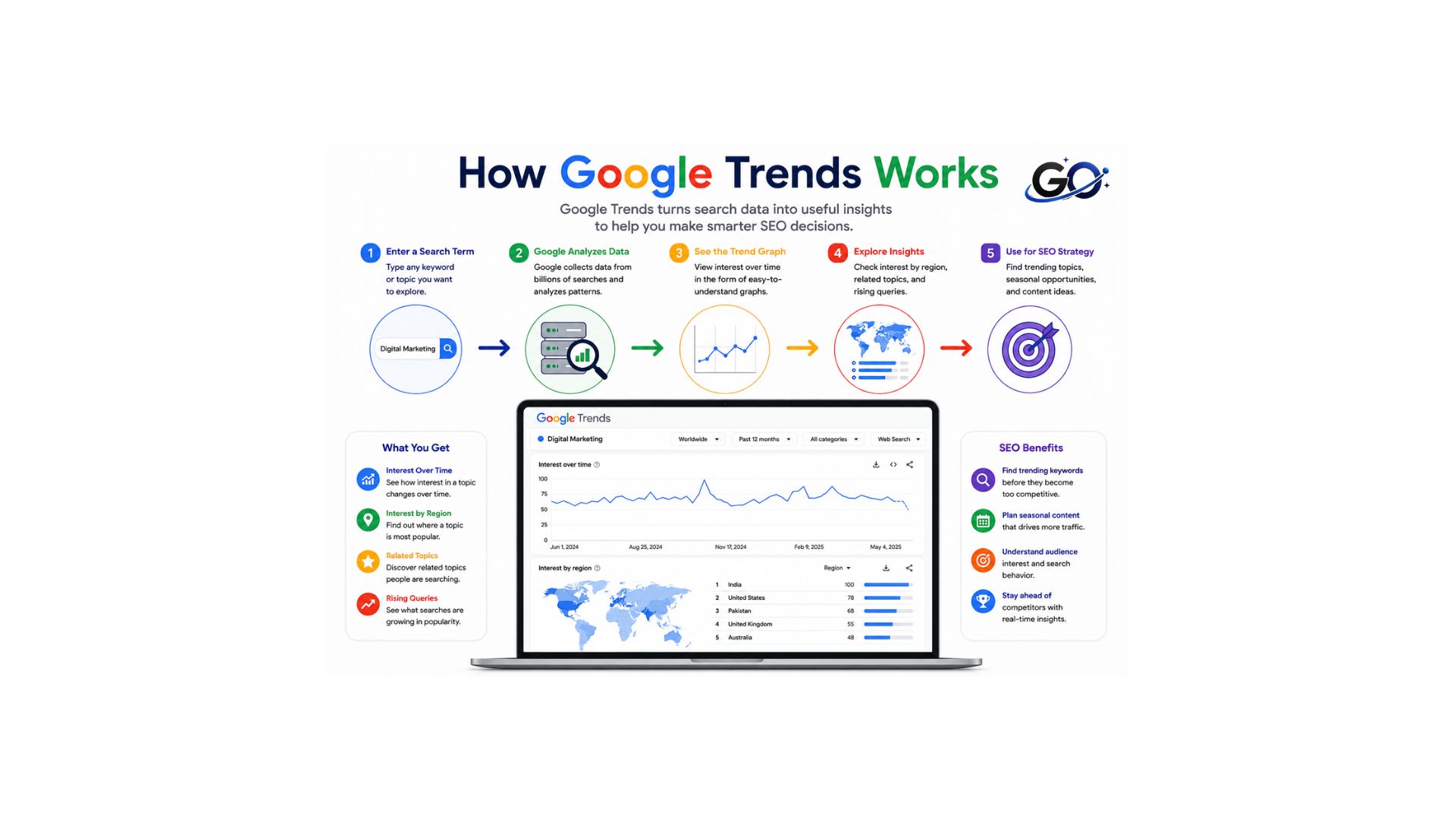
Google Trends is a free tool that displays the most popular subjects on Google and YouTube at any given moment worldwide. This tool shows the popularity of specific search terms, their relative search volume and dynamics, and the places where they generate the most interest. Google Trends measures user interest across a range of topics by analysing search data samples, which are then simply displayed as a graph. The tool also allows you to filter results by country, region, search category, and search type, including Web Search, Image Search, YouTube Search, News Search, and Google Shopping.
How to Use Google Trends for SEO
Find Trending Topics
One of the best ways to use Google Trends is by discovering trending topics before they become highly competitive. The Trending Searches section highlights subjects that are currently attracting significant attention from users.
While interest is growing, you can increase traffic by producing high-quality content about these subjects. This tactic is particularly effective for news websites, blogs, and companies that consistently release new information.
Conduct keyword research
One of the fundamental resources for keyword research is Google Trends. Even while it’s not particularly advanced for comprehensive SEO keyword research, it nonetheless offers useful information about what people in particular nations search for and how that interest evolves over time.
The best resource for researching keywords using Google Trends is the Explore section. It provides details on every search query whose search volume is more than zero and may be accessed from the top menu or left sidebar. There are undoubtedly some keyword suggestions there.
Improve your local SEO strategy
The information you obtain when evaluating a keyword’s popularity using conventional keyword research tools is the average for the nation under study. In this sense, Google Trends is special since it allows you to see how interest in your subject differs around the nation or even between cities in a certain area.
Beneath the Interest over time graph is the Interest by subregion section. Here, you can see which US states or other regions of the nation are more interested in the subject. You may see which cities within the state or area the searches originate from by clicking on any of the subregions shown in the table.
Compare Multiple Keywords
You can compare many terms simultaneously with Google Trends. You can use this tool to find out which keyword is more popular and consistently searched for.
For example, if you are deciding between two similar keywords, comparing them in Google Trends helps you choose the one with greater long-term potential.Before producing your content, you might assess popularity patterns rather than depending solely on search volume.
Identify Seasonal Search Patterns
Google Trends’ ability to pinpoint search phrases whose search volume rises and then quickly returns to zero in less than a week—such as the names of new scents introduced by fashion houses—is another indisputable advantage.
Conventional keyword research tools might not have any information on time-sensitive keywords because they often do not update their databases in real time. Google Trends serves as an extra set of eyes to assist you spot keyword chances that you might have otherwise overlooked, such as popular how-to questions or rapidly evolving trends.
Find Related Topics and Related Queries
By exploring trending queries, you can tap into topics that are current and likely to engage your readers. Use this tool to determine what the public is now interested in, or use historical data to forecast future trends.
As of this writing, a lot of the topics that have been trending in “Autos and Vehicles” over the past week have to do with stock and recalls. This could be an indication of the direction the dealership wants to take their content topics, like blog posts about car recalls and how owners can deal with them.
Compare Competitor Search Demand
No business exists in a vacuum, so knowing your competition is one of the most critical factors in running a business. And not just in general either. Competitor analysis leads to better SEO.
An increase in branded searches can frequently be caused by a significant push in Facebook, display, or even traditional marketing initiatives. Big spikes can indicate that they are running a campaign or competition you need to be aware of. Big spikes can also mean that the competitor has been in the news. Remember, this measures search volume of a brand name, not rankings or customer sentiment.
Plan Your Content Calendar
In addition to other marketing or SEO chores, you can use Google Trends to determine what kind of material is appropriate for your objectives. Google Trends analyses search phrases using web search data by default. However, this tool also includes information from YouTube and Google’s image search, so you can find out what kind of content is most popular with usersWhen combined with the appropriate kind of content, such as making a video for your YouTube channel rather than another blog article, some keywords can yield superior results.
If the search term would make for a good blog post and video, look at its trend curve under the web search tab and then check YouTube’s search results. Choose the one that seems more promising, or if the question is equally popular on YouTube and in web searches, make both a blog article and a video.
How Google Trends Compares to Other Keyword Research
Tools
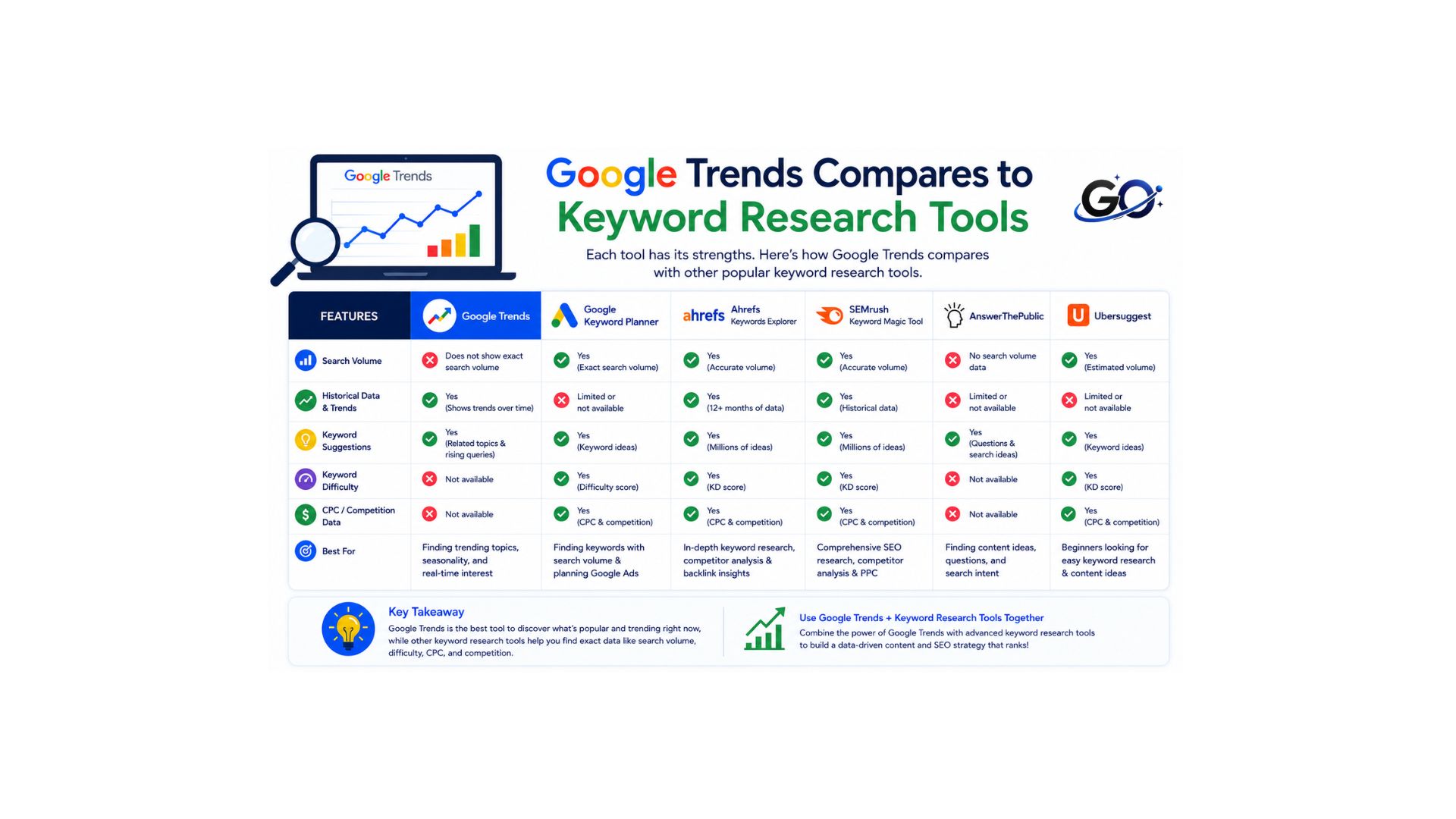
Google Trends tells you whether interest in a topic is rising, steady, or falling.
This is a crucial context before you invest in keyword research or content creation.
However, it lacks advanced trend detection, keyword metrics, and a thorough analysis of audience language.
That’s why you might want to pair it with other tools.
Google Keyword Planner
Google Keyword Planner is a free keyword research tool provided by Google.It assists you in analysing keyword competition, estimating monthly search volume, and finding fresh keyword ideas. The tool is especially useful for beginners who want reliable keyword data directly from Google. It also allows you to plan SEO and PPC campaigns using accurate search insights.
Ahrefs Keywords Explorer
Ahrefs Keywords Explorer is a powerful SEO tool for finding profitable keywords and analyzing their ranking potential. It provides detailed metrics such as search volume, keyword difficulty, traffic potential, and click data. You can also discover related keywords and questions that users search for. It is widely used by SEO professionals to build effective content strategies.
SEMrush Keyword Magic Tool
SEMrush Keyword Magic Tool offers one of the largest keyword databases available. It helps users find keyword ideas, analyze search intent, and group related keywords for better content planning. The tool also provides search volume, keyword difficulty, CPC, and competitive insights. It is ideal for creating comprehensive SEO and content marketing strategies.
AnswerThePublic
AnswerThePublic is a keyword research tool that helps you discover the questions and phrases people search for online. It gathers autocomplete data from search engines and organizes it into topics, questions, comparisons, and related searches. This makes it easier to understand user intent and create content that answers real search queries. It is especially useful for finding long-tail keywords, blog ideas, and FAQ topics that can improve your SEO strategy.
Ubersuggest
Ubersuggest is an easy-to-use SEO tool developed by Neil Patel for keyword research and competitor analysis. It provides keyword ideas, search volume, SEO difficulty, paid difficulty, and content suggestions in a simple dashboard. The tool also helps identify top-ranking pages and backlink opportunities. It is an excellent choice for beginners and small businesses looking for affordable SEO solutions.
FAQs
1. How can Google Trends improve my SEO strategy?
You can compare keyword popularity, find trending themes, and comprehend seasonal search trends with Google Trends.By allowing you to create relevant content that corresponds with the interests of current users, this data raises your chances of showing up higher in search results.
2. How often is Google Trends data updated?
Google claims that the “Trending now” tool updates Google Trends data around every ten minutes. You may be informed about the most recent market movements thanks to this real-time updating, which maintains all data continually up to date.
3. Can Google Trends be used for free?
Yes, Google Trends is a free tool among many other Google tools, making it a potentially integral part of a cost-effective marketing strategy.
4. Can Google Trends help with local SEO?
Indeed, Google Trends is helpful for local SEO since it displays the most popular locations for particular keywords. You can target location-specific keywords and produce content that better suits your local audience by examining search interest by nation, state, or city.
5. What’s the difference between Google Trends and other keyword tools?
While other keyword tools can supply you with information about metrics such as average monthly search volume and levels of competition, Google Trends can give you information about current keyword trends and markets, as well as efficiently visualised comparisons for other phrases.
Conclusion
Google Trends is one of the most useful free SEO tools available today. It helps you understand how search interest changes over time, discover trending topics, compare keywords, identify seasonal opportunities, and plan content more effectively. When combined with other keyword research tools, it becomes a powerful resource for building an informed SEO strategy.
Instead of creating content based on assumptions, use Google Trends to understand what your audience is actively searching for. By following search trends and publishing relevant, high-quality content at the right time, you can improve your search rankings, attract more organic traffic, and build long-term success in SEO.