

When people are prepared to execute a particular action, they utilise search terms known as transactional keywords. Purchasing a product, registering for a service, downloading a resource, making an appointment, or beginning a free trial are examples of this action.
Because they frequently target people who are nearing decision-making, these keywords are crucial. Understanding transactional keywords can assist organisations in producing content and landing pages that cater to the urgent demands of users.
What Are Transactional Keywords?
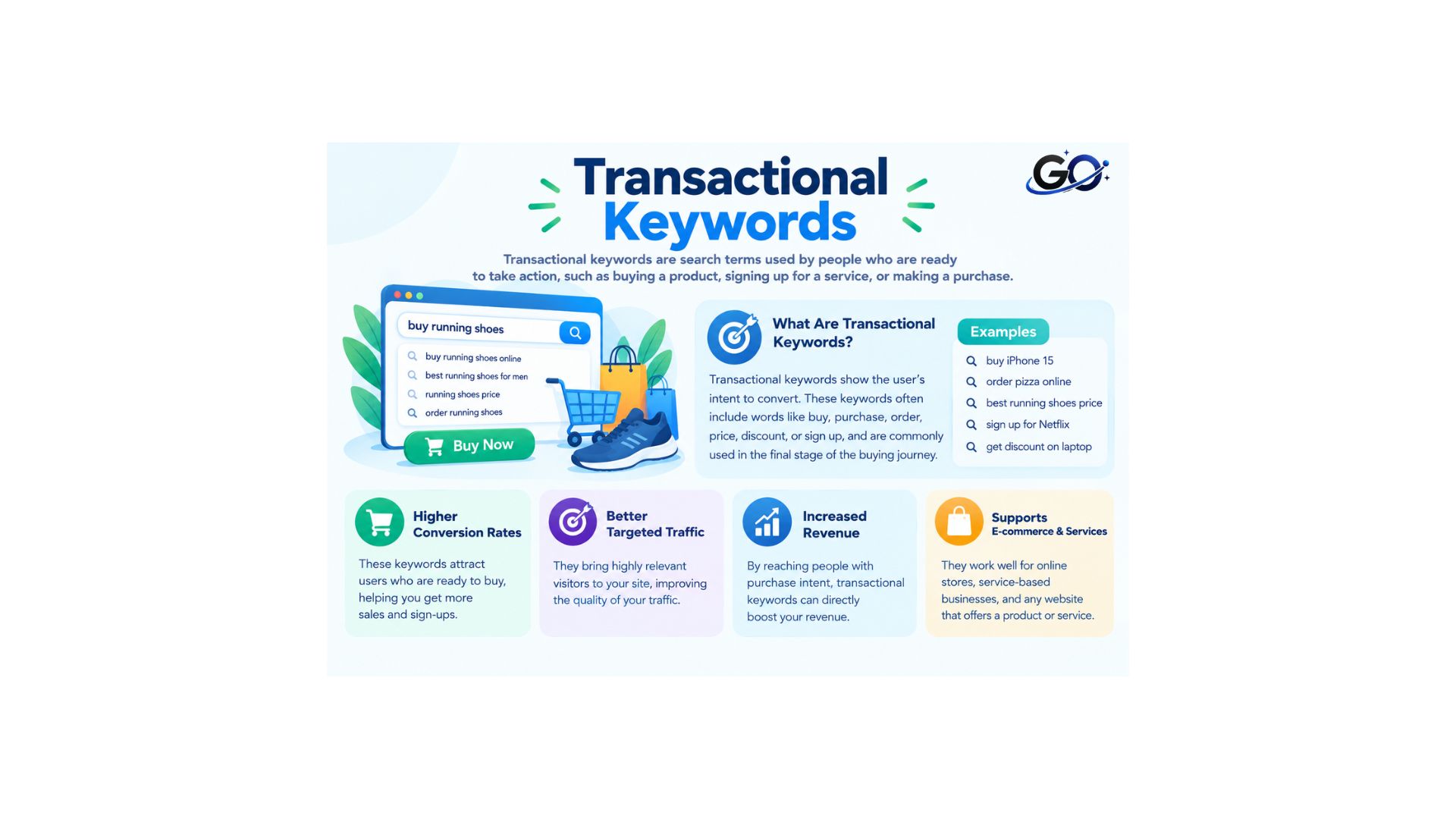
Transactional keywords, also known as buyer keywords, are enquiries that show a user’s intention to do something on a website, including making a purchase, registering, or completing a transaction. They are the most likely to result in conversions and show a high degree of buy intent, making them extremely important for organisations.
Words like “buy,” “order,” “discount,” “request a quote,” and “free shipping,” to just a few, are frequently seen in transactional keywords. These phrases show that the user is prepared to convert and is at the end of their buyer journey.
When a person has transactional search intent, it means they are prepared to do something, like buy something or join up for a service.
How Do Transactional Keywords Work?
Search engines can better recognise a user’s desire to finish an action by using transactional keywords. Search engines make an effort to deliver results that align with this objective.
When someone searches for “buy wireless headphones,” for instance, product pages, shopping results, retailer websites, and other pages that let the user make a purchase may appear in the search results.
In a similar vein, a search for “book dentist appointment” may yield pertinent booking alternatives and service pages.
Why Are Transactional Keywords Important in SEO?
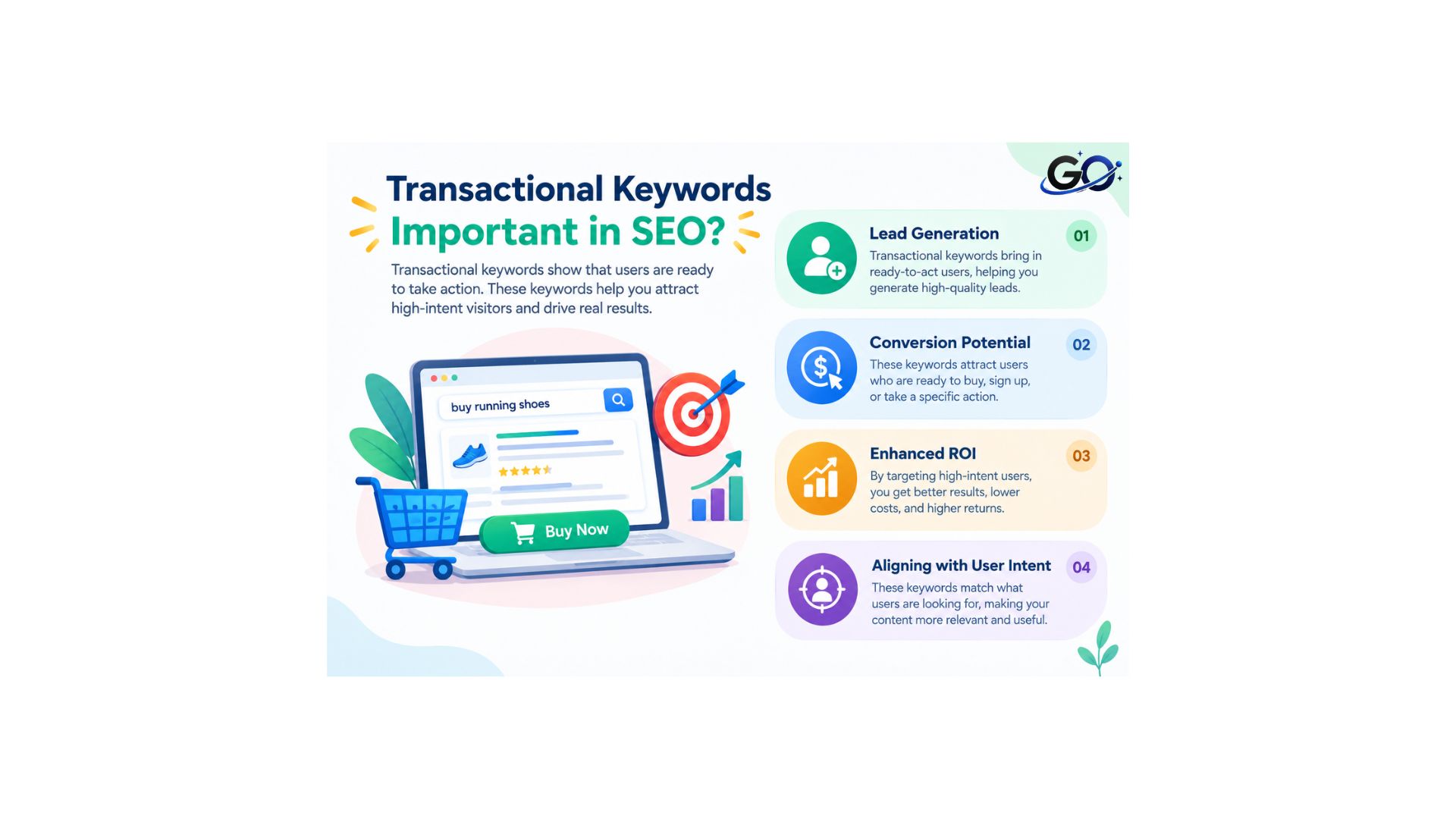
So why should your digital marketing strategy prioritise transactional keywords? Here are a few of the many explanations:
Lead Generation
In order to generate leads, these keywords are essential. Your company needs to contact people who are actively looking for goods and/or services. They are prepared to act; they are not only perusing. You can target a pool of potential leads who are more inclined to interact by giving these keywords top priority.
Conversion Potential
Transactional keywords offer enormous conversion potential, as contrast to informational keywords that just increase website traffic. They direct visitors to perform particular tasks, such as seeking quotations, setting up consultations, or making purchases. Your bottom line is immediately impacted by these actions.
Enhanced ROI
The return on investment (ROI) for these high-intent keywords is frequently higher. While transactional keywords promote conversions, which have a direct influence on income, informational keywords help increase brand visibility. A successful transactional keyword approach can yield substantial profits.
Aligning with User Intent
The user’s purpose is properly aligned with transactional keywords. Users are obviously looking for a local plumber when they search for something like “plumber near me.” You increase the relevance of your page to the user’s search intent by providing pertinent and optimised information.
Examples of Transactional Keywords
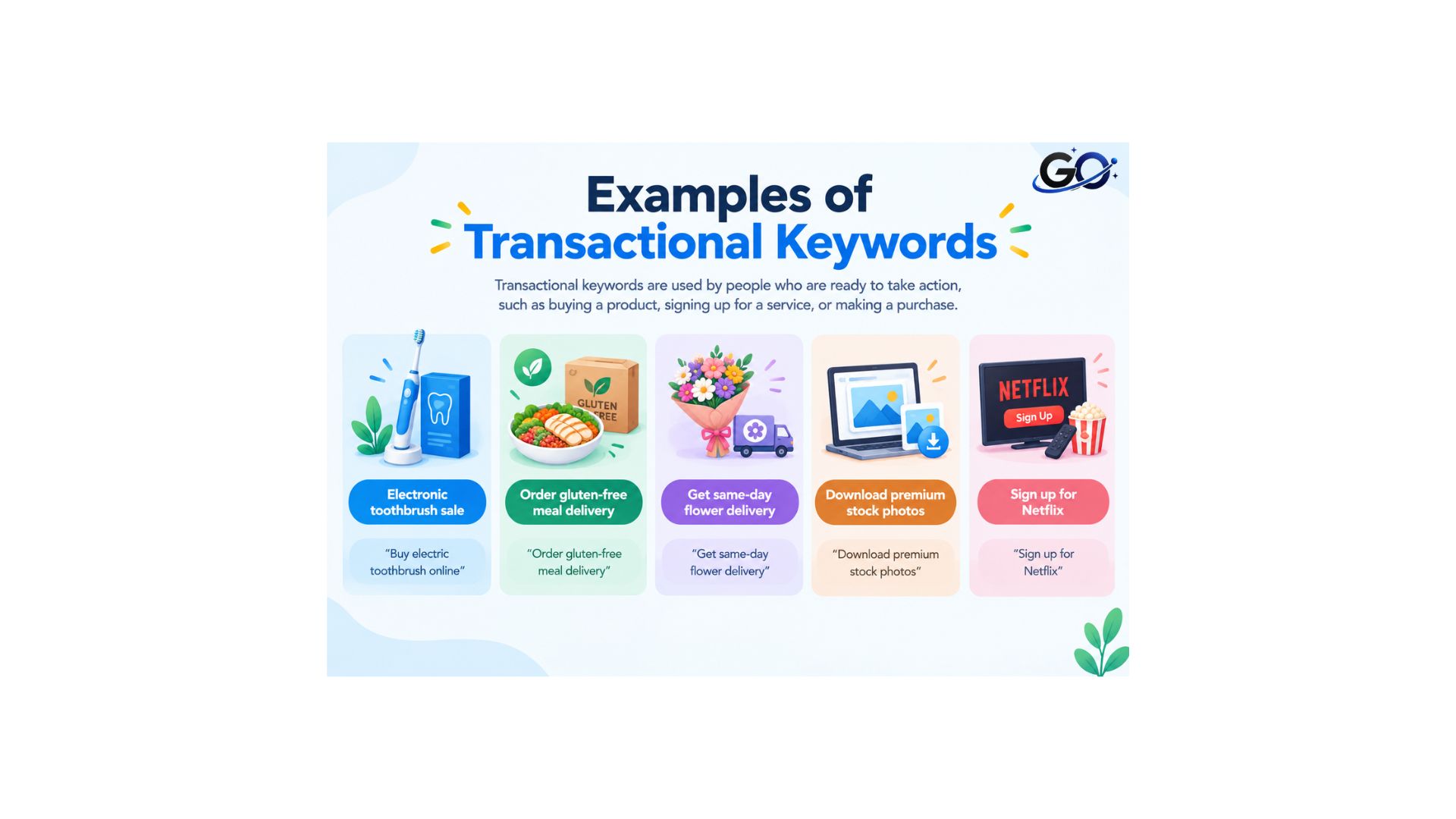
Effective SEO requires an understanding of many keyword categories, including transactional, commercial, navigational, and informational.These are a few instances of transactional search intent keywords.
Electronic toothbrush sale
The user’s interest in buying an electronic toothbrush is indicated by this term. They want to save money, have probably done their homework, and are prepared to buy.
Order gluten-free meal delivery
This term implies that the user wants to obtain gluten-free food delivery services. They are prepared to select a provider after deciding on their preferred diet.
Get same-day flower delivery
The user is looking for a florist who offers same-day flower delivery. The eagerness implies that they are prepared to buy something quickly, perhaps for a particular occasion.
Download premium stock photos
The word “download” suggests that the user is ready to take action, possibly by purchasing high-quality stock pictures.
Sign up for Netflix
This term shows that the user wants to subscribe to Netflix. They are likely looking for the official sign-up page because they are ready to subscribe.
How to Find Transactional Keywords
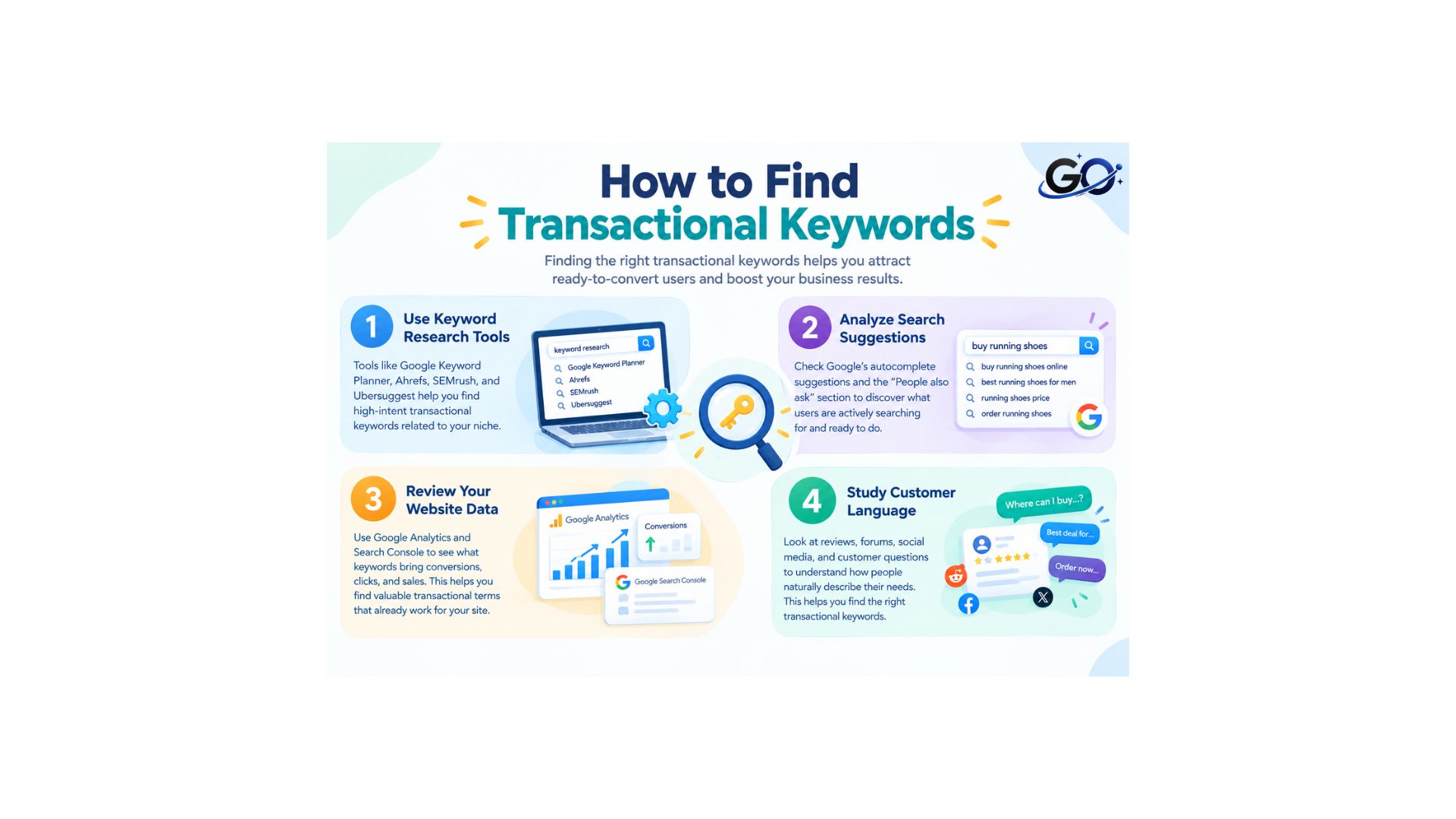
Finding transactional keywords starts with understanding the actions that matter to your business.
Use Keyword Research Tools
You can use keyword research tools to find search terms related to specific goods and services. Look for words such as “buy,” “order,” “book,” “hire,” “download,” and “sign up.” You can also combine these terms with the main keywords for your products or services.
Analyze Search Suggestions
Search suggestions provide ideas for commonly used phrases. To find relevant results, type your main term into a search engine.These ideas can help you identify possible transactional searches.
Review Your Website Data
Search performance statistics and website analytics can reveal which queries direct users to your conversion-focused sites.Search for keywords associated with sales, reservations, registrations, or other significant activities.
Study Customer Language
When consumers enquire about your goods or services, pay attention to the phrases they use. Their enquiries, requests, and frequently used phrases can yield helpful keyword suggestions.
Common Transactional Keyword Mistakes
Sending users to the incorrect kind of page is a frequent error. Typically, a transactional term should direct consumers to a site where they can simply start or finish the requested action.
Focusing solely on keyword usage while neglecting the user experience is another error. Excessive keyword repetition does not improve a page.
Businesses should also avoid unclear calls to action. Visitors should understand what will happen when they click a button or complete a form.
Conclusion
Transactional keywords are an important part of SEO because they target users who want to take a specific action. These actions may include buying a product, booking a service, downloading a resource, or signing up for an offer.
Understanding user intent and developing pages that facilitate the intended activity are critical components of efficient transactional keyword use.Businesses can make transactional pages more effective by providing relevant content, clear calls to action, accurate information, and an easy-to-use interface.
Frequently Asked Questions
1. What are transactional keywords?
Transactional keywords signal that users want to perform specific actions, such as purchasing, making a reservation, downloading, subscribing, or registering.
2. What is an example of a transactional keyword?
“Buy running shoes online,” “book a hotel room,” “hire a freelance writer,” and “start a free trial” are a few examples.
3. Are transactional keywords important for SEO?
Businesses can use transactional keywords to attract users who are ready to take action and complete a conversion.
4. What is the difference between transactional and informational keywords?
While informational keywords concentrate on discovering knowledge or learning about a subject, transactional keywords emphasise finishing a task.
5. How can I optimize for transactional keywords?
Make landing pages that are pertinent, have clear names, offer helpful information, include compelling calls to action, and simplify the conversion process.