

Learn what readability is and why it matters for SEO. Discover how clear, easy-to-read content improves user experience and search rankings.The ease with which readers may comprehend and assimilate written material is referred to as readability. It is the quality of written language that makes it straightforward for readers to comprehend the message, making it crucial for effective communication. Readability is not just about the choice of words; it also involves sentence structure, length, and complexity, as well as the organization of the text.
The reader’s experience is improved by well-organised and understandable information, which enables them to understand the intended message with little effort and without any misunderstandings. Grammatical precision, syntactical simplicity, and logical coherence are all components of legibility, a multifaceted element of writing that enhances the written content’s overall accessibility. The goal of emphasising comprehensibility is to create a reader-friendly environment in which the audience may effortlessly explore the text and extract important information.
Why Is Readability Important?
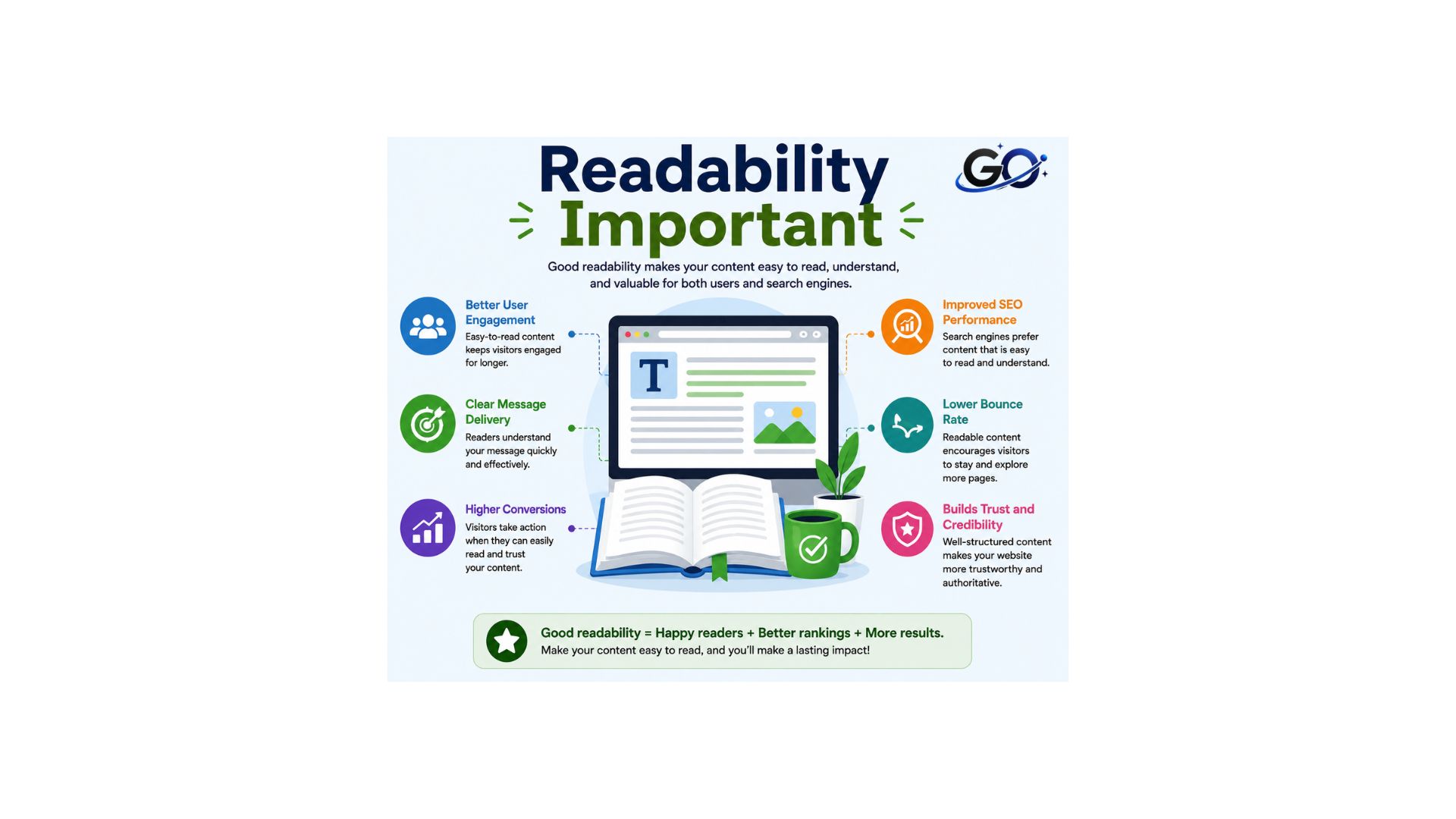
Because it makes your information simple to read, comprehend, and enjoy, readability is crucial. Visitors are more likely to stick with your website and keep reading if they can easily get the information they require. Additionally, well-organised and lucid content enhances user experience, boosts engagement, and lowers bounce rates. Additionally, since search engines favour easily comprehensible information, readability is a crucial component of writing SEO-friendly articles.
How Readability Affects SEO
Readability is not a direct Google ranking factor, but it strongly influences many factors that affect search performance. Easy-to-read content keeps users engaged, which can improve important user behavior signals.
Content with good readability often provides:
- Better user engagement.
- Longer average session duration.
- Lower bounce rates.
- Increased page views.
- Higher chances of earning backlinks.
- More social shares.
Search engines prioritize content that satisfies user intent. When visitors quickly understand your content and find it helpful, your website is more likely to perform well over time.
Key Elements of Readability
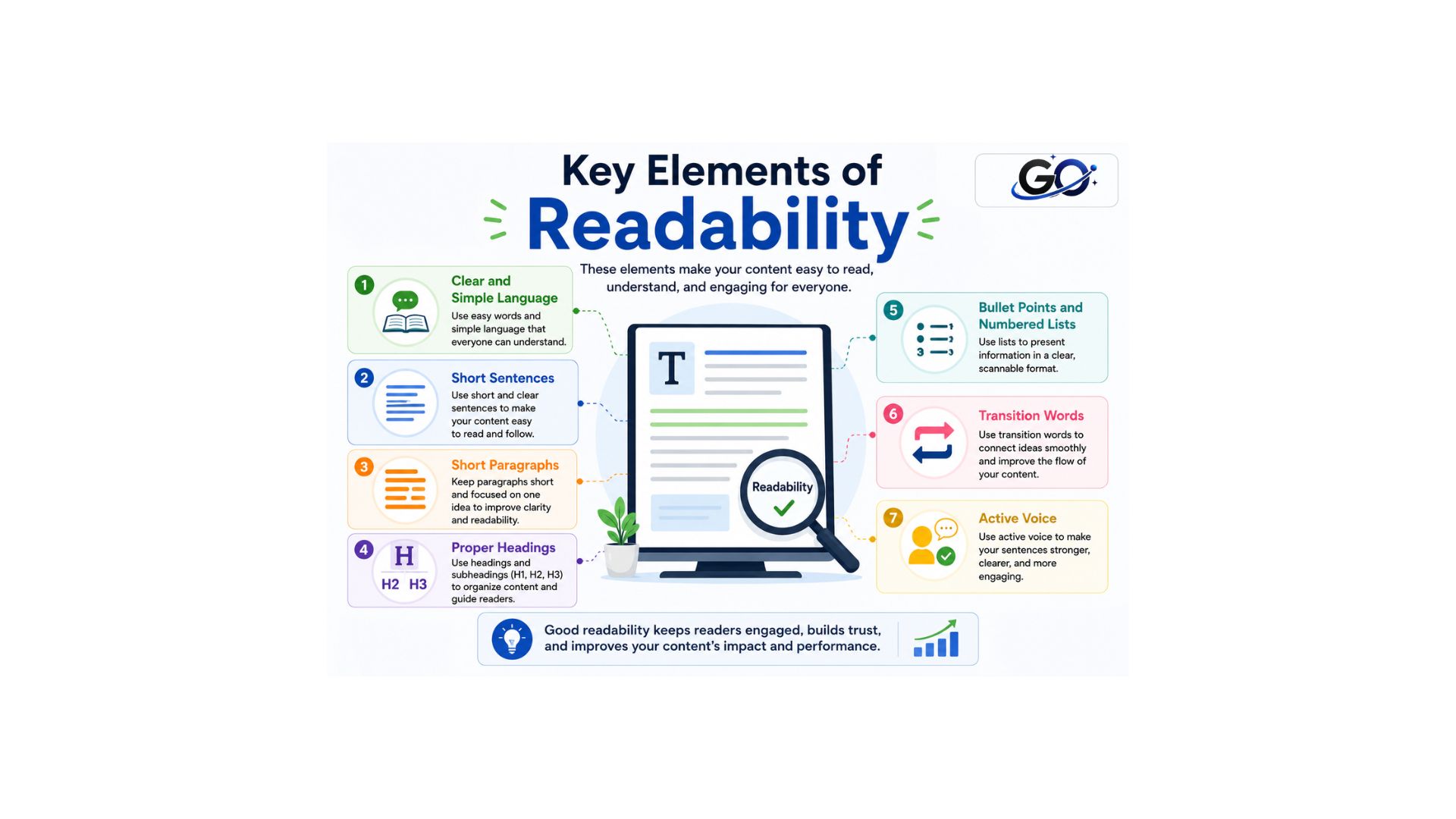
Several elements determine how legible your text is.
Clear and Simple Language
Opt for simple, everyday words instead of complex, jargon-filled language, unless it is necessary for maintaining the accuracy of the content.
Short Sentences
Long sentences can overwhelm readers. Aim for concise sentences that communicate one idea at a time. This improves clarity and keeps readers focused.
Short Paragraphs
Large blocks of text are difficult to scan, especially on mobile devices. Keep paragraphs between two and four sentences whenever possible.
Proper Headings
Organize your content with descriptive headings and subheadings. Headings make articles easier to navigate and allow readers to find the information they need quickly.
Bullet Points and Numbered Lists
Lists improve readability by presenting information in a clear and organized format. They also help readers scan important points without reading every paragraph.
Transition Words
Transition words connect ideas and improve the flow of content. Examples include:
- First
- Next
- However
- Therefore
- In addition
- Finally
Using transition words makes your writing smoother and easier to follow.
Active Voice
Writing in an active voice makes your content more direct and engaging, thereby improving comprehensibility.
For example:
Passive: The author wrote the piece.
Active: The author wrote the article.
Factors That Improve Readability
Better reading and easier comprehension of text are caused by a number of reasons. Simple language, short sentences, and succinct paragraphs make it easier for readers to understand what you’re saying. Visitors can easily browse material thanks to logical content organization, bullet points, and clear headlines. While utilising active voice makes the writing more direct and interesting, adding transition words enhances the flow between sentences and paragraphs. Applying these strategies consistently produces material that is more readable, entertaining, and useful for search engines and users alike.
Common Readability Mistakes
Many authors make readability errors that lower the calibre of their writing and make it more difficult for readers to comprehend. Using lengthy phrases, authoring lengthy text passages, selecting difficult terms, and inadequately organising content are common problems. Repeating the same information, omitting headings and subheadings, and overusing passive language can all contribute to an article’s lack of interest. Use straightforward language, brief paragraphs, distinct headings, and a logical flow of ideas to make your writing easier to read. These minor adjustments improve the readability of your text and give your audience a better experience.
Best Practices for Better Readability
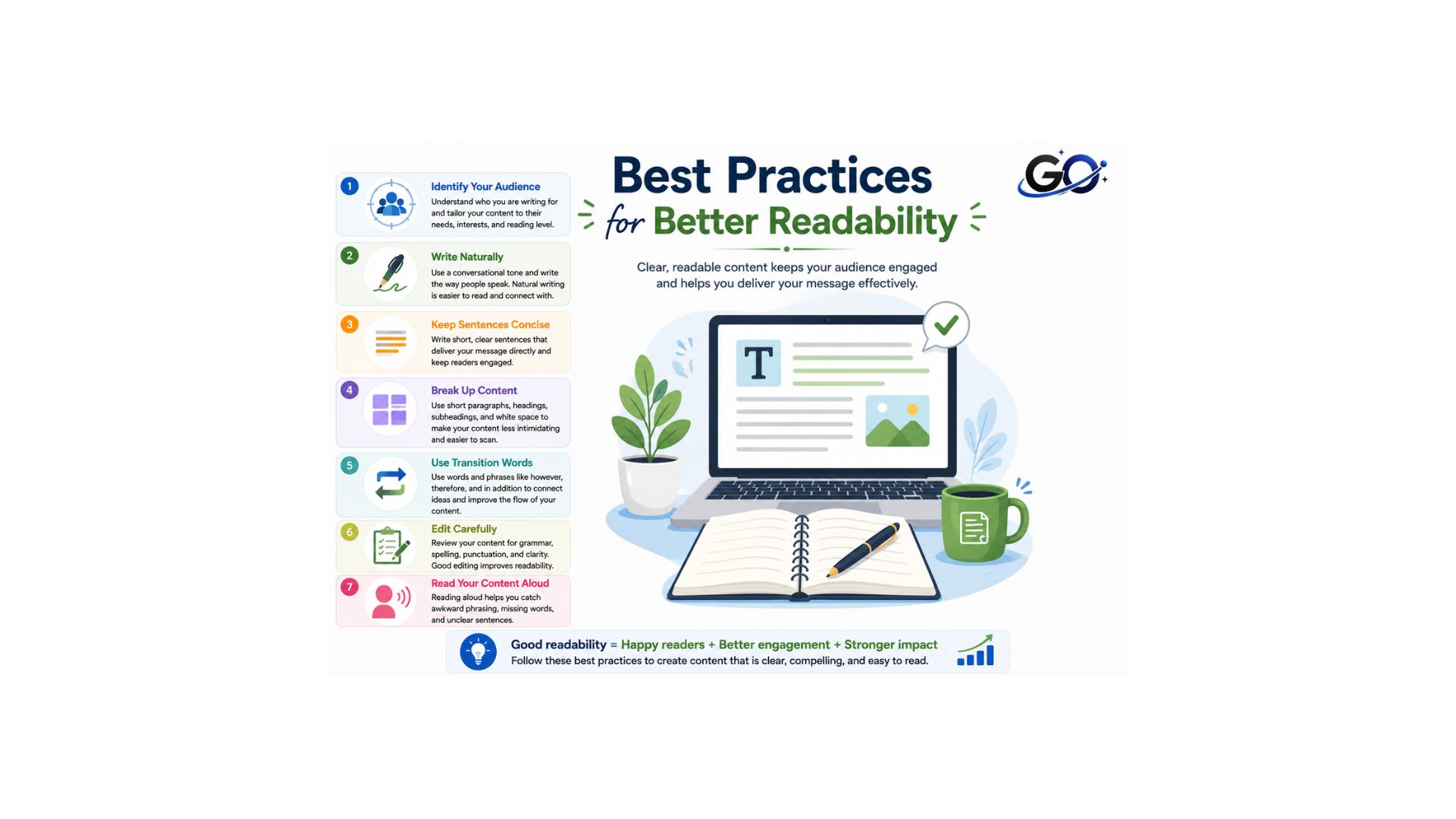
Improving readability does not require complicated techniques. Following a few simple practices can make a significant difference.
Identify Your Audience
Knowing your audience is the first step in using legibility scores effectivelyMake sure your writing is appropriate for the intended audience’s reading level.
Write Naturally
Use a conversational tone instead of trying to sound overly formal.
Keep Sentences Concise
Express ideas using the fewest words necessary without losing meaning.
Break Up Content
Use headings, bullet points, tables, and images to make content visually appealing.
Use Transition Words
Connect paragraphs and ideas smoothly so readers can follow your message.
Edit Carefully
Proofread every article before publishing to remove grammar mistakes and improve clarity.
Read Your Content Aloud
Reading aloud helps identify awkward sentences and areas that need improvement.
Readability and User Experience
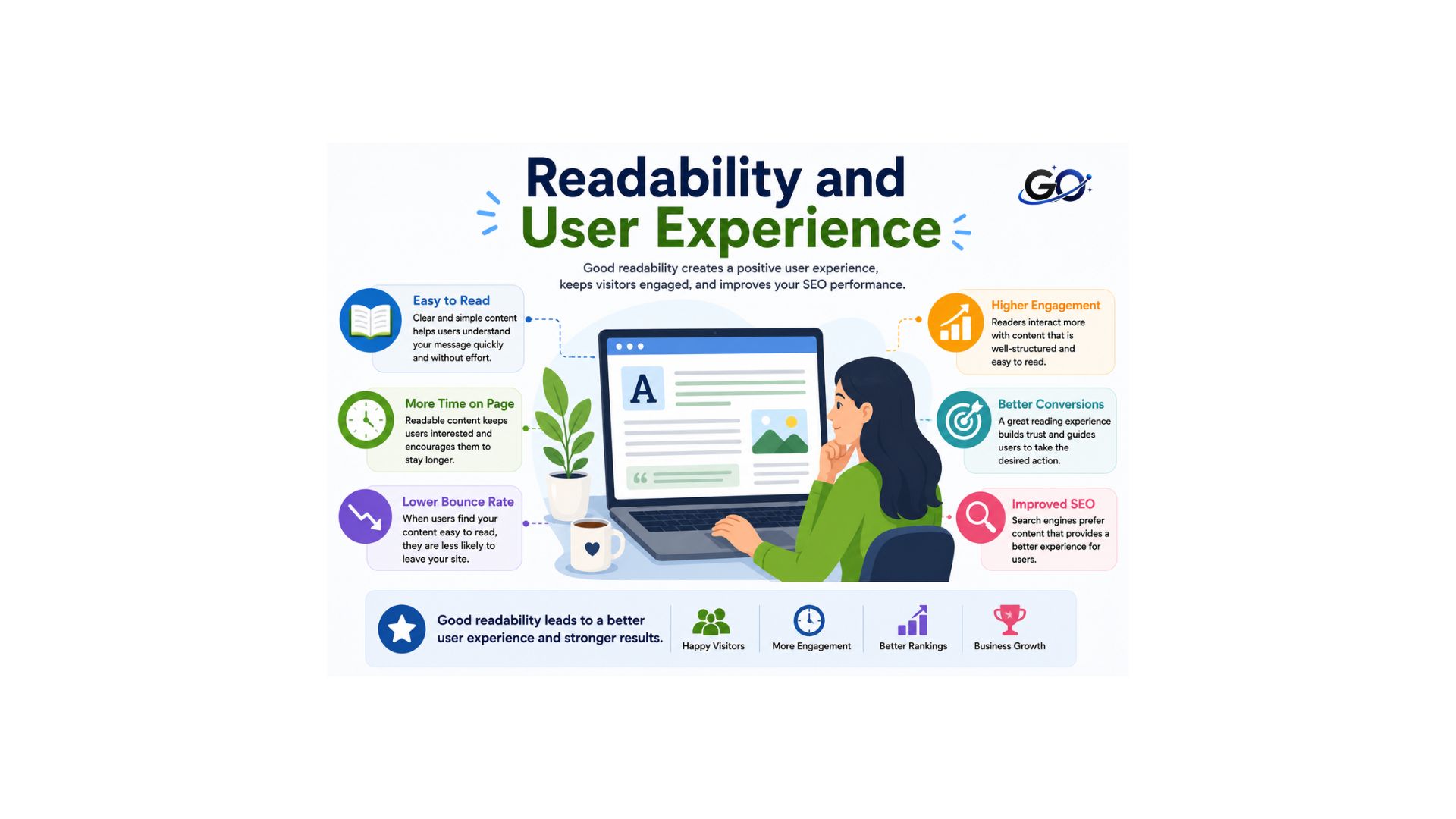
User experience and readability are closely connected. Visitors expect websites to provide information quickly and clearly.
When content is easy to read:
- Visitors stay longer.
- Navigation becomes easier.
- Readers trust the website more.
- Users are more likely to return.
Good readability creates a positive experience that benefits both readers and website owners.
Readability and Mobile Devices
A large percentage of internet users browse websites on smartphones. Mobile-friendly content requires excellent readability.
To improve readability on mobile devices:
- Keep paragraphs short.
- Use descriptive headings.
- Leave enough white space.
- Choose readable font sizes.
- Avoid overcrowding the page.
Mobile-friendly formatting helps readers consume information comfortably on smaller screens.
Best Readability Checker Tools
Several tools help writers evaluate and improve readability.
Yoast SEO
Yoast SEO analyzes readability by checking sentence length, paragraph length, transition words, passive voice, and heading distribution.
Hemingway Editor
Hemingway Editor identifies complex sentences, passive voice, and difficult words while providing suggestions for improvement.
Grammarly
Grammarly checks grammar, punctuation, clarity, and readability to help writers produce polished content.
Microsoft Word
Microsoft Word includes readability statistics that measure sentence complexity and reading ease after grammar checking.
These tools provide useful insights, but human editing remains essential for creating natural and engaging content.
Conclusion
Readability is the foundation of effective content writing. It determines how easily readers can understand your message and engage with your website. Clear language, logical structure, short paragraphs, descriptive headings, and proper formatting all contribute to better readability.
Although readability alone does not guarantee higher search rankings, it improves user experience, increases engagement, and helps visitors find value in your content. By focusing on readability, you create content that is enjoyable to read, easier to understand, and more likely to achieve long-term success.