

Learn how to avoid Keyword Stuffing in SEO, use keywords naturally, improve content quality, and boost your search engine rankings today. One of the biggest mistakes beginners make is using the same keyword repeatedly in an attempt to improve rankings. We call this method “keyword stuffing.”
Many website owners believe that repeating a keyword as many times as possible will help them rank higher on Google. However, modern search engines are much smarter than they were years ago. Instead of rewarding excessive keyword repetition, Google focuses on content quality, relevance, and user experience.
What Is Keyword Stuffing?
A type of spam known as “keyword stuffing” occurs when a website owner attempts to raise their search engine ranks by adding an excessive amount of terms to a page. While keyword stuffing was formerly a highly successful strategy for improving your search engine ranking, it is now seen as spam and may even result in penalties from search engines if they find you employing it.
Keyword stuffing can be done on the visible page, which often leads to content that doesn’t read well and an overly high keyword density.Nevertheless, it is also possible to conceal the additional keywords on a page by employing hidden material, such as meta keywords.
Why Keyword Stuffing Is Bad for SEO
Using too many keywords can damage your website in several ways. IIt frequently results in search engines losing faith in your material rather than raising ranks.
Poor User Experience
Engaging, educating, or amusing the audience is the main objective of content. When content is overloaded with terms, it becomes unnatural and challenging to read. If users find the information repetitious and unhelpful, they are more likely to abandon the website.
Low Conversion Rate
Although keyword stuffing may increase traffic, these visitors are frequently of low quality and have no real interest in the products or content. They are therefore less likely to make a purchase or interact with the website in a meaningful way.
Reduced Content Quality
Keyword stuffing moves the emphasis from producing useful material that answers user queries and needs to only pleasing search engines. This change may make the content less valuable and relevant overall.
Loss of Credibility
Content that seems to be making an excessive effort to rank for specific keywords may come across as fake or desperate. The content’s dependability and the website’s or brand’s credibility may be questioned by readers.
Possible Google Penalties
Keyword stuffing can be identified by algorithms used by modern search engines, especially Google. If a website is found to be using this strategy, it may be penalised by having its ranking lowered or possibly removed from search results.
Examples of Keyword Stuffing
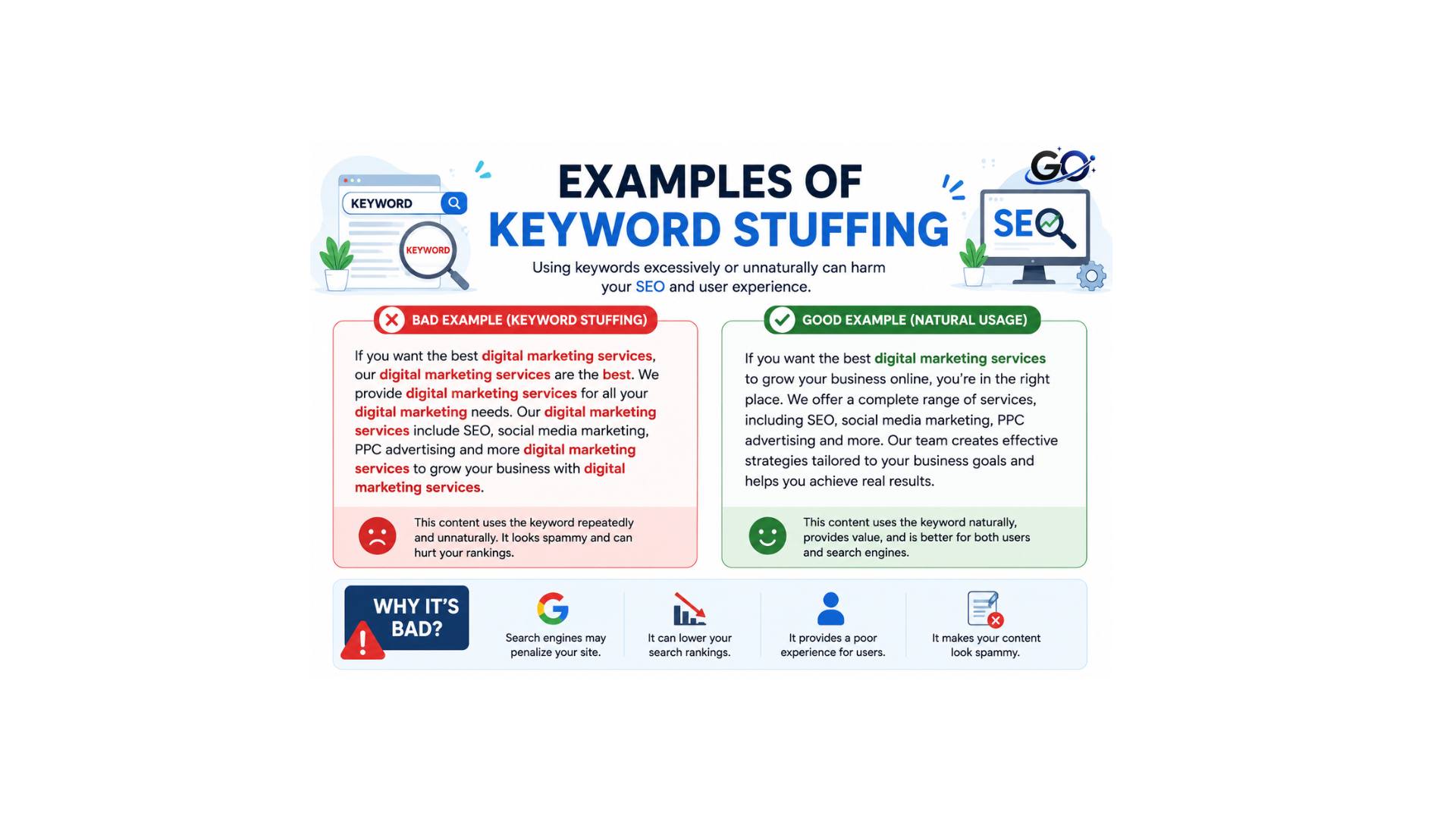
1. Visible text: “Looking for cheap shoes? Our cheap shoes store has the cheapest shoes online. Get the finest prices on inexpensive sneakers by purchasing them here!
2. Unrelated alt tags, such as “A pair of brown cheap shoes from the cheapest shoe shop, which has amazing cheap shoe deals,”
3. Over-optimized meta tags: “Cheap Shoes | Buy Cheap Shoes | Cheap Shoes Online | Cheap Shoe Store”
Different Types of Keyword Stuffing
Keyword stuffing can appear in many forms, not just inside paragraphs.
Repeating Keywords in Content
The most common type is inserting the same keyword into every sentence, even when it doesn’t fit naturally.
Overusing Keywords in Headings
Adding identical keywords to every heading makes the content look forced and reduces readability.
Keyword-Stuffed Meta Descriptions
Writing a meta description filled with repeated keywords instead of creating an engaging summary is another common mistake.
Excessive Image Alt Text
Image alt text should describe the image accurately. Stuffing keywords into every image without proper descriptions is considered poor SEO practice.
Hidden Keywords
When the “stuffing” is not visible to users, it is referred to as hidden keyword stuffing. People will hide keywords by.
With this black-hat SEO tactic, users don’t “see” the keywords, but search engines do. Previously, this tactic was effective for ranking in organic search results, but search engines have become skilled at detecting this spammy practice.
How Google Detects Keyword Stuffing
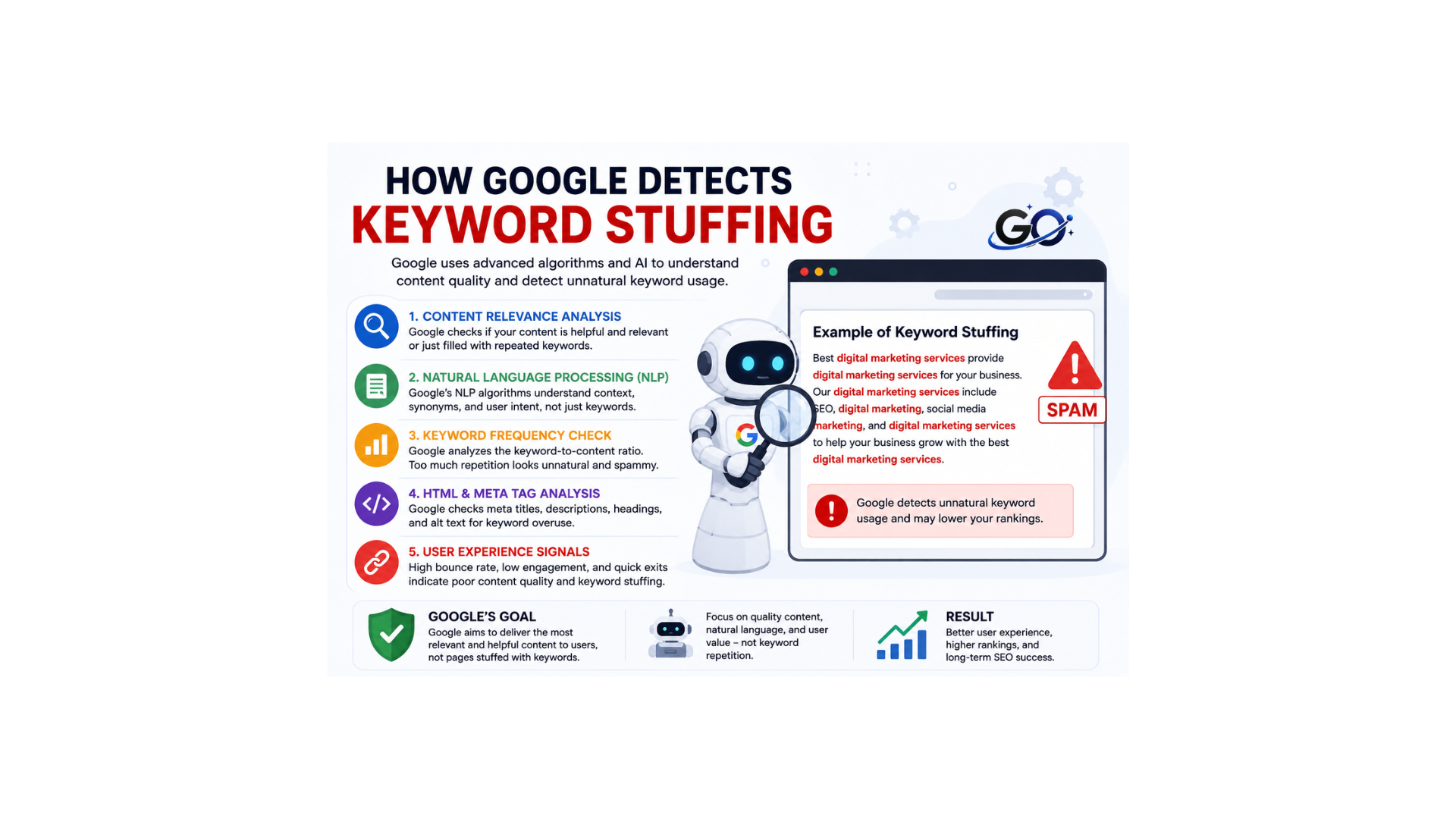
Google no longer counts keywords alone. Instead, it evaluates the overall quality of a webpage using advanced algorithms.
Search engines analyze:
- Natural language
- Content relevance
- Search intent
- Semantic relationships between words
- User engagement signals
- Overall readability
This means a page can rank well even if the exact keyword appears only a few times, provided the content answers the user’s question effectively.
How to Avoid Keyword Stuffing
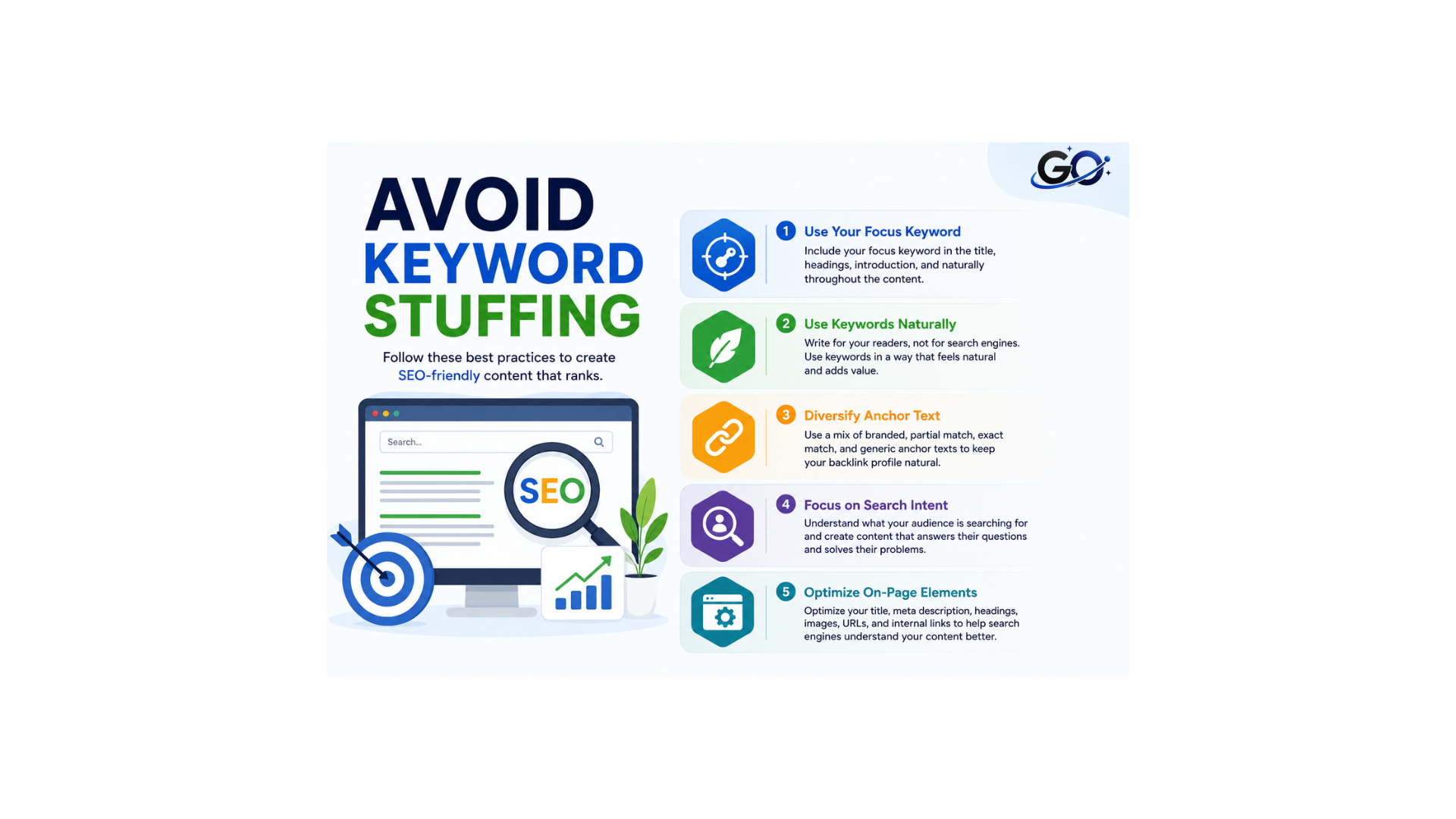
Understanding Keyword Stuffing in SEO helps you create content that ranks well without overusing keywords. Write naturally, use your focus keyword where it fits, and prioritize delivering value to your audience.
Use Your Focus Keyword
The first step is proper keyword research. Every significant page on your website ought to feature a central keyword. . But the goal isn’t to include the keyword or variations of it as many times as possible.
Instead, your focus keyword should appear only in the key elements of the page:
- Title tag
- Meta description
- Page slug
- Headline
- Body text (ideally at the beginning)
Use Keywords Naturally
Your goal keyword and its synonyms and variations will inevitably appear when you write your content organically. Your content will become difficult to understand and useless to your viewers if you are obsessed with your keyword and utilise it frequently. Low-quality content won’t improve your ranks because Google wants to give its users the finest possible results.
Diversify Anchor Text
Use different anchor text for links throughout your website or content, whether they are internal or external. Use a variety of descriptive phrases, brand names, or generic terms in place of the same keyword as anchor text. By doing this, you can prevent coming across as manipulative to search engines and assist develop a more natural link profile.
Focus on Search Intent
Instead of just focusing on keywords in your content strategy, consider producing fresh, valuable material that meets consumer demands. Create excellent content by matching your page to the user’s search intent and offering comprehensive responses to their questions.
Optimize On-Page Elements
There are a few “easy win” sections of your page where you can incorporate your target keywords without affecting the readability and user experience of your content, even if you should avoid keyword stuffing. To make sure your goal keywords show up in these places—page titles, headings, meta descriptions, and throughout your content—without being overoptimized, utilise our On-Page SEO Checker.
Best Practices for SEO Without Keyword Stuffing
Following SEO best practices helps your content rank without relying on outdated techniques.
Create High-Quality Content
The cornerstone of effective SEO is high-quality content. Concentrate on offering precise, practical, and thoroughly investigated information that addresses users’ enquiries. Content with genuine value is more likely to rank higher and keep visitors interested. .
Cover the Topic Completely
Explain the subject from several perspectives rather than using the same keyword repeatedly. To ensure that readers comprehend the topic completely, include pertinent examples, useful advice, and concise explanations. In search results, comprehensive material frequently performs better.
Add Internal Links
Internal links connect related pages on your website and help users discover more valuable content. They also make it easier for search engines to crawl your site, improving navigation and distributing SEO value across your pages.
Use External References
The credibility of your work can be increased by including links to reputable and authoritative websites. External references assist readers delve further into the subject and bolster your content with trustworthy sources.
Optimize Images
To enhance picture SEO, use meaningful alt language, descriptive file names, and compressed image sizes. Images that have been optimised load more quickly, improve accessibility, and improve the user experience in general.
Update Content Regularly
To keep your material correct and current, review and update it. Maintaining rankings and giving your audience continuous value can be achieved by updating out-of-date content, incorporating fresh perspectives, and enhancing already-existing portions.
Does Keyword Density Matter?
Keyword Stuffing in SEO is closely related to keyword density, which refers to how often a keyword appears compared to the total number of words in an article. While keyword density helps indicate your content’s topic, there is no ideal percentage that guarantees higher rankings. Google does not rank pages based on a fixed keyword density. Instead, it rewards content that is relevant, helpful, and written naturally without keyword stuffing in SEO. Rather than targeting a specific percentage, use your primary keyword where it fits naturally and support it with related words and phrases.
Conclusion
Keyword stuffing is an outdated SEO technique that can negatively affect both search engine rankings and user experience. Modern SEO is no longer about repeating the same keyword as many times as possible. Instead, success comes from creating valuable, informative, and easy-to-read content that satisfies search intent.
When writing articles, focus on solving readers’ problems, use keywords naturally, include relevant keyword variations, and organize your content with clear headings. By following these best practices, you can create high-quality content that performs well in search results, builds trust with your audience, and delivers long-term SEO success.