
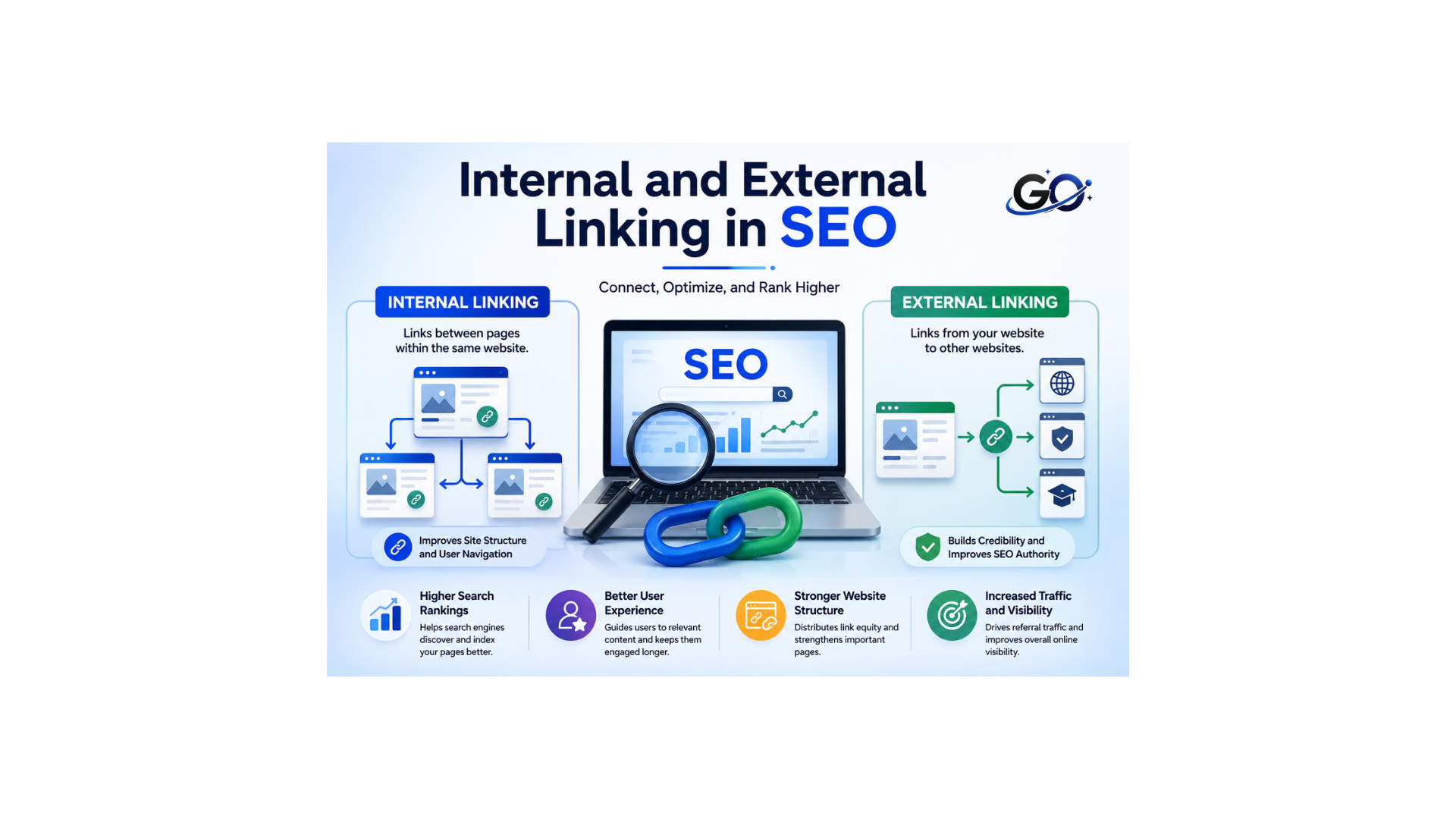
Learn what internal and external linking in SEO is, why it matters, and how they improve rankings, navigation, and user experience.They help search engines understand your website’s structure while making it easier for visitors to navigate your content. A well-planned linking strategy improves website organization, enhances the user experience, and helps search engines discover important pages more efficiently. Whether you manage a blog, business website, or eCommerce store, understanding how internal and external links work is essential for building a strong SEO foundation.
What Is Internal Linking in SEO?
Internal links are those hyperlinks you use in different webpages within your website to develop a solid network between them. Internal Linking acts as a roadmap for users to explore an entire website rather than just sticking to the page they visited. For example, we sometimes link service pages to a relevant blog to drive actions from visitors.
These links also help your website build a logical content hierarchy. It simplifies finding more information about your business or a specific topic within your website. Additionally, internal links make it possible for visitors to stay on your website longer.
What Is External Linking in SEO?
External or outbound links are not immediately on your website, in contrast to internal connections. These are hyperlinks that link your webpage to another webpage or website from a different domain.
External links help build credibility and trust with your target audience. For example, citing a fact or statistics from an external domain in your citation is external linking. Even generating backlinks through guest posting on reliable websites is a part of these links.
Internal Linking vs External Linking
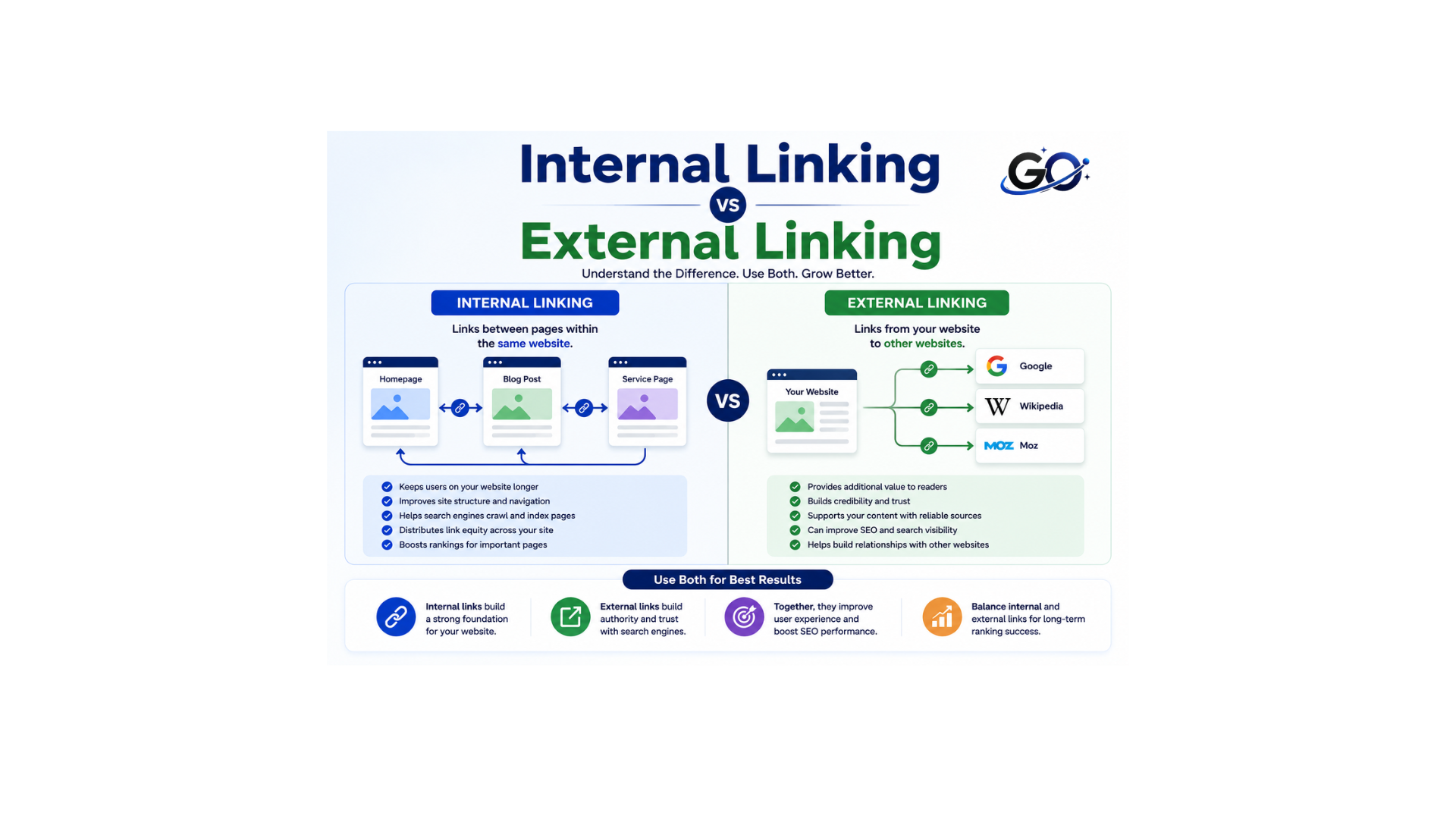
Although both types of links are important for SEO, they serve different purposes.
| Internal Linking | External Linking |
| Connects pages within the same website | Connects to another website |
| Improves website navigation | Supports information with trusted sources |
| Helps search engines crawl your site | Increases content credibility |
| Distributes page authority | Provides additional resources |
| Keeps visitors engaged | Enhances trust and relevance |
Using both types of links together creates a balanced SEO strategy that benefits both users and search engines.
How Internal and External Links Work
Search engines rely on links to discover, crawl, and understand web pages more effectively.. Internal links show the relationship between different pages on your website, helping search engines determine which pages are most important. They also allow authority to flow throughout your website, improving the chances of important pages ranking higher.
External links work differently. They connect your content with reliable information from other websites, helping search engines better understand your topic. At the same time, readers can access trusted resources that support the information you provide. Together, internal and external links create a better browsing experience and strengthen your website’s overall SEO.
Types of Internal and External Links
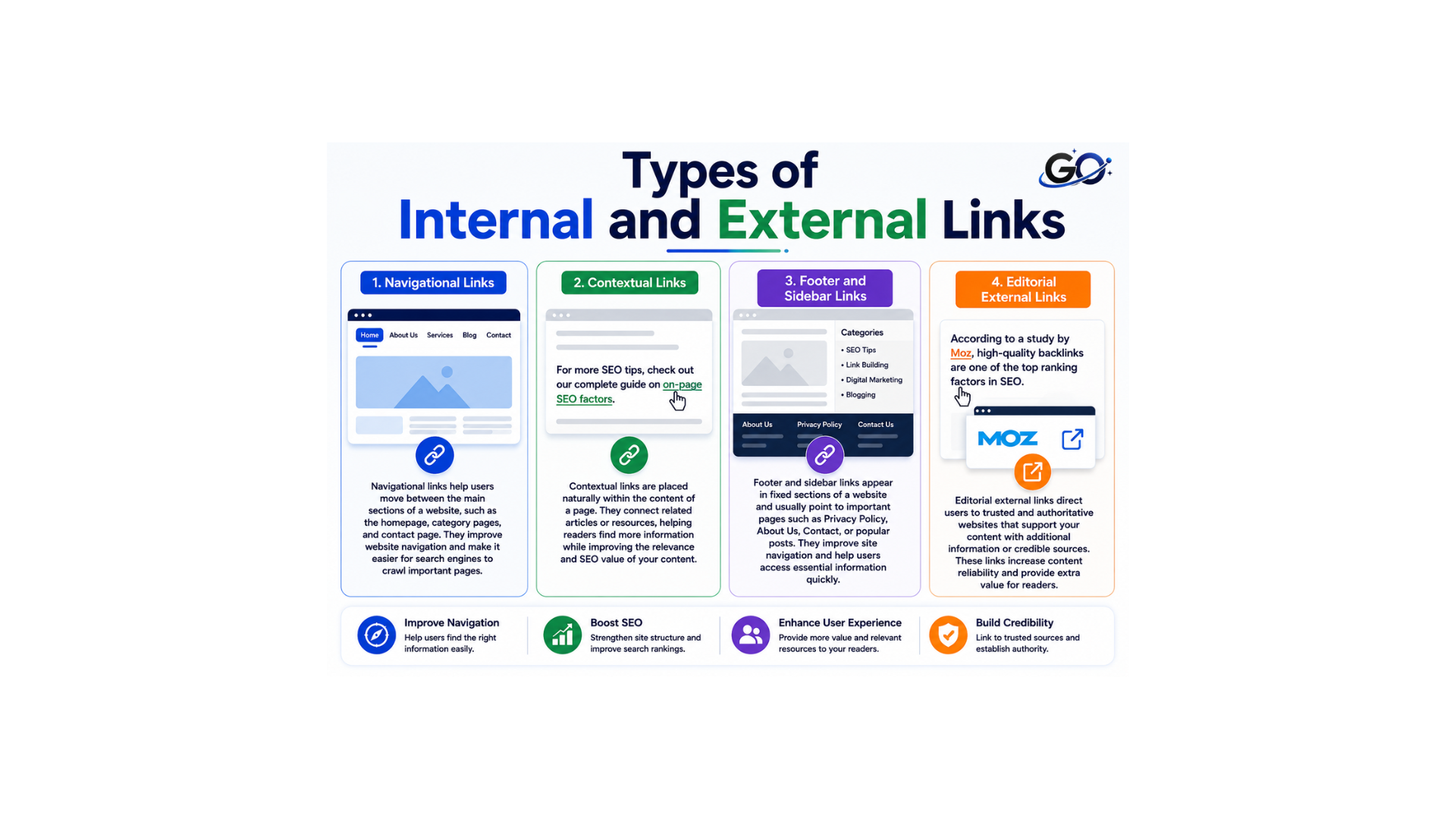
SEO uses several common types of links to improve website navigation and rankings.
Navigational links:
These appear in your site’s main menu or header and help visitors reach key sections, such as your homepage, blog, services, or products.
Contextual links:
Embedded within the body of your content. They’re the most valuable for SEO because they connect related topics in context and pass the most link equity.
Footer and sidebar links
These appear in your site’s footer or sidebar and typically point to key pages such as your privacy policy, contact page, or recent posts.
Editorial External Links
These links direct readers to trusted websites, research studies, official documentation, and industry resources from within your content.
Best Practices for Internal and External Linking
A successful linking strategy requires careful planning and relevance. Following the best practices of Internal and External Linking in SEO helps improve website navigation, user experience, and search engine rankings. Always link to pages that genuinely help your readers understand the topic better. To ensure that both users and search engines understand the purpose of the linked page, use descriptive anchor text rather than generic terms like “Click Here.”
Keep your links natural and avoid excessive linking throughout a single article. Review your website regularly to identify and fix broken links. When adding external links, always choose authoritative and trustworthy websites that provide accurate information. Updating older articles with links to newer content is another effective way to strengthen your Internal and External Linking in SEO strategy and improve overall SEO performance.
Common Internal and External Linking Mistakes
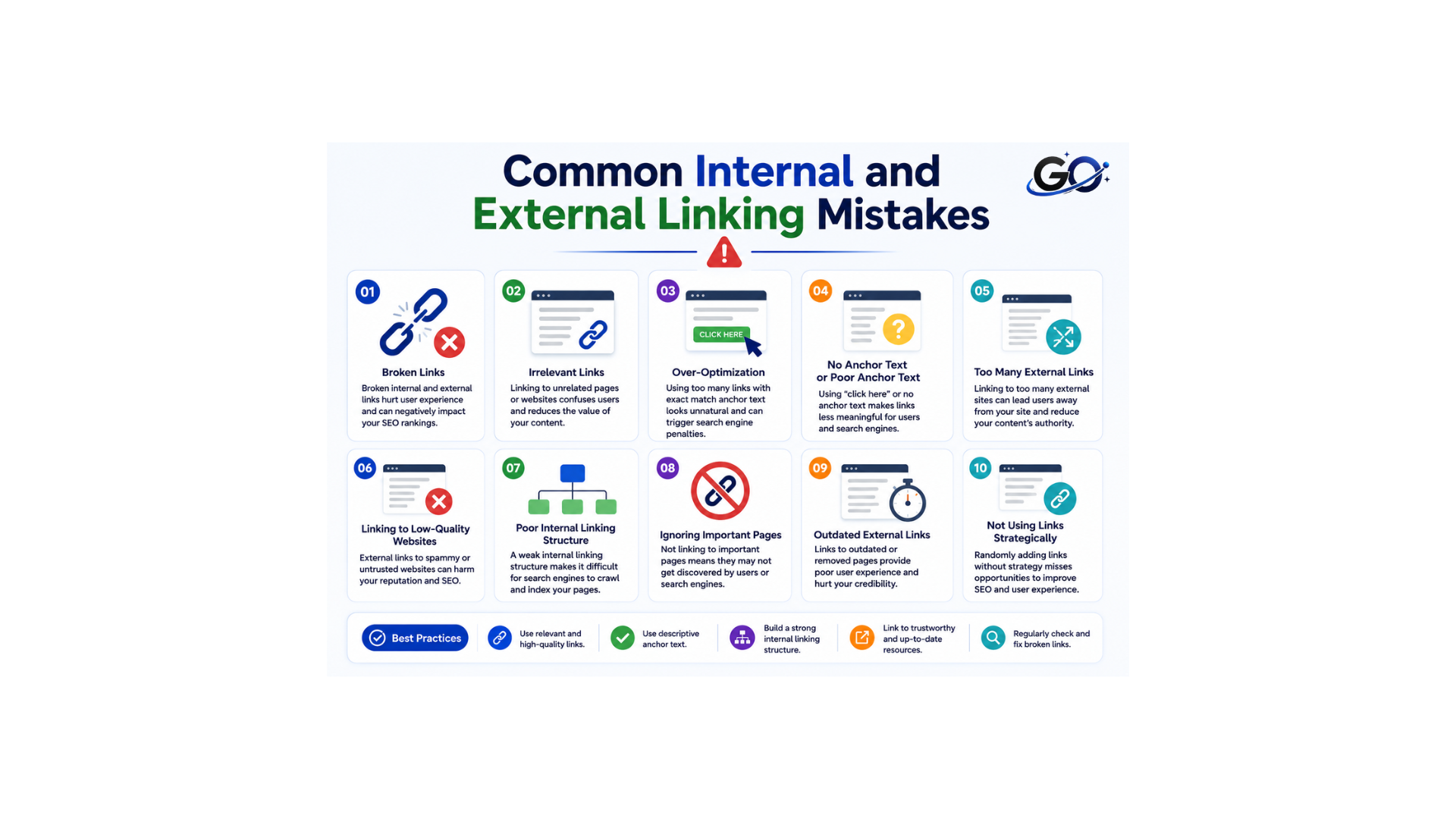
Many website owners make simple linking mistakes that reduce SEO effectiveness. A well-planned Internal and External Linking in SEO strategy helps avoid these issues and improves website performance. One of the most common errors is adding too many links to a single page, making it difficult for users to focus on important information. Another mistake is using irrelevant anchor text that does not describe the destination page.
Broken links also create a poor user experience and should be fixed regularly. Linking to unreliable or spammy websites can harm your website’s reputation. Some websites also create orphan pages that have no internal links pointing to them, making them difficult for search engines to discover and index.
Avoiding these mistakes will help create a stronger website structure, improve user experience, and ensure your Internal and External Linking in SEO strategy supports better search engine rankings.
Other Types of Links You Must Know
Setting up your link-building campaigns will be made easier if you understand the distinction between internal and external links. However, for a comprehensive understanding of SEO, users also need to be aware of other “types of links.”
The other kinds of links that SEOs need to be aware of are as follows:
1. Inbound Links
Hyperlinks from external websites that go back to a particular page on your own website are referred to as inbound links, or backlinks. They are essential for SEO since they convey to search engines the legitimacy and authority of your website, which may raise its search engine ranks.
Backlinks are comparable to Google’s “authority currency.” Having inbound links from reputable domains increases your relevance, credibility, and popularity within your business or speciality. It is comparable to receiving votes of confidence.
2. Dofollow Links
Hyperlinks that are not qualified with a rel=”nofollow” or rel=”sponsored” attribute are known as dofollow links. Search engines can track these links and transfer PageRank or link juice from the source to the linked webpage.
These links improve the destination site’s SEO by telling search engines that the linked content is trustworthy or supported by the source website.
3. Nofollow Links
Unlike dofollow links, nofollow links are qualified with a rel=”nofollow” tag. They tell search engines not to follow the provided link, as the name implies. PageRank cannot move from the source to the linked page due to the nofollow tag.
Nofollow links are frequently used to stop search engines from taking into account links from user-generated content, sponsored ads, or unreliable sources for ranking purposes. Additionally, employing nofollow links ensures adherence to search engine criteria on natural linking methods while preserving the integrity of a website’s link profile.
4. Sponsored Links
Hyperlinks with the rel= “sponsored” attribute are known as sponsored links, and they tell search engines that the backlinks are sponsored or paid. In 2019, Google changed the way the nofollow attribute functions.
Google is aware that the internet economy is intricately linked to the sale of links. Google requires webmasters to be “completely transparent” with Google by correctly classifying sponsored links. This protects them from Google’s fines in the event that they are discovered to be in violation of the search engine’s link spam policy.
5. UGC Links
Google also implemented user-generated content links, or UGC links, in 2019. Webmasters can tell Googlebot that a hyperlink is user-generated, such as a blog comment, and not authorised by the website by using this rel property.
UGC links are intended to give Google more details and explanation regarding the type of links on your website, just like other rel= properties.
6. Broken Links
Hyperlinks that no longer take users to the intended destination webpage are known as broken links. People frequently get a “404 Not Found” warning when they click on those URLs. One of the most common internal linking problems on a website is broken links.
Tools and Resources for Link Analysis
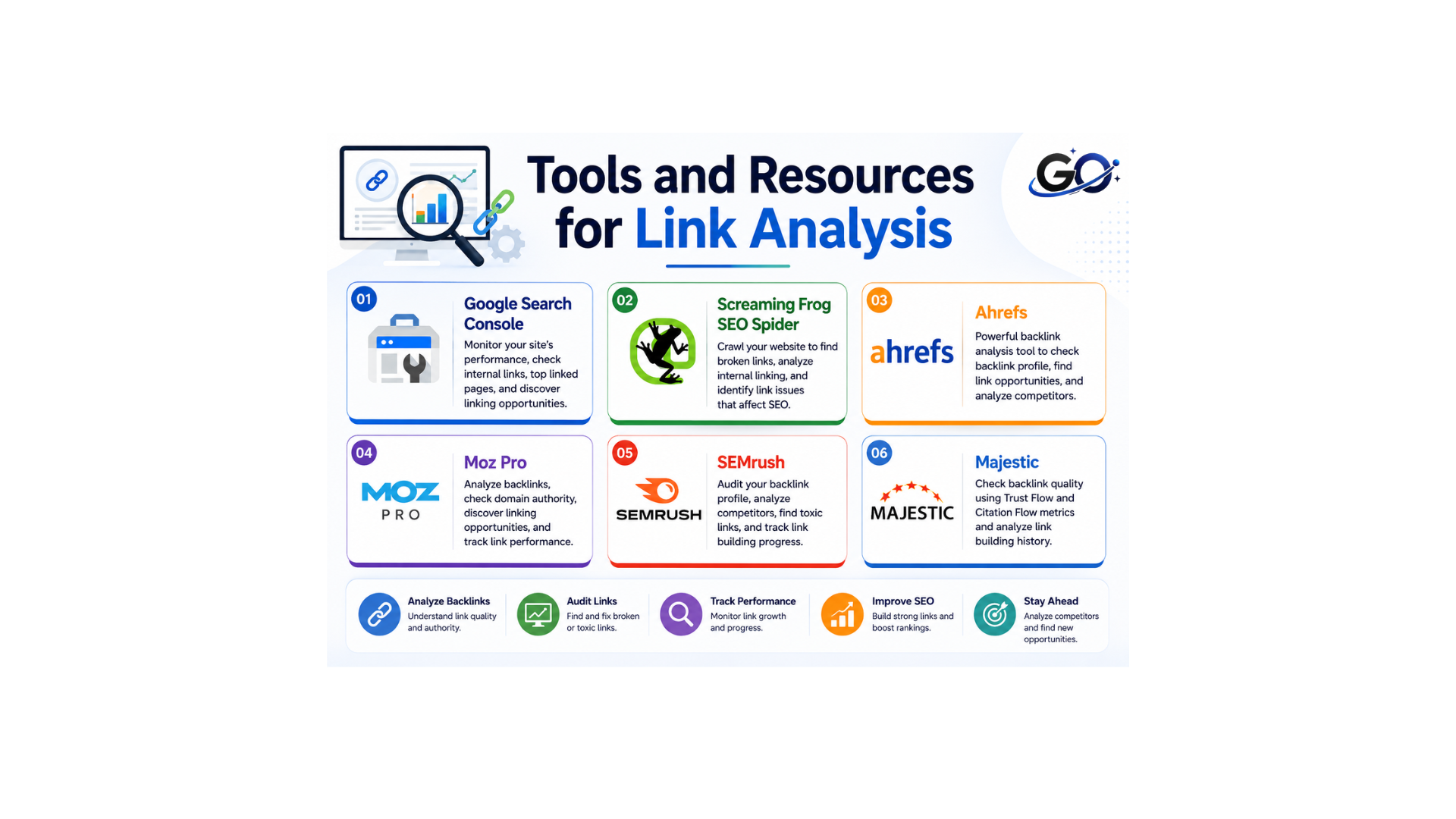
Use tools and resources to manage and optimise your internal and external connectivity. They assist in analysing your links, identifying broken ones, and pinpointing areas that need work.
Google Search Console
Google Search Console (GSC) is a free tool that helps you monitor your website’s performance in Google Search. It displays the search engine result page (SERP) performance of your website.
Webmasters can check indexing status, search queries, crawling issues, and enhance website exposure via Google’s web service, Google Search Console.
Screaming Frog SEO Spider
For site audits, this website crawler is excellent. It evaluates link metrics, identifies broken links, and displays the structure of your website.
Ahrefs
A thorough SEO tool for in-depth link research. The pages that have the most internal links are shown. The pages with the best external link quality are also displayed. It highlights prospects for new connections and much more.
Moz Pro
Moz Pro’s domain authority measure is well-known. It offers information on both internal and external connections. It provides recommendations for improving your link profile.
SEMrush
There are several capabilities available with this tool. Link audits are part of it. The internal links of your website can be examined. Additionally, you can evaluate the calibre of your external links.
Majestic
Majestic is an expert in link analysis. It offers comprehensive information about external links. This aids in your comprehension of the online position of your website. It also assists you in locating connectivity opportunities.
Conclusion
Internal and external linking are essential elements of every successful SEO strategy. Internal links aid in website organization, enhance navigation, and facilitate search engine crawling and comprehension of your material. External links strengthen your content by connecting it with reliable and authoritative sources that build trust with readers. When used naturally and strategically, both types of links improve website usability, enhance SEO performance, and contribute to higher search engine rankings. By following best practices and maintaining a logical linking structure, you can create content that benefits both your audience and search engines.