

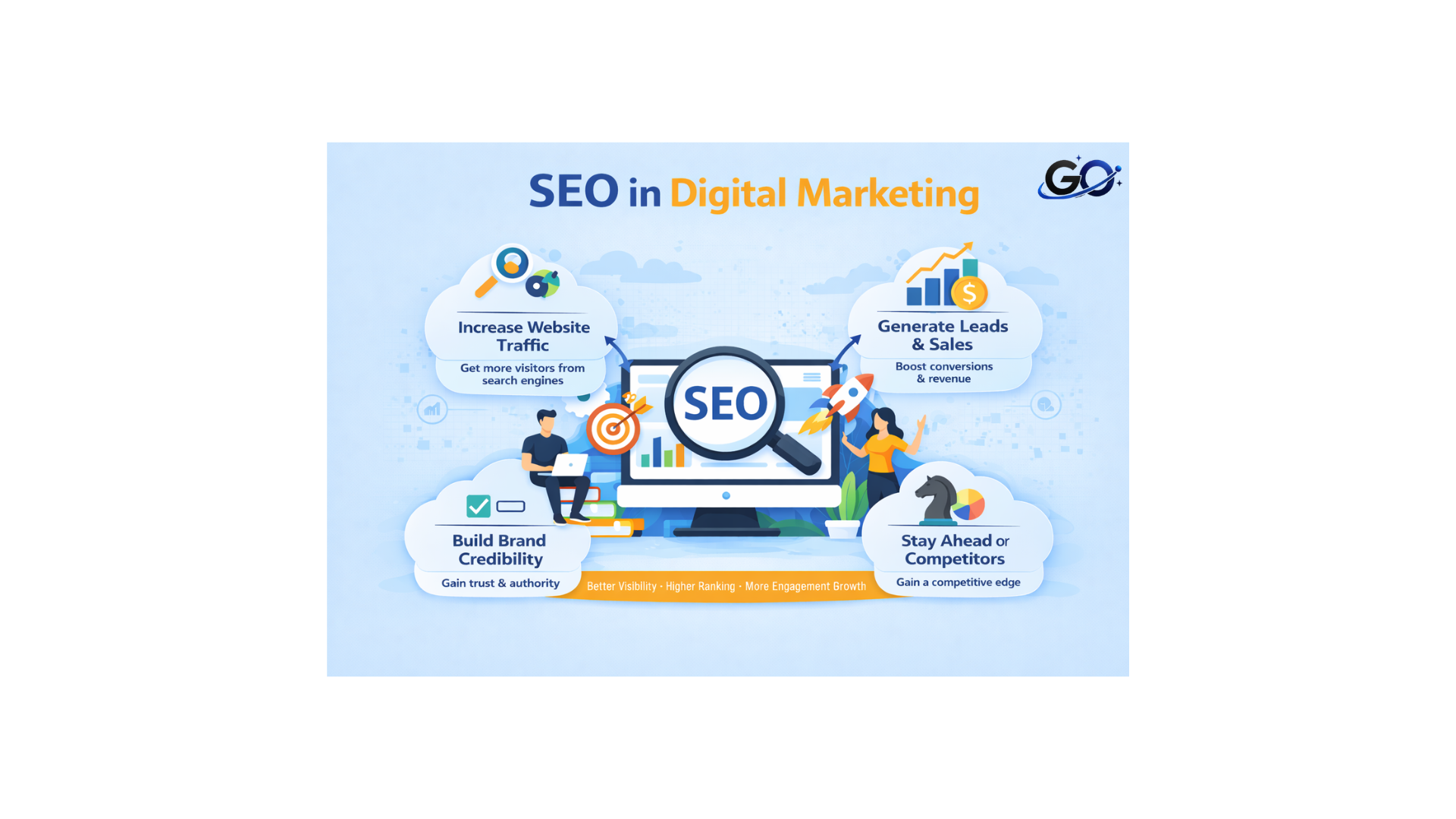
SEO (Search Engine Optimization) is an important part of digital marketing that helps websites rank higher on search engines like Google. It focuses on improving content, keywords, website structure, and technical performance.
A well-optimized website attracts more organic traffic, improves user experience, and increases online visibility. SEO helps businesses reach their target audience, build credibility, and generate more leads and conversions over time.
What Is SEO?
SEO stands for Search Engine Optimization. Enhancing a website’s visibility on search engines such as Google, Bing, and Yahoo is a digital marketing tactic.
By assisting websites in ranking higher in search results, SEO aims to enhance organic traffic. SEO helps websites show up in front of the appropriate audience when people search for information, goods, or services online.
For instance, websites with good SEO are more likely to show up on Google’s first page when someone searches for “best mobile phones.”
What Is Digital Marketing?
Digital marketing is the process of promoting products, services, or brands through online platforms such as search engines, websites, social media, email, and mobile apps. It helps businesses connect with people on the internet and reach a larger audience.
Digital marketing includes many methods, such as:
- Social Media Marketing
- Email Marketing
- Content Marketing
- Affiliate Marketing
- Pay-Per-Click Advertising (PPC)
- Search Engine Optimization (SEO)
Today, almost every business uses digital marketing to increase brand awareness and grow online.
Why Is SEO Important in Digital Marketing?
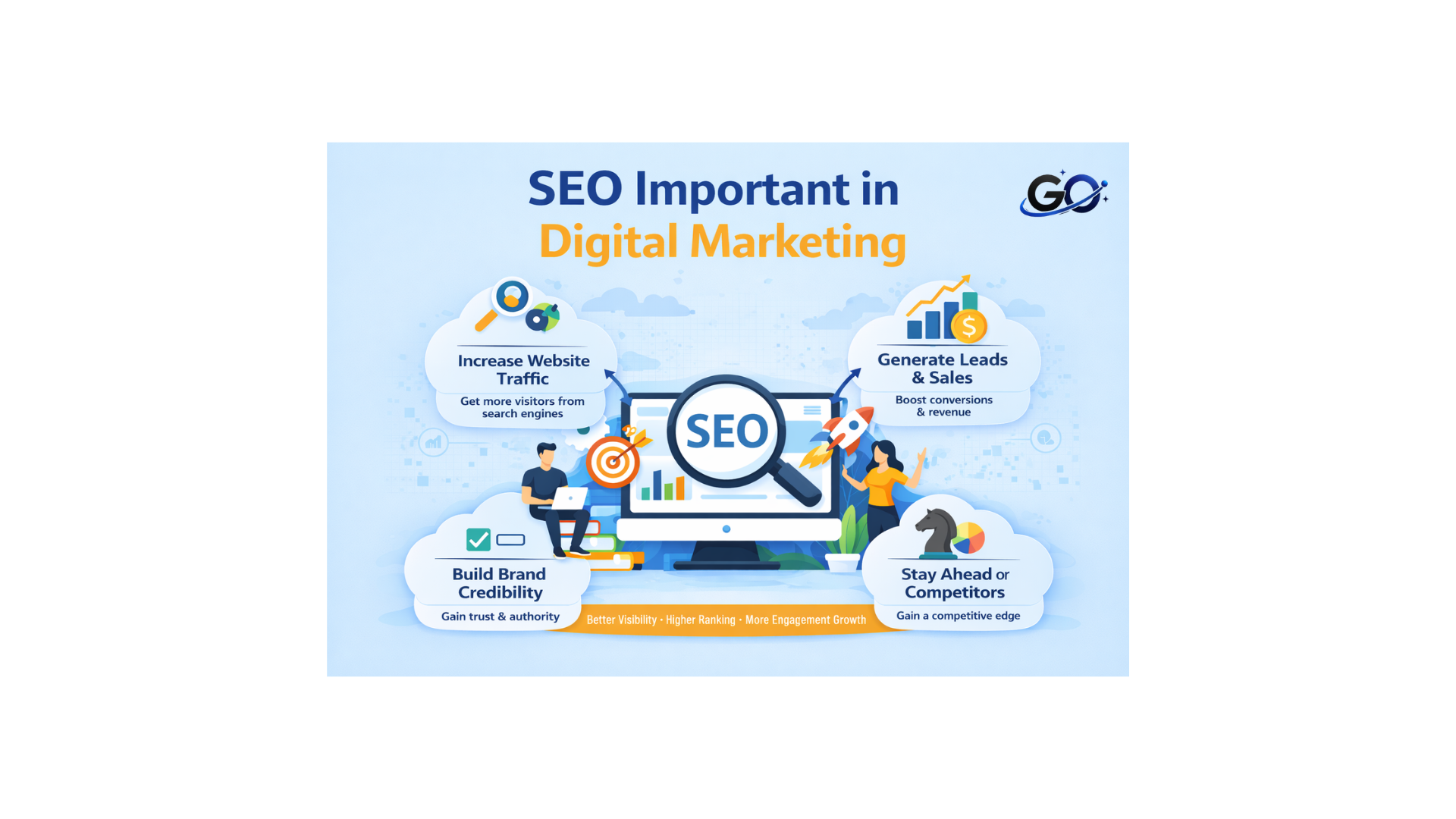
SEO plays a major role in digital marketing because most people use search engines to find information, products, and services. If your website is not visible on Google, you may lose potential customers.
Here are some important benefits of SEO:
- Increasing website traffic
- Build trust and credibility
- Improves user experience
- Help businesses grow online
- Generates long-term results
- Reduces advertising costs
A well-optimized website can attract visitors continuously without spending money on paid promotions.
Types of SEO in Digital Marketing
On-Page SEO
The structure and content of a webpage are referred to as on-page SEO. Search engines search for keyword-related content that fulfils the searcher’s goal, is organized and user-friendly, and provides reliable industry knowledge.
1. Content optimization
Producing high-quality content regularly is important for SEO. Content should answer questions, solve problems, and provide value to users.
Tip 1: Align content with search intent
Pages are ranked by search engines based on user queries rather than just keywords. Align your material with the search’s purpose:
- Informational: Answer questions (e.g., “What is SEO?”)
- Navigational: Assist users in locating a website (such as the “Nike homepage”).
- Transactional: Target consumers who are prepared to make a transaction (e.g., “Buy running shoes online”).
- Commercial: Help with purchasing choices (e.g., “Best SEO tools for small businesses”).
Tip 2: Follow Google’s E-E-A-T principles
Google values content that shows Experience, Expertise, Authoritativeness, and Trustworthiness.
Improve this by:
- Showcasing author credentials.
- Citing reliable sources.
- Using well-researched, original content.
Tip 3: Make use of distinct headings (H1, H2, H3).
Both readability and SEO are enhanced by proper header layout.
- H1: The primary title (such as “The Ultimate Guide to SEO”).
- H2: Important portions, such as “What is SEO?”
- H3: Subsections (e.g., “Types of SEO Strategies”).
Tip 4: Break up long text blocks
Large paragraphs reduce engagement.
- Key takeaways are presented in bullet points.
- Including images, movies, or infographics.
- Writing short paragraphs (2-3 sentences max).
Tip 5: Keep content fresh
Google prefers updated and relevant content.
updating outdated statistics with more recent information.
sections that are expanded with additional information.
Resolving obsolete references and broken links.
2. Keyword Research
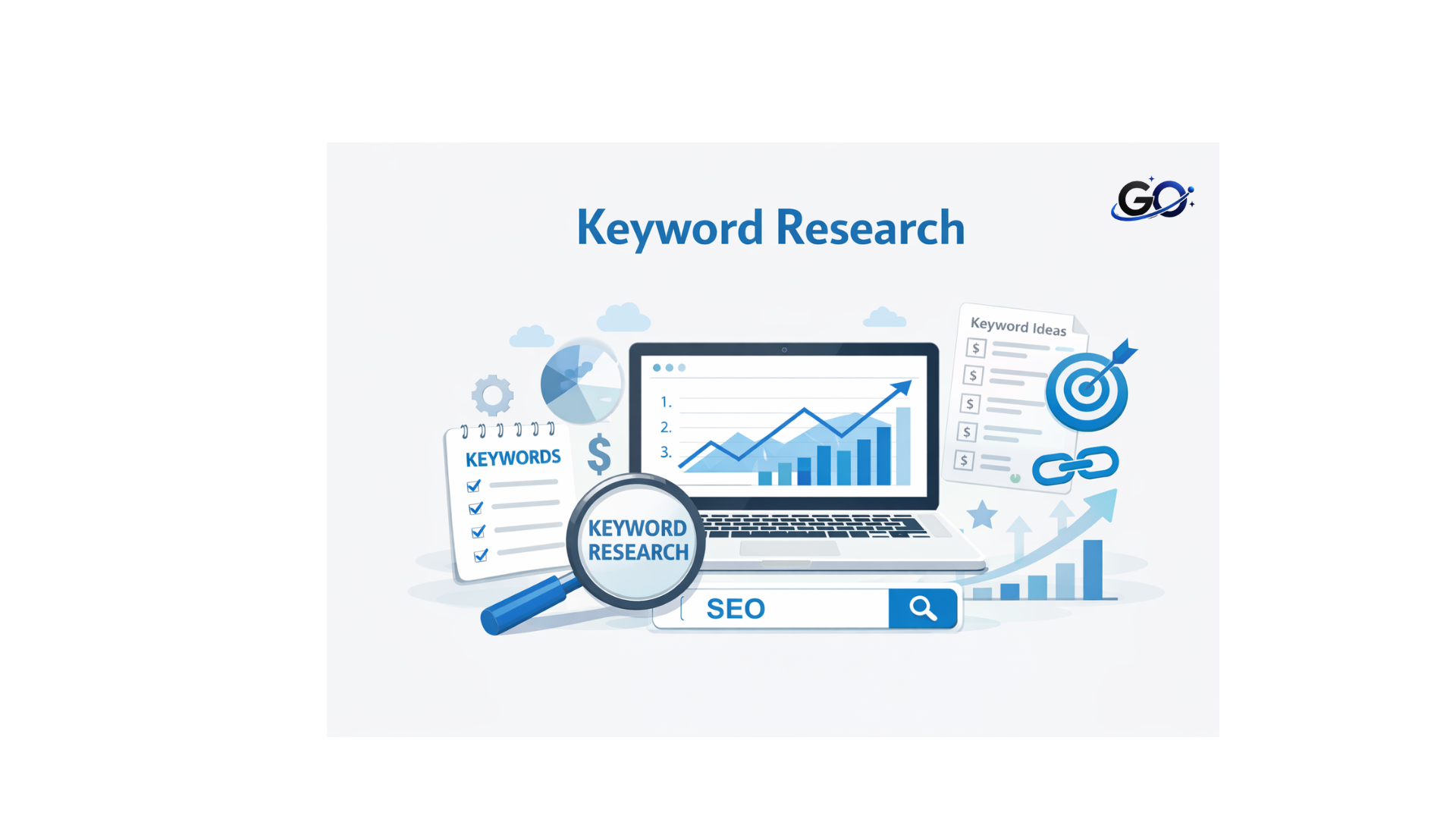
Keyword research is an essential part of any successful SEO strategy. It entails determining and examining the search phrases people use to look up information about your company or sector on search engines. You can gain important insights into the search habits of your target audience by carrying out in-depth keyword research, which enables you to tailor the material on your website to their requirements. and search intent. Increased organic traffic to your website and increased visibility on search engine results are two benefits of this method.
3. HTML & metadata optimization
Search engines are better able to comprehend your website when HTML parts are optimized.
Title tag
Both browser tabs and search results display the title tag.
- Include the target keyword
- Keep it around 60 characters
Meta description
The meta description gives a short overview of the page.
- Keep it around 160 characters
- Make it engage.
URL
URLs should be short, clear, and keyword rich.
Make sure they are succinct, informative, and full of keywords (e.g., yourdomain.com/Seo-marketing).
Alt text
Alt text describes images and helps improve accessibility and SEO.
To enhance search rankings, all text might contain target keywords in addition to describing a picture.
Headings
Headings divide content into sections and improve readability.
It can enhance SEO marketing efforts by breaking up content into manageable chunks and giving each one a suitable header.
4. Website architecture and SEO
A good website structure improves crawling, user experience, and rankings.
Site map
Search engines can locate and index sites with the aid of a sitemap.
Loading speed
Fast-loading pages improve rankings and user experience.
Mobile friendliness
Responsive websites perform better on mobile devices.
Website security
HTTPS-secured websites are trusted more by users and search engines.
Content structure and internal linking:
Internal linking improves navigation and helps search engines understand page relationships.
Off-Page SEO
Backlinks that a website receives are referred to as off-page SEO. When other websites link to pages on your website, this is known as a backlink. For SEO, the more relevant and authoritative, the better. Over time, backlinks can contribute to your site’s authority and exposure.
1. Backlink strategy & link building
Backlinks are links to your website that come from other websites.Quality backlinks from trusted websites improve rankings and authority.
Best practices:
- Focus on quality backlinks
- Use natural anchor text
- Create valuable content
- Use guest posting and digital PR
2. Domain authority & trustworthiness
Domain authority shows how trustworthy a website is. Strong authority improves search visibility and rankings.
Recommended methods:
- Publish quality content regularly
- Get mentions from trusted websites
- Encourage customer reviews
- Stay active in business directories
3. Social signals & SEO
Social media helps increase traffic, engagement, and brand awareness, which indirectly supports SEO.
Best practices:
- Share content regularly
- Use videos and infographics
- Engage with your audience
- Participating in forums and communities
4. Local SEO & citations
Businesses can appear in local search results with the aid of local SEO.
Suggested strategies:
- Optimize Google Business Profile
- Use location-based keywords
- Keep business information consistent
- Collect positive customer reviews
Businesses can improve rankings and long-term organic traffic with a strong off-page SEO strategy.
Technical SEO
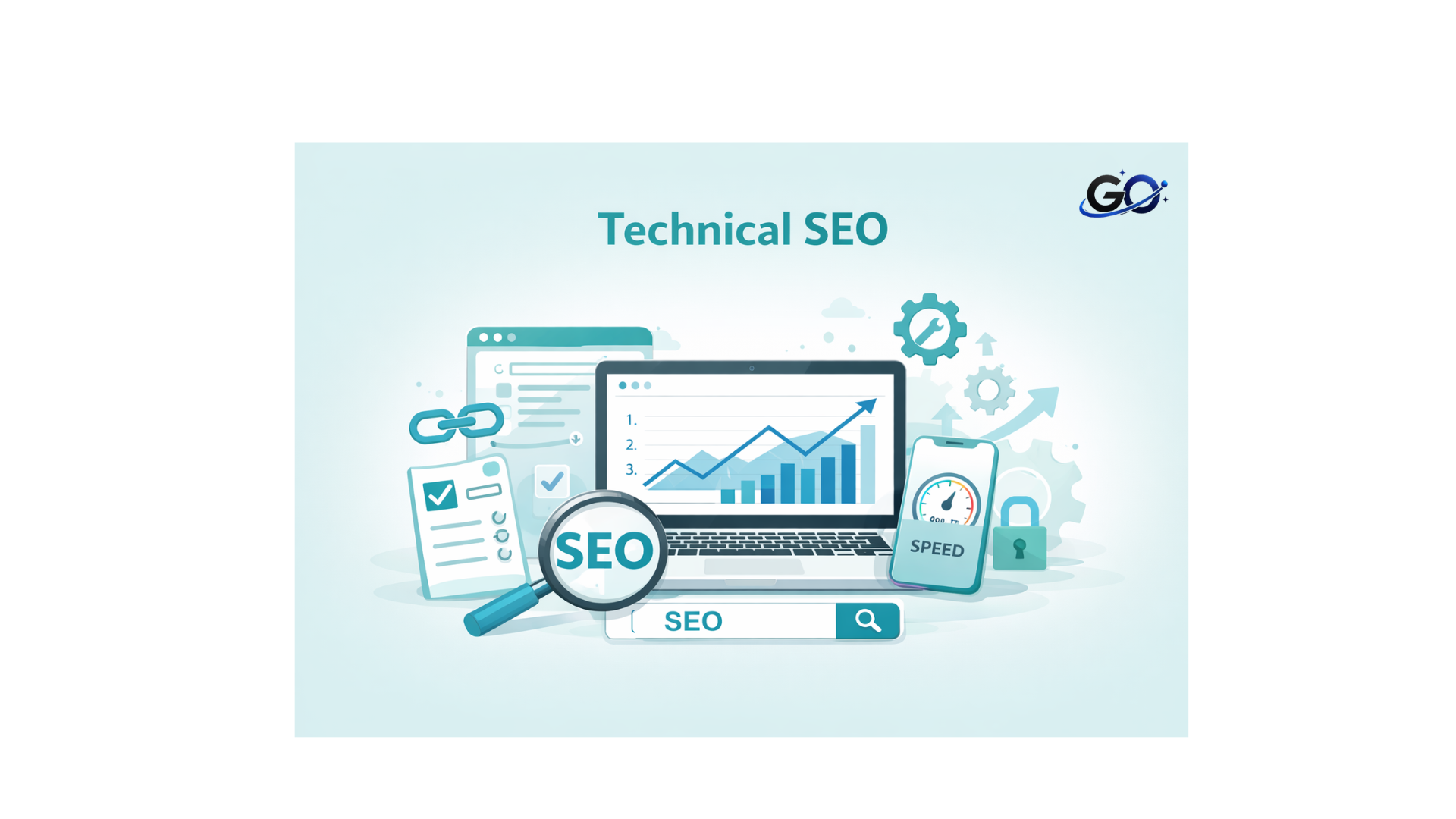
The backend components of your website, such as title tags and meta descriptions included in a webpage’s source code, the structure and navigation of the website, and how pages within a site link to one another, and the site’s loading time.
1. Fixing broken internal links
Broken links harm user experience and SEO. Regularly check and update internal links to keep navigation smooth.
Best practices:
- Fix broken links
- Update outdated URLs
2. Website speed & core web vitals
Fast websites improve rankings and user experience.
Improve speed by:
- Compressing images
- Enabling browser catching
- Minifying CSS and JavaScript
- Using a CDN
3. Mobile optimization
Google utilizes mobile-first indexing, which improves the performance of mobile-friendly websites.
Best practices:
- Use responsive design
- Optimize buttons and menus
- Improve readability on small screens
- Reduce unnecessary pop-ups
4. Indexing & crawling optimization
Search engines must properly crawl and index your pages for better rankings.
Recommended practices:
- Submit XML sitemaps
- Use canonical tags
- Optimize robots.txt
- Monitor indexing in Google Search Console
5. Website security (HTTPS & SSL)
Secure websites enhance SEO performance and foster confidence.
Security tips:
- Install SSL certificates
- Redirect HTTP to HTTPS
- Keep website security updated
A strong technical SEO strategy improves website performance, rankings, and user experience.
Image SEO
Image SEO is the process of making photographs on your website more visible in search results and enhancing your overall SEO performance.
- Resizing and compressing images to expedite site loads
- Including alt text (HTML image descriptions) helps make photos easier for screen reader users and search engines to understand
• Making sure your photos are both aesthetically pleasing and helpful to your audience
Consequently, image SEO presents a significant opportunity to boost website traffic.
Video SEO
The practice of making and refining videos for optimal search engine visibility is known as video SEO. Results from video platforms like YouTube and search engines like Google are included in this category.
- Researching YouTube keywords to find out what videos people look for
- Including keywords in the description and title of your video
- Making embedded movies easier for search engines to interpret by using schema markup
Conclusion
SEO is an essential part of digital marketing that helps websites gain visibility, attract organic traffic, and grow online. Whether you run a small blog or a large business website, SEO can help you reach more people and improve your online presence. By using the right SEO strategies, businesses can achieve long-term success in search engine rankings and digital marketing.