

Discover the common benefit of long-tail keywords, including higher rankings, targeted traffic, lower competition, and better conversions.
Keyword research is one of the most important parts of Search Engine Optimization (SEO). Without the right keywords, it is difficult for a website to attract the right audience from search engines. Among the different types of keywords, long-tail keywords are considered one of the most effective options for improving search rankings and increasing targeted traffic.
Many beginners focus only on short and highly competitive keywords because they have a large search volume. However, experienced SEO professionals understand that long-tail keywords often provide better results. They help websites attract users who are looking for specific information, products, or services.
What Are Long-Tail Keywords?
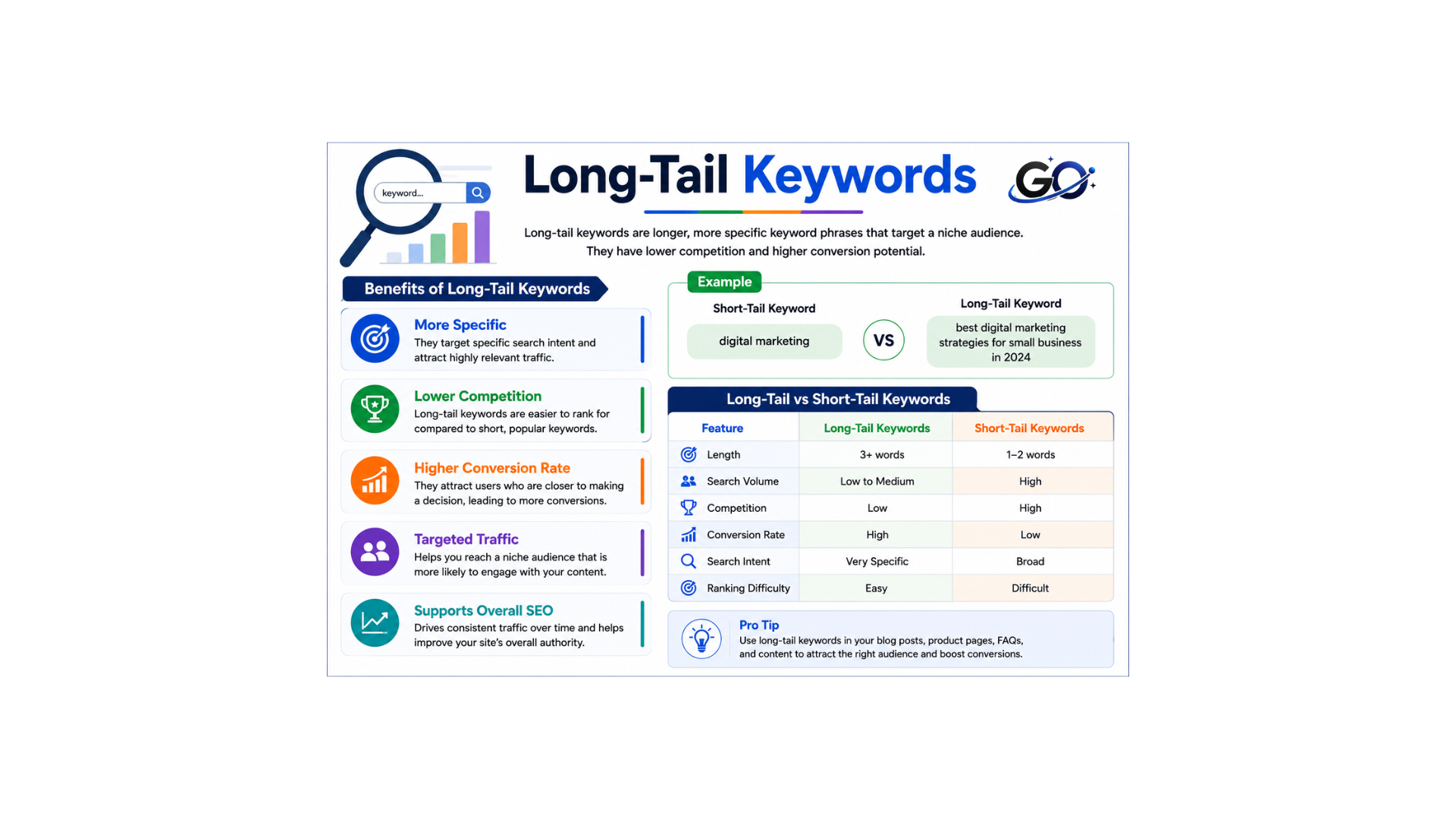
Because they may be more precisely matched with the language people use in their searches, long-tail keywords or key phrases are more particular and typically have higher conversion rates (especially today, with people using voice search). However, they receive less traffic than short-tail keywords for the same reasons.
You may progressively increase website traffic by targeting particular populations and niches using long-tail keywords.
Long-tail keywords are specific search phrases that target a clear audience and search intent. A Common Benefit of Long-Tail Keywords is that they attract targeted traffic while making it easier to rank in search engine results.
The Common Benefit of Long-Tail Keywords
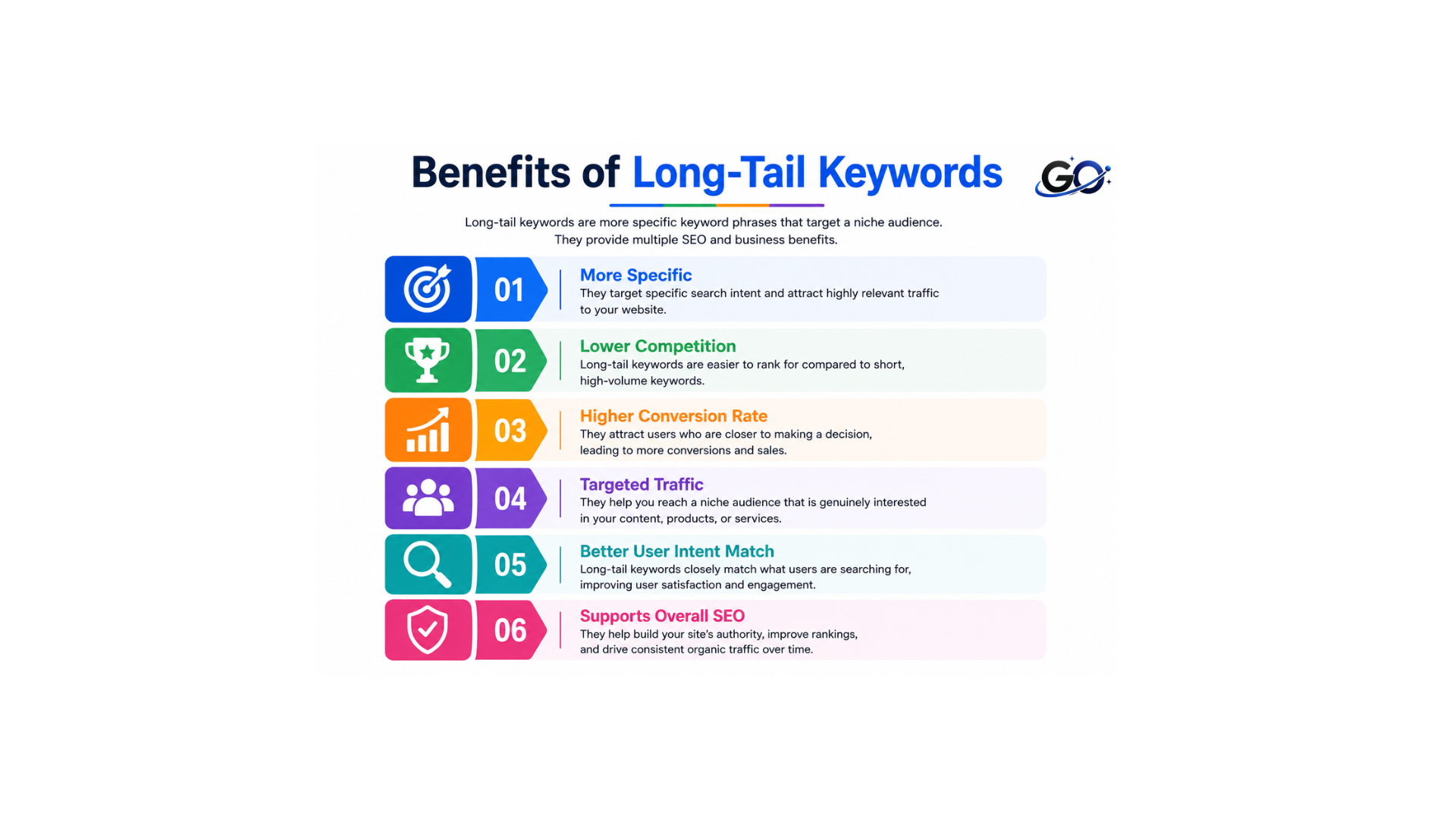
There are several common benefits associated with using long-tail keywords in your SEO strategy. Some of these benefits include:
Lower competition: Long-tail keywords are typically less competitive than short-tail keywords, making it easier to rank higher in search engine results.
Higher conversion rates: As long-tail keywords are more specific, they tend to attract users with a clear search intent, leading to higher conversion rates.
Improved user experience: By targeting long-tail keywords, you can create content that addresses the specific needs and interests of your target audience, resulting in a better user experience.
Cost-effectiveness: In paid search campaigns, long-tail keywords often have lower cost-per-click (CPC) rates due to their lower competition.
Why Long-Tail Keywords Are Important for SEO
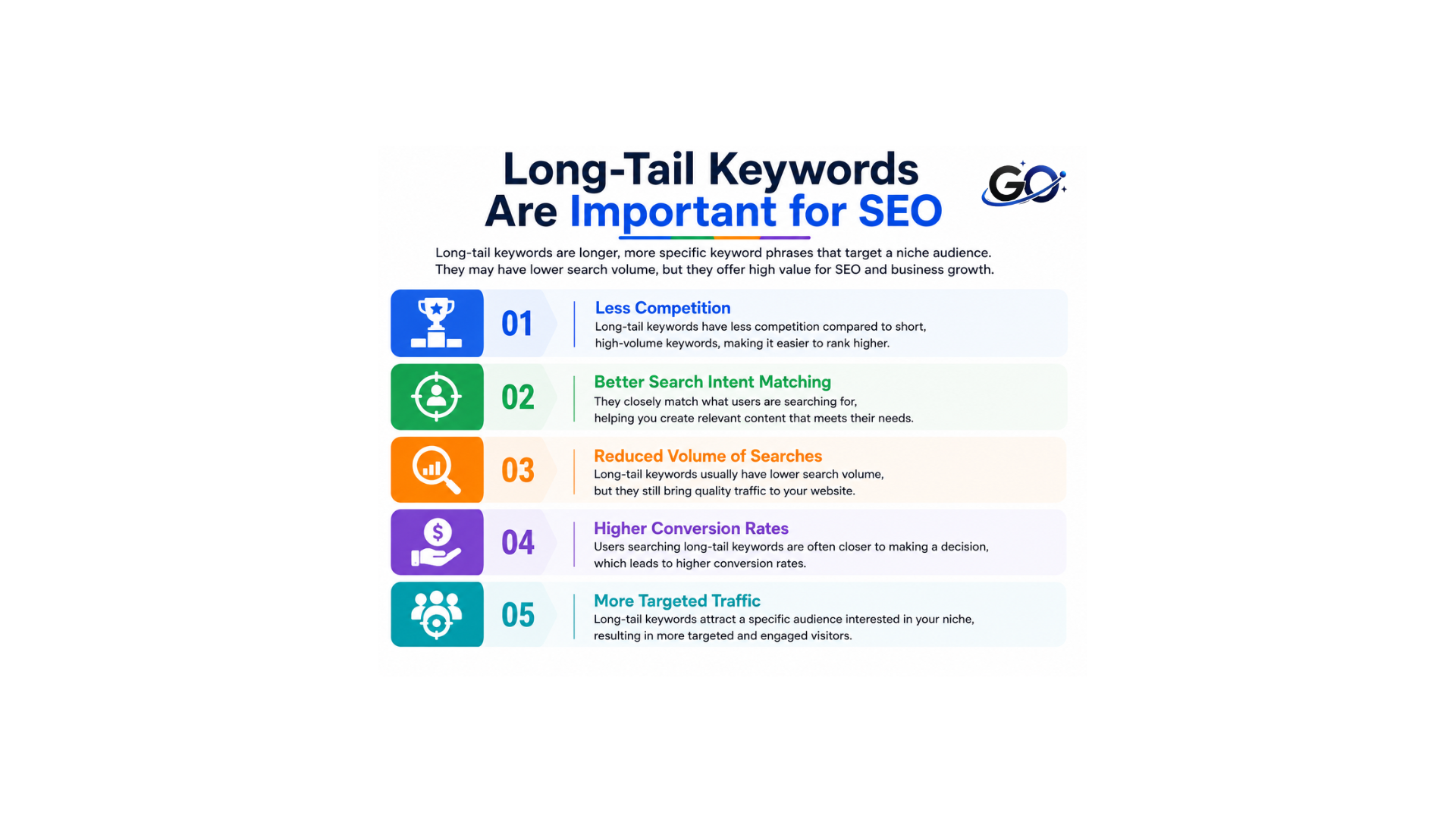
Long-tail keywords play a significant role in modern SEO strategies because they help websites target niche audiences and improve search visibility.
Less Competition
Long-tail keywords usually experience less rivalry than regular head phrases, which bring saturated competition. For example, while the term “sushi” might be very difficult to rank for, a more nuanced keyword like “sushi sandwich recipe” is easier to rank and could provide a more accessible gateway to higher search rankings.
Better Search Intent Matching
The motivation behind a user’s search query is referred to as search intent.
Long-tail keywords provide a better understanding of what users want. Since they are more specific, they allow content creators to create highly relevant content that directly answers user questions.
For example:
- “SEO” is broad.
- “How to improve SEO for a WordPress website” clearly shows what the user wants.
Google is more likely to rank your content higher when it aligns with search intent.
Reduced volume of searches
Long-tail keywords receive fewer monthly searches than short-tail keywords, which receive millions of searches. This is not a problem, though, because it reduces competition and speeds up the website’s ranking. In contrast to “wireless earbuds,” which receive hundreds of thousands of searches with fierce competition, “best wireless earbuds under $50” may only receive 1,000 searches per month, but they are simple to rank for.
Higher Conversion Rates
Given the specificity of these keywords, you’ll have a much easier time turning visitors into customers. The users searching for long tail keywords have typically moved past the research phase and are now looking for specific products, services, or information that meets their needs. You attract a more qualified audience that is ready to take action by focusing on these keywords, whether that’s making a purchase, signing up for a newsletter, or filling out a contact form.
After all, the goal of SEO isn’t just to generate traffic – it’s conversions. You can provide a measurable return on investment by focusing on long-tail variations. This is important for your own website or for the websites of your clients if you’re an SEO agency.
More Targeted Traffic
The specificity inherent in long-tail keywords means they attract a niche audience that’s often closer to making a decisive action, be it making a purchase, signing up, or any other conversion action.
A generic search for “SEO” might merely attract individuals exploring the concept, whereas a more detailed term like “SEO software for small businesses” is likely to draw in potential customers on the brink of making a purchase decision.
Make internal and external links’ anchor texts more effective.
Your long-tail keywords work well in internal links. When inserting a link to a page on another page, include them in the anchor text. Make sure the anchors are varied and sound genuine. Linking pages with wide, more popular keywords to pages ranking for long-tails is recommended (e.g., from product to category). This will raise the PageRank and increase the visibility of some pages.
Use long-tail keywords for H2/H3 headings
Long-tail keywords are a fantastic choice for your page’s section headings, as we just covered at the beginning of this post. For instance, suppose I publish a blog post titled “How to choose a bike” and I own an online bike store. It is now simple to divide this kind of guide into multiple semi-independent sections, each of which can focus on a distinct long-tail term.
Add FAQ/Q&A sections to your pages
If you have a bunch of long-tail keywords that seem relevant to a page, but you can’t work them in organically, then consider adding a FAQ section. Turn your list of keywords into questions, come up with answers, and add a section at the end of your page. It works great for product pages, landings, and all kinds of service pages (about, contacts, terms & conditions, etc.). The added benefit of FAQs is that you can enhance them with schema markup and improve your chances of being noticed by Google.
Voice Search and Long-Tail Keywords
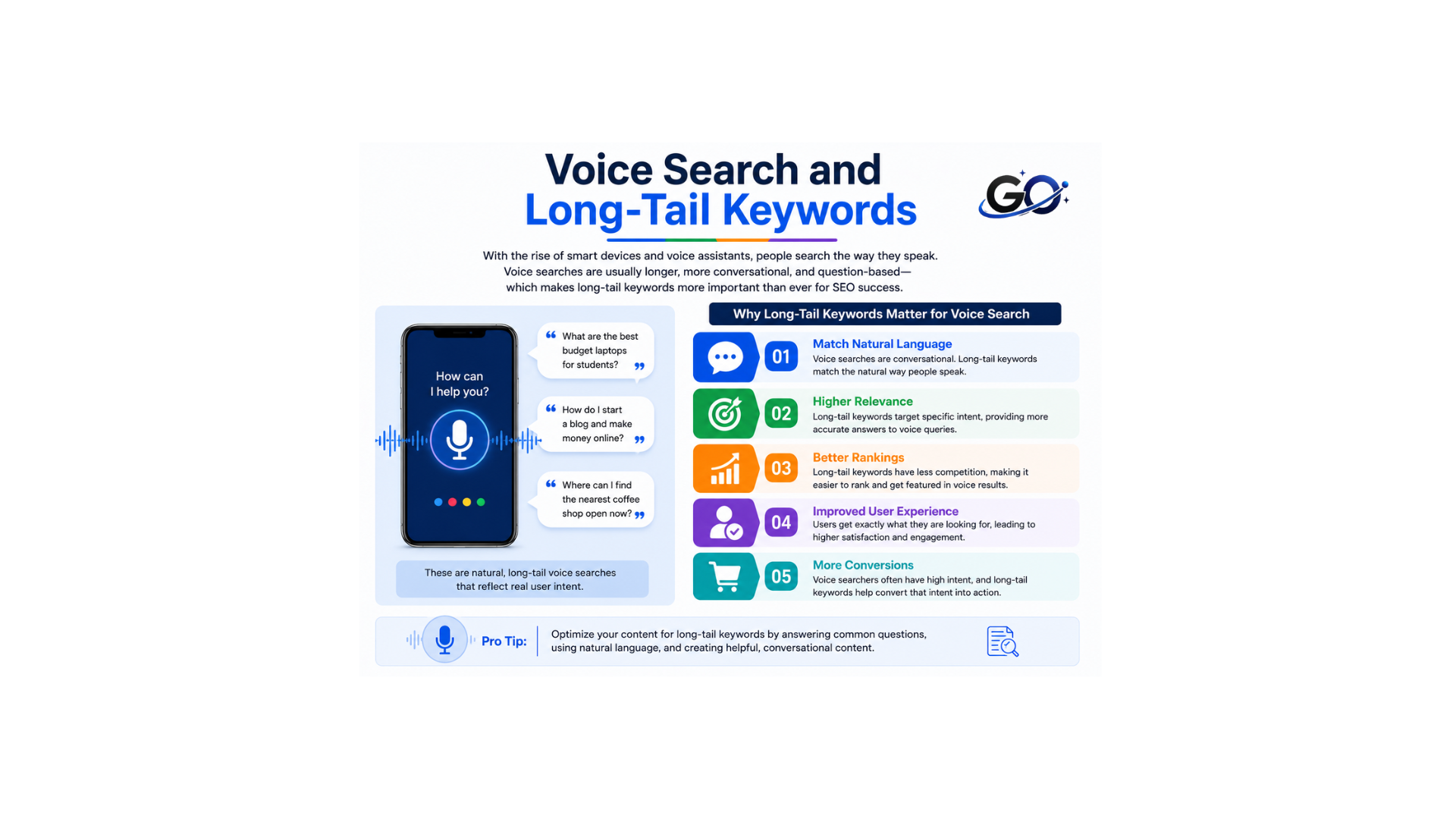
The interest in voice search is rising each year. According to statistics, over 70% of people would rather converse than type when searching the internet. Since we usually use longer phrases while searching for something vocally, the majority of those searches involve long-tail keywords.
To make your writing more enticing and pertinent, you should incorporate long-tail keywords. When a customer discovers the answer to their problem on your website, they will likely purchase the proposed solution from you. Thus, long-tail keywords help you increase your site’s conversion rate, turning more visitors into buyers.
How to Find Long-Tail Keywords
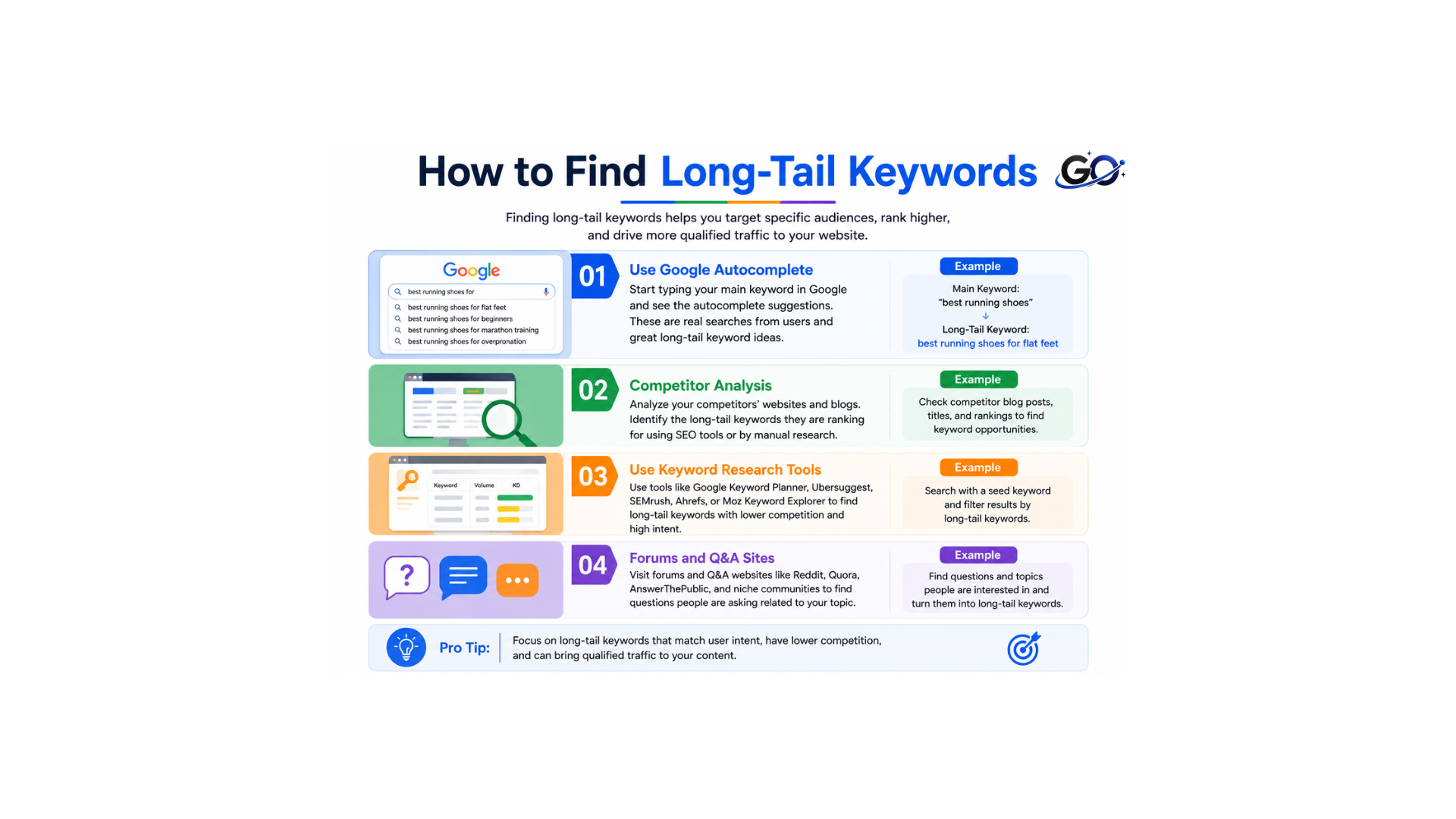
Use Google Autocomplete
Head to Google.com and start typing a search query into the search bar.Look for long-tail terms with obvious search intents by scrolling through the suggestions before you finish.
For example, if you start with “Best content marketing…,” you’ll notice several autocomplete options that would make for good long-tail keywords, such as:
- “Best content marketing examples”
- “Best content marketing agencies”
- “Best content marketing courses”
Competitor analysis
To find long-tail keywords that you may use in your own content, look at the SEO of your competitors. Look through their titles and headings to find phrases you might not have thought of. Then work these into the templates you use to structure upcoming SEO articles and see if they drive more traffic.
Use Keyword Research Tools
Popular tools include:
These tools help identify keyword volume, competition, and search trends.
Forums and Q&A sites
Forums and question-and-answer websites are your gravy train that helps you stay on the same page with your target audience.
The best thing about these resources is that the people who use them are dedicated enough to join up and engage in genuine, opinionated discussions. These resources are particularly made to contain a variety of discussions.
Most of the time, the conversations that occur on these websites deal with subjects that search engines either don’t fully cover or don’t adequately address.
Conclusion
The common benefit of long-tail keywords is their ability to attract highly targeted traffic that is more likely to convert. Because these keywords are specific, they help websites match user intent more effectively, improve search rankings, and generate better engagement. Long-tail keywords also have lower competition, making them ideal for new websites, blogs, and businesses. By focusing on user intent and creating valuable content around specific search queries, you can build sustainable organic traffic and achieve long-term SEO success.