

Meta Title and Meta Description are key SEO elements that help search engines understand your page and attract more clicks. Additionally, they can directly influence a searcher’s decision to click through to your website because Google frequently uses meta tag text to create snippets.
Any text from your webpages may be pulled by search engines since they may deem it more pertinent and display it in the snippet. However, there are certain principles that will help you get the most of your tags when it comes to promoting your website.
What Is a Meta Title?
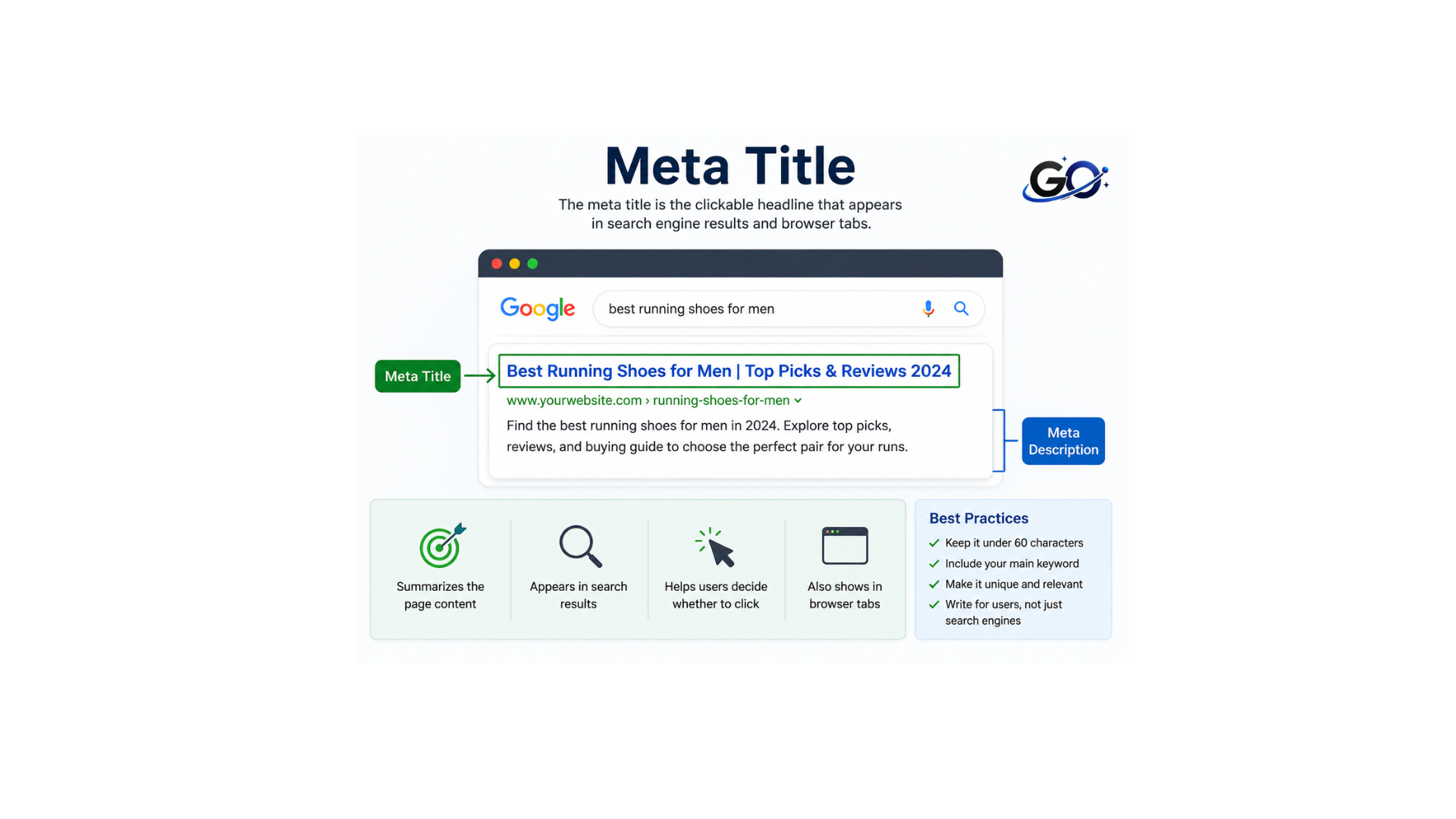
The Meta title is an HTML element that summarises the primary idea of a web site and is displayed in the SERPs as well as in browser tabs. Another common name for it is the SEO title. Title tag usually serves as a succinct summary of the page’s content and helps both readers and search engines understand what the page is about.
What Is a Meta Description?
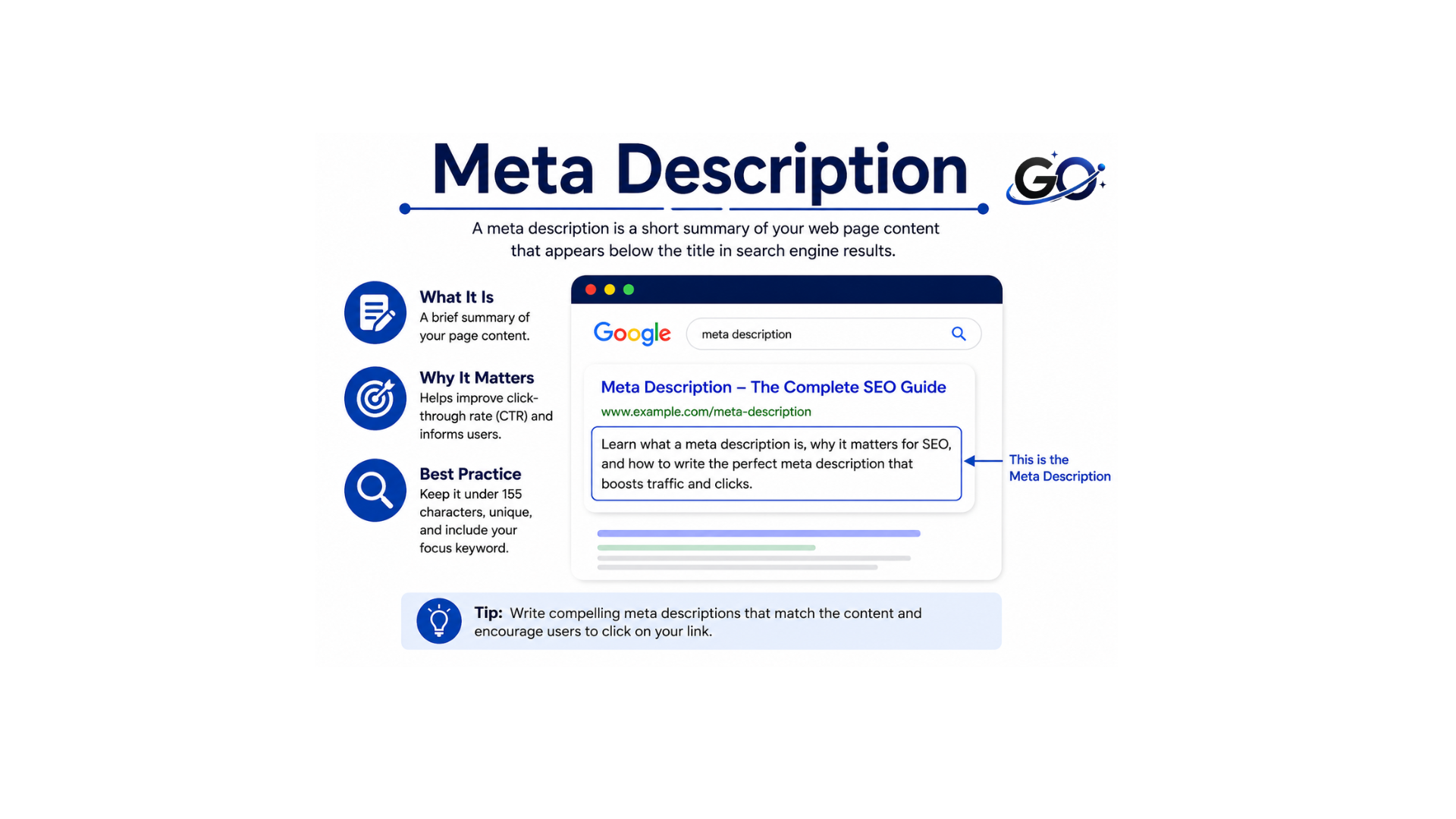
An HTML tag that appears beneath the title tag in search engine results pages (SERPs) that summarises the content of a web page is called a meta description. Its goal is to give visitors a brief synopsis of the page before they click.
While it does not directly impact search engine results, a well-written meta description can greatly influence click-through rates (CTR) by delivering a compelling preview of what users can expect from the page.
Why Title and Description Are Important for SEO
Meta titles and meta descriptions help search engines understand your page and encourage users to click on your website. Therefore, you should optimise a title tag for your main keyword since it is a crucial on-page SEO component. It can help you increase your rankings for the keyword you include in your title (and for the keyword cluster around this search phrase as well).
If you don’t yet track your website rankings regularly, make sure to set up automated position tracking with the help of the Keyword Rank Checker.
Top 5 best practices for writing the meta title
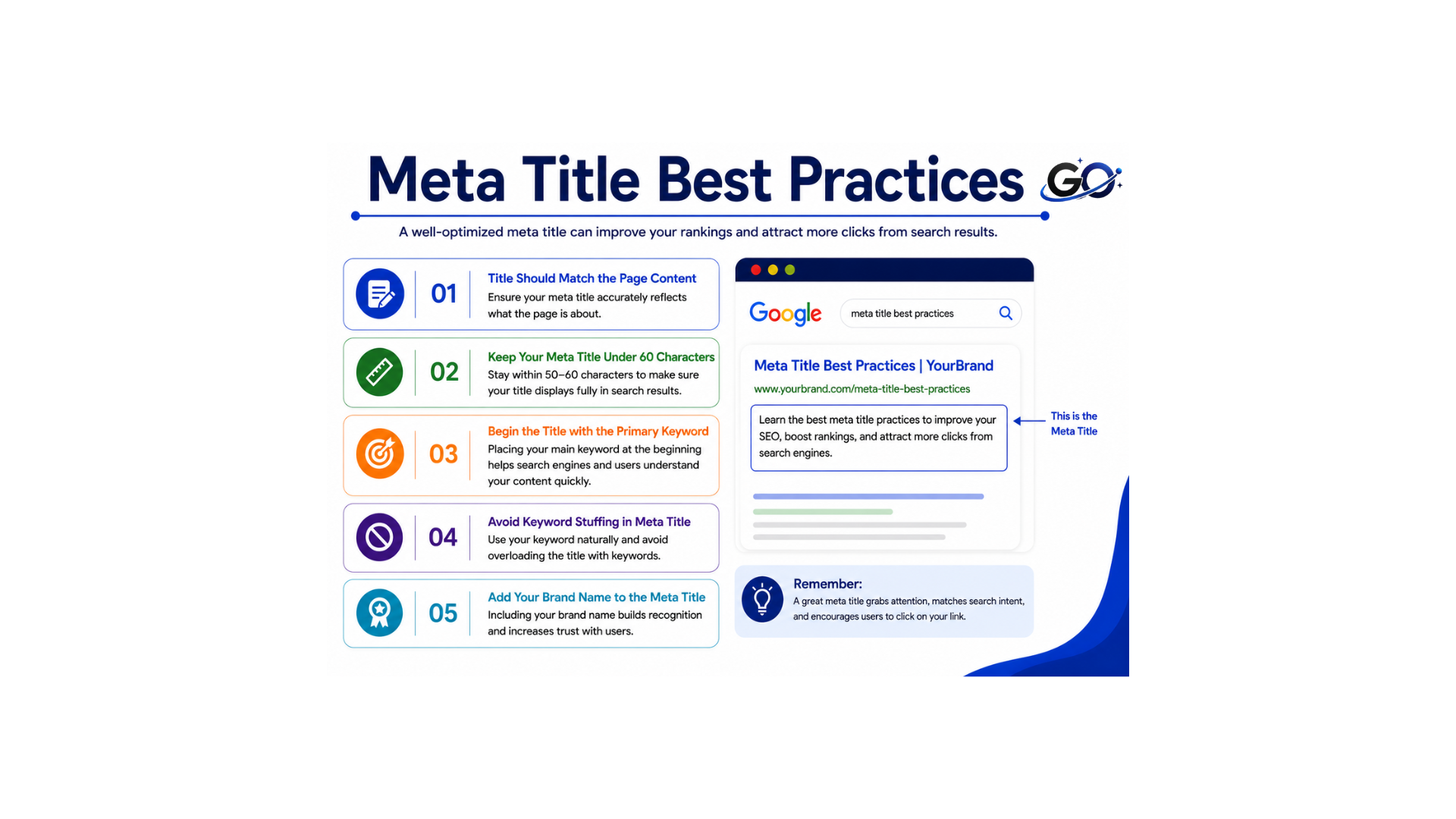
Title Should Match the Page Content
Don’t write something like “How to bake a cake at home” in the meta title of a page about a restaurant that distributes food around New York. The primary subject of the page should be succinctly and clearly stated in the title. Keep in mind that the primary goal of search engines is to deliver relevant content to users. Generally speaking, write for individuals as they are the ones who look most closely at the title to determine whether it provides a solution to their issue.
Keep Your Meta Title Under 60 Characters
Lengthy titles are reduced by search engines to roughly 50-60 characters, which adds up to 600 pixels—the width of the title in the SERP. This is why it’s advisable to take this limit into mind when constructing the title tag. Alternatively, users might encounter a title that is not fully displayed.
Moreover, be especially cautious of character constraints while optimising for mobile devices. Keep both title tags and meta descriptions relatively brief to ensure they are fully visible on smaller displays.
Begin the Title with the Primary Keyword
The closer the keyword is to the start of the meta title, the more weight it has with search engines, according to a rule that many SEOs have agreed upon, even if you still need to make sure your title is readable and click-worthy.
This guideline is likely to apply to most websites in highly competitive areas when you look at the top 10 results.
Avoid Keyword Stuffing in Meta Title
While it may be helpful to include a few descriptive terms in the
element, it will not be advantageous from an SEO standpoint to repeatedly utilise the same or very similar words and phrases. A title with keywords like “Widgets, widget tools, widget products, widget apps,” for example, doesn’t benefit the consumer. Google and potential users may perceive your material as spam if it contains this kind of keyword stuffing. <br>Additionally, you may experience keyword cannibalisation and lose ranking positions for all of your website’s pages if you target the same keywords for each one.
Add Your Brand Name to the Meta Title
element is a great place to include some details about your website. <br>However, if you use the same content for each page’s <title>, it may appear repetitive, particularly if several sites show up in search engine results. <br>Put your brand name at the start or finish of each page’s <title> element, separated by a hyphen, colon, or pipe, to keep things distinctive.
Top 5 best practices for writing the meta description
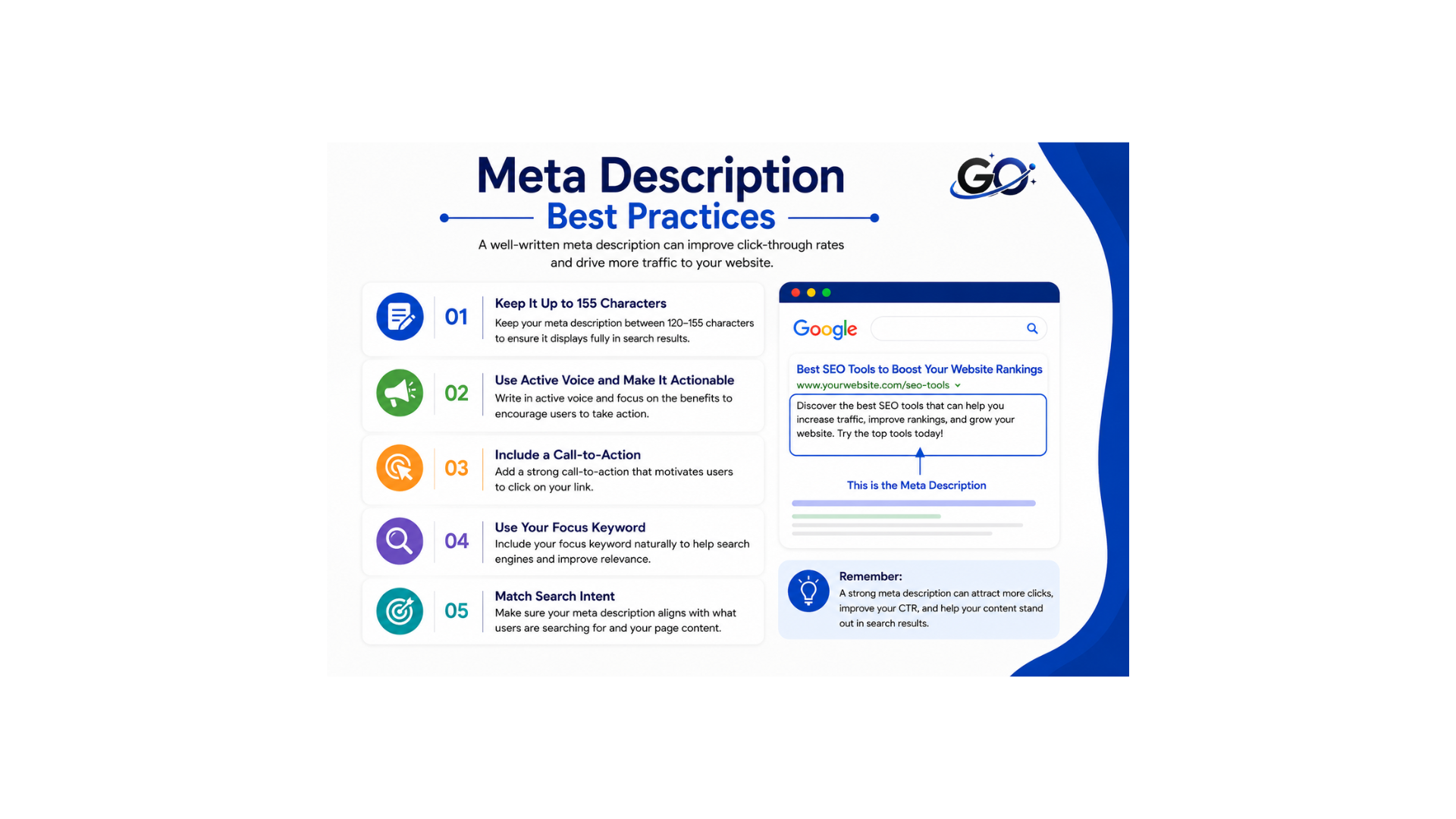
Keep It Up to 155 Characters
There is no such thing as the ideal duration; it all depends on the message you wish to get across. Keep your message brief and to the point, but give yourself enough room to express it. However, if you examine the search results on Google, you’ll typically encounter snippets of 120 to 156 characters, like in the example below. Google claims you may make your meta descriptions as lengthy as you like, but there is a limit to what we can see in the SERPs – and that’s roughly 155 characters; anything longer will get truncated.
Use Active Voice and Make It Actionable
If you regard the meta description as an invitation to visit your page, you have to think about your user and their (potential) incentive to visit your page. Make sure your description isn’t boring, challenging, or overly mysterious. It’s important for people to know what to anticipate from your page.
You should try to write a description similar to the one in the picture below. It addresses you directly, communicates with you, and is active. If you click the link, you already know what will happen!
Include a Call-to-Action
“Hello, you’re interested in our new product. Learn more! This relates to our previous discussion of the active voice, but we wanted to stress it once again. Your sales text is the meta description. In this instance, the linked page is the “product” you are attempting to sell. We also use invitations like “Learn more,” “Get it now,” and “Try for free.”
Use Your Focus Keyword
Google will be more likely to use the search term and highlight it in the search results if it appears in a portion of the meta description. This will make the link to your site even more enticing. Sometimes, Google even highlights synonyms. In the illustration below, both the Academy Awards and Oscars are highlighted. Getting your results emphasised like that helps them stand out much more.
Match Search Intent
When users search for Meta Title and Description, they want to know what these SEO components are, why they are crucial, and how to optimise them. They are searching for best practices to design interesting meta titles and descriptions that boost search visibility, increase click-through rates and enhance overall SEO performance. This information helps website owners construct user-friendly and search engine–optimized web pages.
Common Mistakes to Avoid
Many website owners make avoidable SEO mistakes.
Some common ones include:
- Duplicate titles.
- Duplicate meta descriptions.
- Missing title tags.
- Missing descriptions.
- Keyword stuffing.
- Writing titles that are too long.
- Writing descriptions that are too short.
- Misleading users.
- Using generic titles.
- Ignoring search intent.
Avoiding these mistakes helps improve both SEO and user experience.
Tools for Optimizing Meta Titles and Meta Descriptions
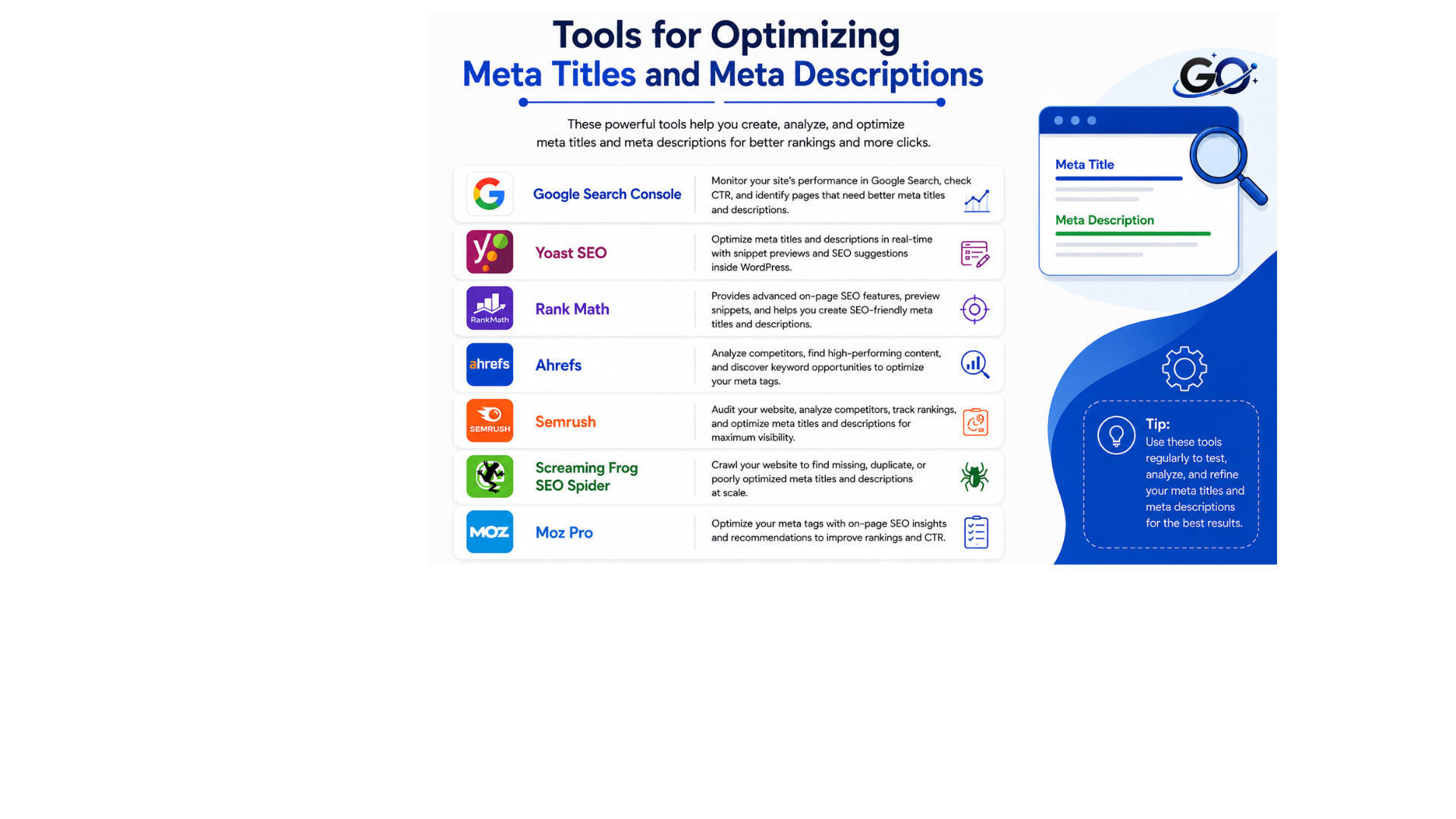
Several SEO tools help create and analyze meta title
Popular options include:
These tools can identify missing tags, duplicate titles, and optimization opportunities.
Do Meta Titles and Meta Descriptions Directly Affect Rankings?
Meta titles and meta descriptions help search engines understand your page, but they do not directly guarantee higher rankings.A clear meta title helps search engines understand your page, while a compelling meta description encourages users to click your website from search results.
Meta descriptions, however, are not a direct ranking factor. Their main responsibility is to increase click-through rates by enticing people to visit your page.
Together, these elements contribute to better SEO performance and a stronger user experience.
Conclusion
Following these Meta Title and Meta Description best practices can improve your SEO, increase search visibility, and boost your click-through rate.A strong meta title helps search engines understand your page while capturing users’ attention in search results. A compelling meta description provides a concise summary that encourages people to click.
By writing unique, keyword-rich, and user-focused meta tags, you can improve click-through rates, enhance the user experience, and strengthen your overall SEO strategy. Whether you manage a personal blog, business website, or eCommerce store, investing time in optimizing your meta titles and meta descriptions is a simple yet highly effective way to support long-term search engine success.