
You may provide content that aligns with what users are genuinely searching for by using a robust Search Intent Content Strategy. Instead of focusing only on keywords, it focuses on understanding the purpose behind a search query and delivering the most relevant information.
There are four main categories of search intent: transactional, commercial, navigational, informative, and mixed. You may produce content that matches user expectations, enhances rankings, and raises conversion rates by determining the right intent.
What Is Search Intent?
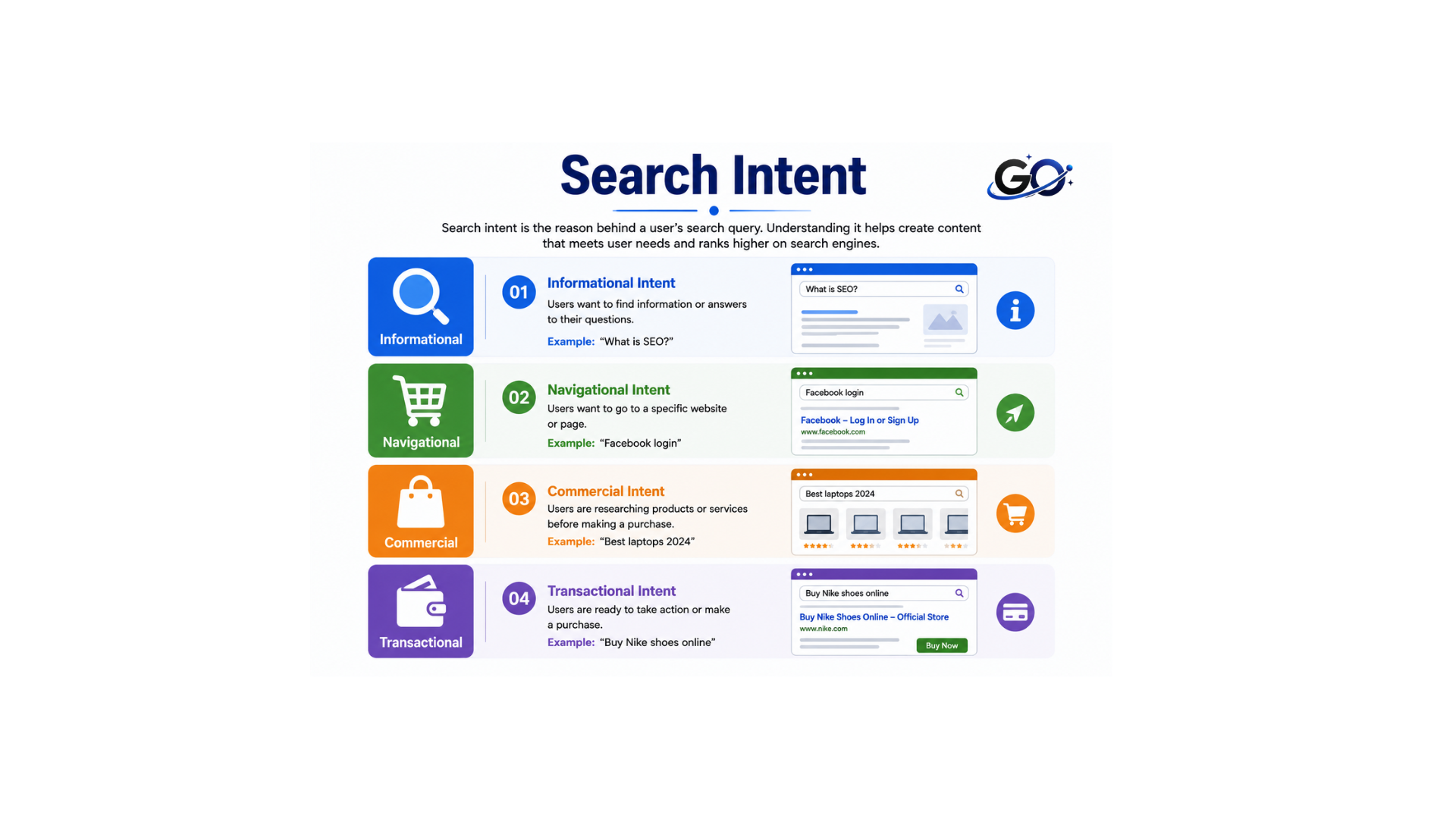
When a searcher enters a query into a search engine, their primary objective is known as search intent, or “user intent.” Informational, commercial, navigational, transactional, and mixed are common categories of search intent, also known as keyword intent.For example, your search purpose would be commercial if you mentioned that you plan to purchase a new laptop.
Sometimes, the intent of a search isn’t straightforward and needs more research and tools to understand. The closer the content you create matches the search intent, the better its chances of appearing in search results.
Why Search Intent is Important?
Knowing why consumers search is just as crucial as knowing what they search for if you want your content to rank effectively.
When you know the intent behind a keyword , you can create content that actually gives users what they’re looking for. You’re not just guessing anymore; you’re meeting their needs directly. This makes your content more useful, which is exactly what search engines like Google want.
Consider a person looking for cake baking instructions. TIf you show them a product page that sells cake pans, they will leave right away because it’s not what they expected. However, people will remain, read, and perhaps even bookmark your page if you provide a detailed recipe.
Search engines monitor how users engage with your website. If visitors stay longer, click around, or don’t bounce back to the results, it’s a sign that your page answered their question. Over time, it helps improve your rankings.
Types of Search Intent
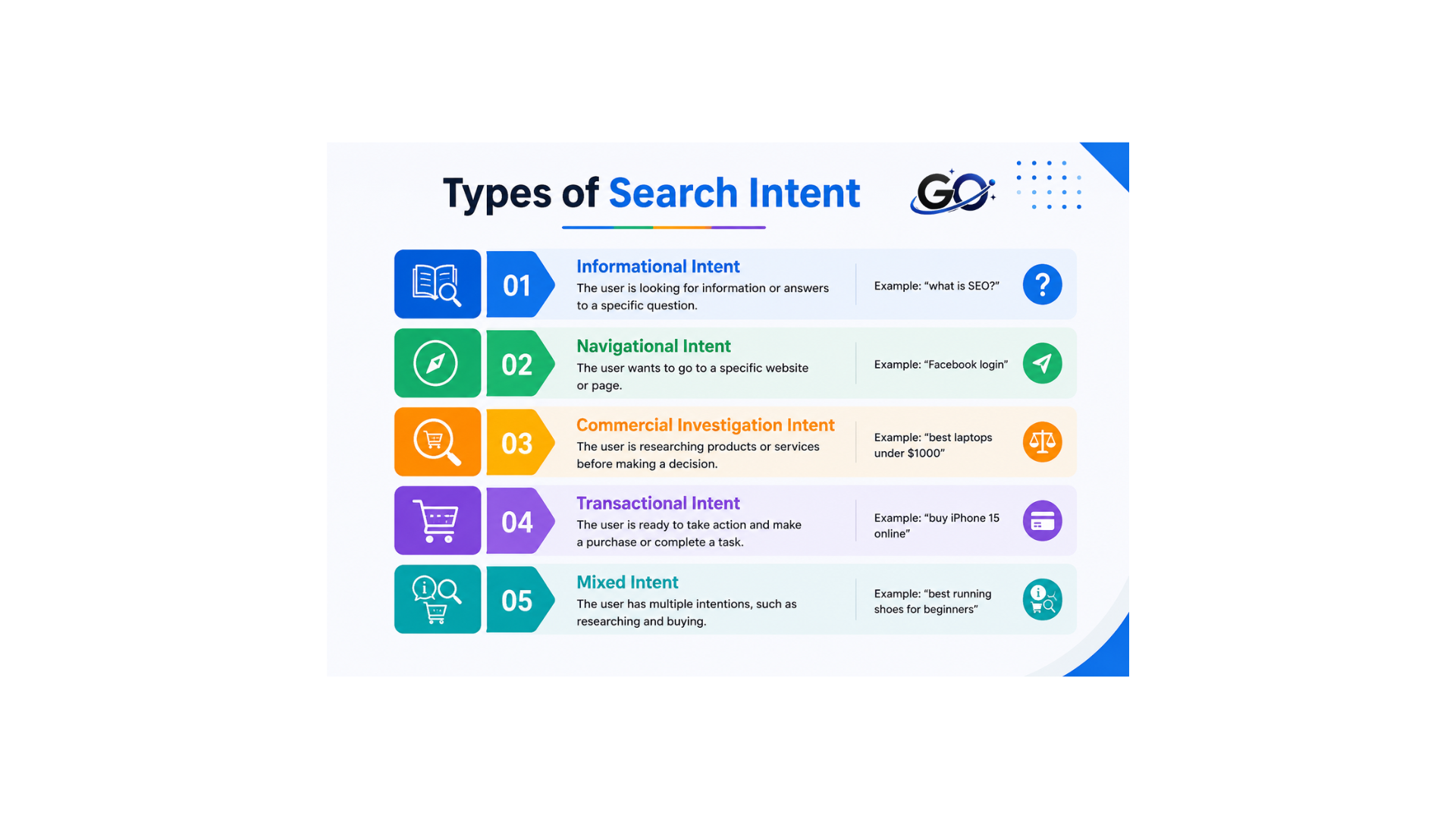
There are five primary types of search intent.
1. Informational Intent
The goal behind informational searches is to learn something new. These search queries could be in the form of a specific question (e.g., how long does it take to become a doctor) or broad investigations that require research (e.g., the role of mass media in childhood socialization).
Google usually displays answers to specific questions with the help of featured snippets. These highlighted excerpts of text sit at the top of the SERP so users can save time browsing the Internet.
Example Strategy
- Keyword Research Process
- How to set up a new computer
- What is SEO
2. Navigational Intent
Navigational purpose users are searching for a particular website or domain. Usually, these searches are used instead of entering the complete URL into Google’s search field. Here are some more examples of queries with navigational user intent.
Example Strategy
- Canva login
- New York Times
- Google search console
3. Commercial Investigation Intent
Commercial intent is usually perceived as something lying in the middle of informational and transactional intent queries.In other words, even when the user has already made up their mind to purchase anything, they still need to carry out a business analysis before deciding.
Example Strategy
- Best SEO tools for beginners
- Gaming pc for beginners
- Best WordPress SEO plugin
4. Transactional Intent
Whether it be a product, service, or subscription, people with transactional search intent are looking for the right place to buy something.For this reason, terms like “buy,” “subscribe,” “price,” “cheap,” “discount,” “sale,” “order,” and so forth are frequently seen in transactional searches.
Example Strategy
- Hire SEO consultant
- Tickets to the Journey concert
- Buy Apple iPhone
5. Mixed intent
Not all searches fall neatly into a single intent category. Mixed intent searches are those that display a combination of two or more intents. They are prevalent because actual users don’t always adhere to a precise order. Someone may want comparisons but also anticipate seeing product sites, or they may want information yet remain open to purchasing.
When a keyword is general, ambiguous, or frequently used by people at various phases of their journey, mixed intent frequently manifests.
Examples Strategy
- best laptops for students under 1000
- running shoes for beginners
- best phones 2025
Search Intent Content Strategy Framework
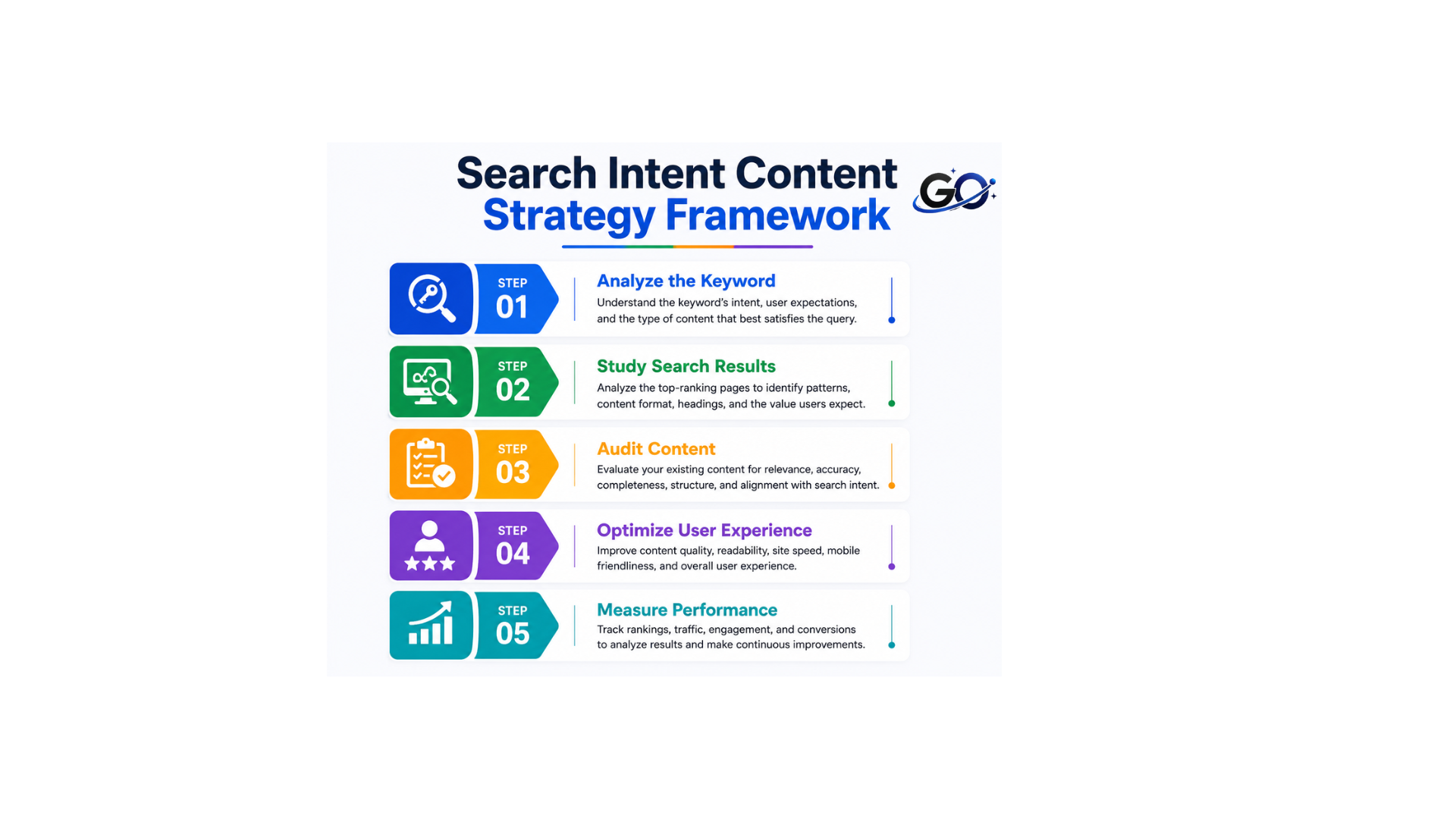
A successful strategy starts with identifying intent and creating the right type of content.
Step 1: Analyze the Keyword
Look at the keyword carefully.
For example:
Keyword: “Email marketing”
Because visitors are interested in learning more about the subject, this keyword may have informational intent.
Keyword: “Best email marketing software”
This keyword indicates commercial investigation intent.
Step 2: Study Search Results
Examining the SERPs is the first and most crucial step in determining the purpose of a query. You can learn what search engines have identified as the search intent by examining the kinds of search engine results that appear. This aids in matching your content to search engine and user expectations.
When you search for “blender” on Google, two different kinds of results appear. The user may be searching for open-source 3D computer graphics software or kitchen equipment.
Step 3:Audit content
Review query logs, look at the SERPs, and analyze your on-page content to spot mismatches. To identify areas where purpose and experience are out of sync, connect queries, landing pages, and on-page signals using your SEO platform (Siteimprove, Semrush, Ahrefs).
If a page is ranking for “pricing” but doesn’t show a clear offer, or if a blog post is pulling transactional queries but has no CTA, that’s wasted potential.
Step 4: Optimize User Experience
How does Google know if a page is a good fit for Search Intent?
They look at how people interact with the SERPs.
They can tell if people aren’t loving a specific search result. And if they note that a search result ISN’T a good fit for a keyword, they’re going to downrank it.Use Subheadings: Google searchers want their answers FAST. Which means they aren’t going to read every single word of your page. Subheadings let users skim your content for the main points.
Step 5: Measure Performance
To measure the effectiveness of your Search Intent Content Strategy , regularly track important metrics such as organic traffic, click-through rate (CTR), bounce rate, conversion rate, and time on page. These metrics provide valuable insights into how users interact with your content and website. By analyzing this data, you can identify strengths, uncover areas that need improvement, and make informed decisions to optimize your content strategy and achieve better search engine rankings.
Common Search Intent Mistakes
Targeting the Wrong Intent
Many websites create informational content for transactional keywords. This mismatch often leads to poor rankings.
Ignoring SERP Analysis
Always analyze search results before creating content.
Overusing Keywords
Keyword stuffing reduces content quality and user experience.
Focusing Only on Traffic
Traffic is important, but conversions matter more. Create content that supports business goals.
Optimizing Content for Search Intent
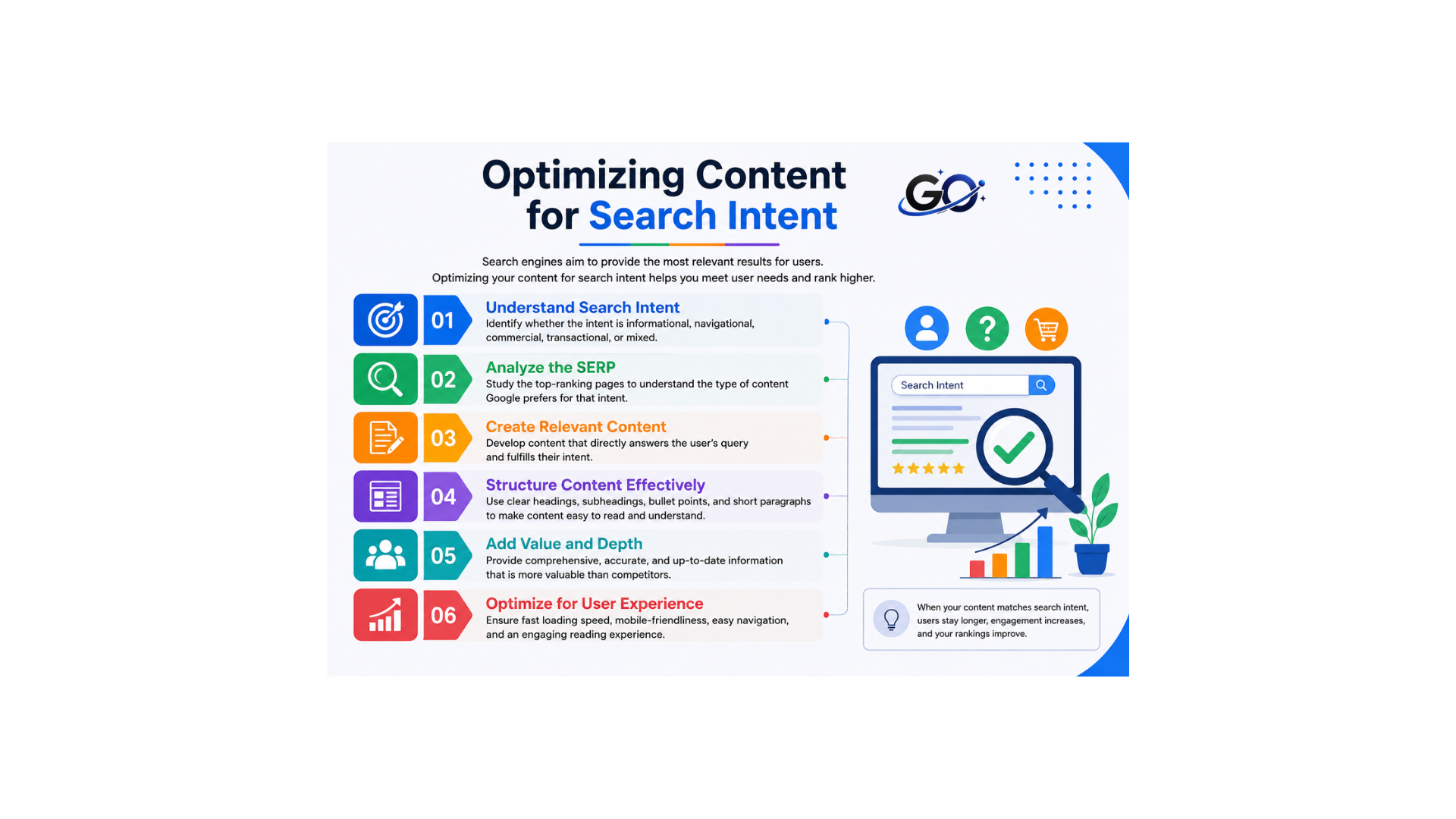
Content Optimisation for Search Intent
You can start producing or optimising your content to your major keyword and its search intent after you have fact-checked it.
Once more, search engines take into account a keyword’s context and are far more intuitive when it comes to comprehending a keyword or topic.
This entails maximising both on-page and off-page elements like:
- Headings: H1s and H2s. Sub-headings, or H2s, provide a chance to discuss important and pertinent subjects that your content should cover in order to best satisfy the expectations of your target audience.
- Links: Your content is connected to a variety of internal and external links to pertinent pages that you want search engines to comprehend. Additionally, internal links help users navigate your website by directing them to call-to-actions or other pertinent topics.
- Anchor Text: Think of anchor text as street signs that tell you where you’re going and how to get there. Search engines use anchor text to determine the connections between different pieces of content and the reasons behind their references and associations. This gives search engines a comprehensive grasp of your subject.
- Images: Using images, such as the example for the keyword “race” used earlier in the article, not only produces interesting content for the reader but also provides opportunities to give search engines additional clues to better understand your content. For example, putting an image of a marathon runner on your page about “race day” helps search engines understand that the content is about marathon races rather than “ethnicity.”
- picture Alt Text: Lastly, picture alt text helps search engines properly index your page for Google Image searches and provides opportunities to incorporate descriptive and keyword-rich information about the material on your page.
Future of Search Intent and SEO
Search engines are becoming increasingly sophisticated. Artificial intelligence and machine learning help Google understand user behavior more accurately than ever before.
Future SEO success will depend less on keyword repetition and more on content relevance, user experience, and intent satisfaction. Websites that consistently provide value and answer user needs will continue to perform well.
As search technology evolves, understanding search intent will remain one of the most important factors in content strategy and SEO.
Conclusion
Search intent is the foundation of effective content marketing and SEO. Understanding why users search allows you to create content that matches their needs, improves rankings, increases engagement, and drives conversions.
Whether users want information, product comparisons, specific websites, or purchasing options, your content should align with their goals. By identifying intent, analyzing search results, choosing the right content format, and optimizing user experience, you can build a powerful search intent content strategy that delivers long-term results.
Businesses and bloggers that focus on satisfying user intent will have a significant advantage in search engine rankings and online growth.
Ye article SEO-friendly hai aur Blogger ya WordPress par publish karne ke liye suitable hai. Iske liye main SEO title, meta description, FAQ schema aur image prompts bhi bana sakta hoon.