

Learn what bounce rate is in SEO, why it matters, common causes, and effective ways to reduce it for better user engagement.
I’m discussing Google Analytics’ bounce rate in this post. The SEO community has debated the impact of bounce rate on search rankings for years. Google has never confirmed that it uses bounce rate from Google Analytics as a direct ranking factor. Many SEO experts believe Google cannot rely solely on Analytics data because website owners may not configure it correctly, which can lead to inaccurate results. In addition, website owners can manipulate bounce rate metrics, making them an unreliable signal for ranking purposes.
Understanding bounce rate helps website owners, marketers, and SEO professionals make better content and optimization decisions. Bounce rate measures the percentage of visitors who land on a webpage and leave without visiting another page on the same website. This metric provides valuable insights into user behavior and helps identify opportunities to improve content quality, website performance, and overall user experience.Whether you run a blog, an eCommerce store, or a business website, monitoring bounce rate can help you better understand your audience and optimize your website for higher engagement.
What Is a Bounce Rate?
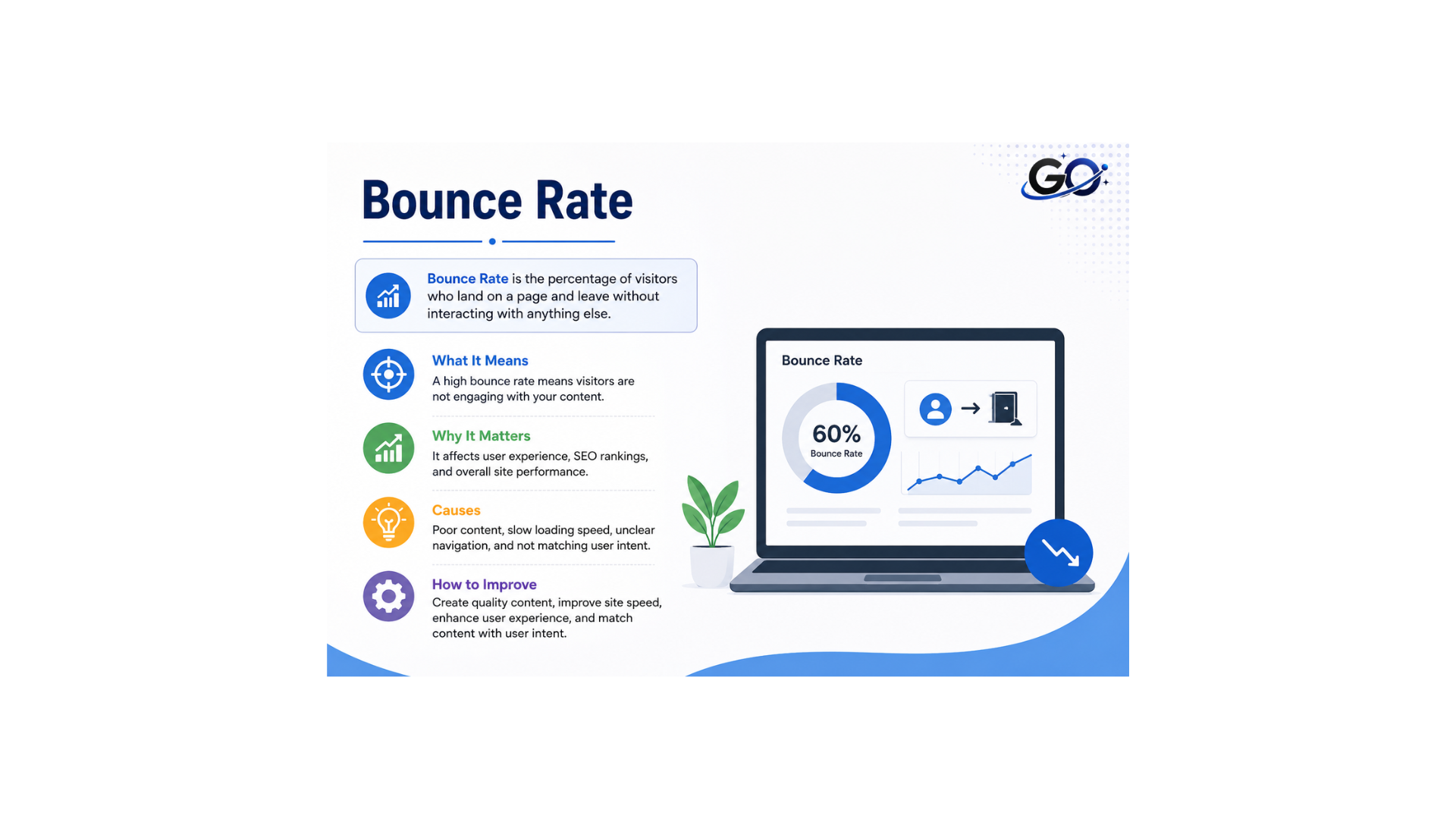
Bounce rate is the percentage of website visitors who leave a webpage after viewing only one page without interacting further with the site. In simple terms, a user visits your website, reads or views a page, and exits without clicking on any internal links, filling out a form, or navigating to another page.
Google Analytics counts a bounce when a visitor lands on a page and leaves the website without taking any further action. In this type of session, the visitor views only one page and does not click another page, submit a form, or trigger any additional interaction that sends data to the Analytics server. As a result, Analytics records the visit as a bounced session.
By dividing the total number of single-page sessions by the total number of page visits, Google’s analytics system determines your bounce rate. Click the “Overview” option in the Analytics audience menu to display this statistic. You’ll get the bounce rate from this.
How Is Bounce Rate Calculated?
To calculate bounce rate, divide the number of unengaged sessions by the total number of sessions and multiply the result by 100. For example, if 1,000 visitors land on your website in a month and 400 of them leave without interacting with any content or visiting another page, your website will have a bounce rate of 40%. This metric helps website owners understand how effectively their pages engage visitors.
Bounce Rate = (Single-Page Sessions ÷ Total Sessions) × 100
Analytics platforms such as Google Analytics automatically calculate this metric and provide detailed reports for website owners.
Why Is Bounce Rate Important?
Bounce rate is an important metric for estimating user engagement per page. It lets you know which sites visitors find more engaging and which ones could use some work so you can make the necessary changes.
However, it’s important not to overestimate the bounce rate, as a low bounce rate doesn’t guarantee leads or conversions. If a page on your site has a low bounce rate but doesn’t convert visitors into customers (or move them further down your marketing funnel), it isn’t helpful to your business.
Does Bounce Rate Affect SEO?
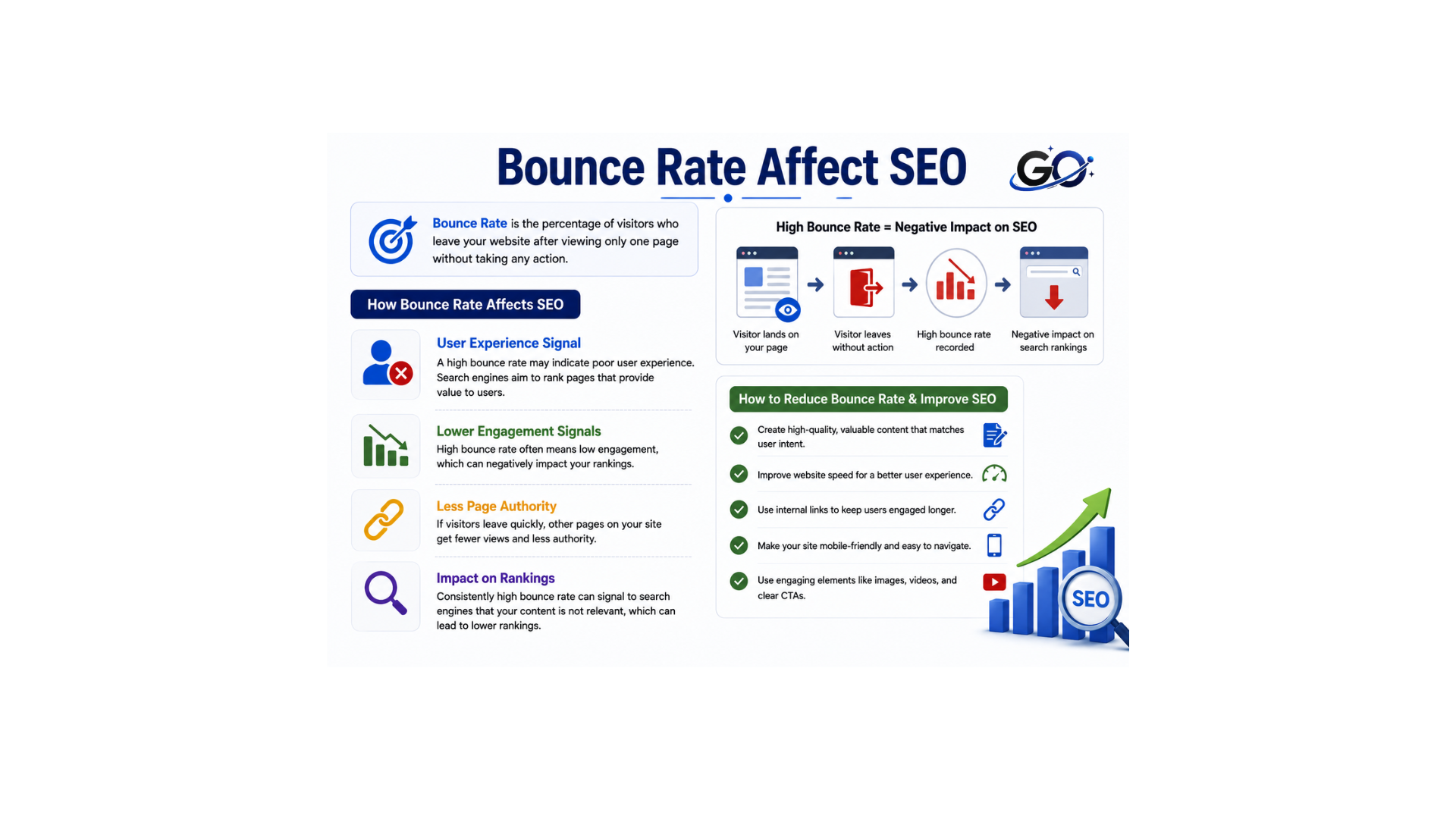
Although Google has never officially confirmed bounce rate as a direct ranking factor, evidence from Google’s antitrust trial and leaked internal documents suggests that user engagement signals may influence how search engines rank and display search results.
If visitors consistently leave a webpage due to poor content, slow loading times, or a confusing user experience, search engines may interpret these signals as indicators of low-quality content. Therefore, while bounce rate itself may not directly impact rankings, the factors contributing to a high bounce rate can affect overall SEO performance.
What Is a Good Bounce Rate?
There is no single bounce rate that is considered ideal for every website. The acceptable bounce rate varies depending on the type of website and the purpose of the page.
Typical Bounce Rate Benchmarks
- Blogs: 60%–80%
- News Websites: 65%–90%
- Landing Pages: 70%–90%
- eCommerce Websites: 20%–45%
- Service Websites: 30%–55%
- Educational Websites: 40%–60%
These figures are only general guidelines. A blog article that answers a user’s question may naturally have a higher bounce rate than an online store where users are expected to browse multiple products.
Common Causes of a High Bounce Rate
Understanding why visitors leave your website is essential for improving engagement and SEO performance.
Slow Page Loading Speed
We’ve all been to websites that are agonizingly slow to load. It’s enough to make anyone hit the back button and look for a faster solution. And that’s precisely what most users do—they don’t stick around to suffer through slow loading times and bad user experience.
Poor Content Quality
Visitors expect useful, accurate, and well-structured content. If content is thin, outdated, or poorly written, users may leave immediately.
High-quality content should provide clear answers, valuable insights, and a positive reading experience. Using headings, examples, and simple language can improve readability and engagement.
Misleading Titles and Meta Descriptions
If a title promises something that the content does not deliver, visitors are likely to leave quickly. This mismatch between expectations and reality often increases bounce rates.
Creating honest and accurate titles helps attract the right audience and improves user satisfaction.
Poor Website Design
A cluttered layout, confusing navigation, and excessive advertisements can frustrate visitors. If users cannot easily find what they need, they may leave without exploring further.
A clean, professional, and user-friendly design helps encourage engagement and keeps visitors on the website longer.
Lack of Mobile Optimization
With more and more people using mobile devices to access websites, it’s important that your site is optimized for these platforms. Visitors will probably quit your website in search of a better user experience if it isn’t mobile-friendly.
Bounce Rate vs Exit Rate
Your exit rate and bounce rates are not the same thing. The percentage of visitors who leave your website from a certain page is known as the exit rate, and a high exit rate isn’t always a reason for concern.
For instance, a “thank you” page displayed after a customer makes a purchase would be expected to have a high exit rate.A high bounce rate would indicate that visitors were somehow arriving at that page without visiting any other pages on your website or making any purchases.
How to Reduce Bounce Rate
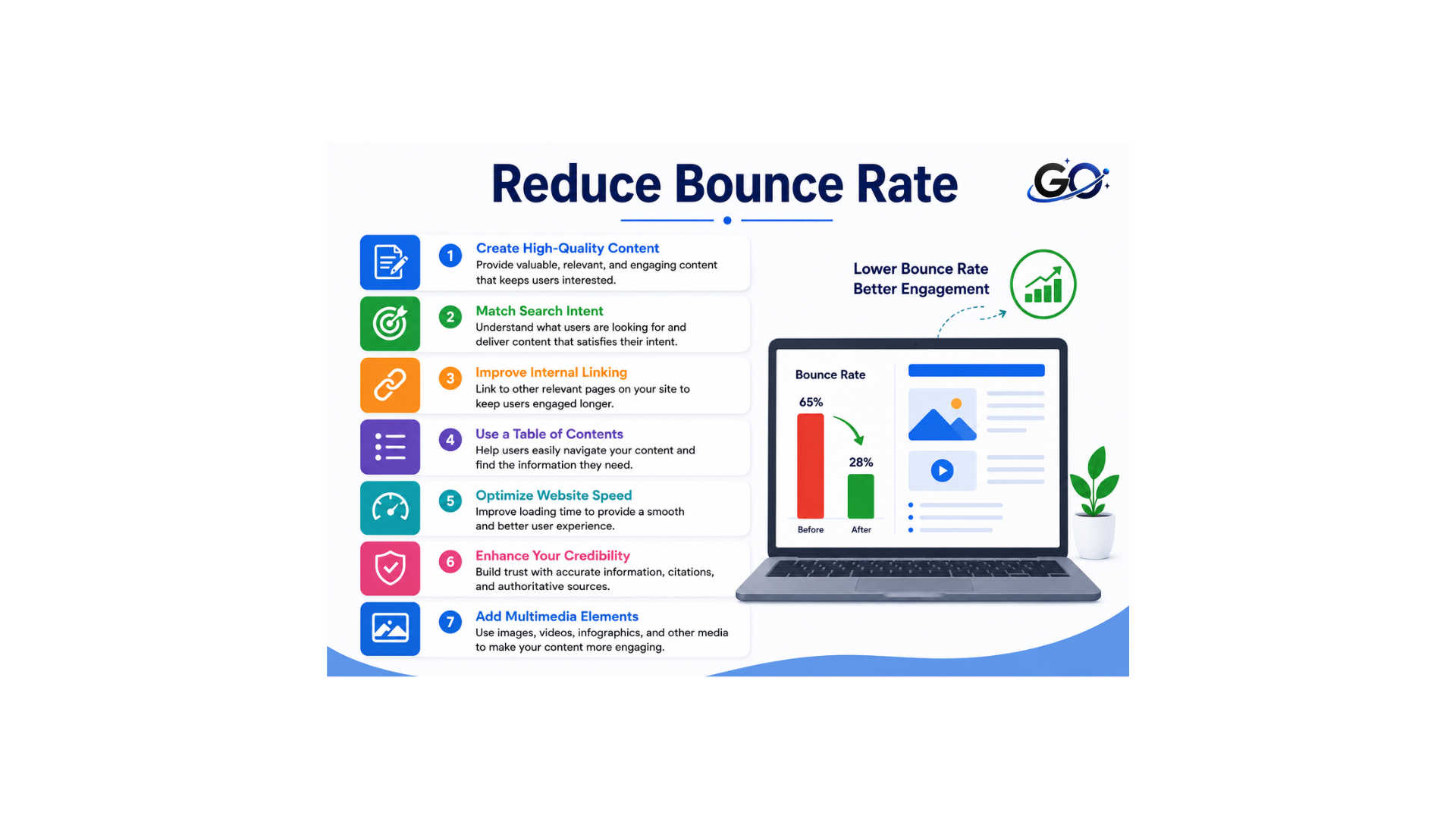
Reducing bounce rate requires improving both content quality and user experience.
Create High-Quality Content
Content should be informative, engaging, and relevant to user needs. Detailed articles that answer questions thoroughly often encourage visitors to spend more time on a website.
Match Search Intent
One of the most important factors in lowering your bounce rate is search intent. Someone has a specific objective or intention in mind when they conduct a Google search. They are more likely to remain on your page and even browse other pages on your website if you can accomplish that objective fast and precisely.
Improve Internal Linking
Using internal links is another technique to keep visitors interested and lower your bounce rate. Unlike external links, which lead users to another website, internal links are hyperlinks that connect users to other pages on the same website.
Use a table of contents
Adding a table of contents to your website might help keep visitors interested and lower the bounce rate if it contains long-form material. With the help of a table of contents, readers may rapidly determine which subjects are most pertinent to them and click straight to the portions that interest them. Additionally, it provides readers with a preview, increasing the likelihood that they will stay on the page.
Optimize Website Speed
Fast-loading pages provide a better user experience. Compressing images, enabling caching, and using reliable hosting can significantly improve website speed..
Enhance your credibility
One of the most important ways to gain your visitors’ trust is to be credible. Display client testimonials, ratings, and other social proof of your dependability.This will make it more likely that visitors will remain on your website and feel more comfortable using it.
Add Multimedia Elements
Images, videos, infographics, and charts can make content more engaging and easier to understand. Visual elements often encourage users to spend more time on a page.
When Is a High Rate of Bounces Not an Issue?
Poor performance is not always indicated by a high bounce rate. Sometimes users find exactly what they need on a single page and leave satisfied.
For example, if someone searches for a specific question, lands on your article, finds the answer, and leaves, the session is still counted as a bounce. However, the user’s goal was achieved successfully. This is especially common with blog posts, tutorials, and informational articles.
Because of this, bounce rate should always be analyzed alongside other metrics such as average time on page, engagement rate, and conversion rate.
Tools to Measure Bounce Rate
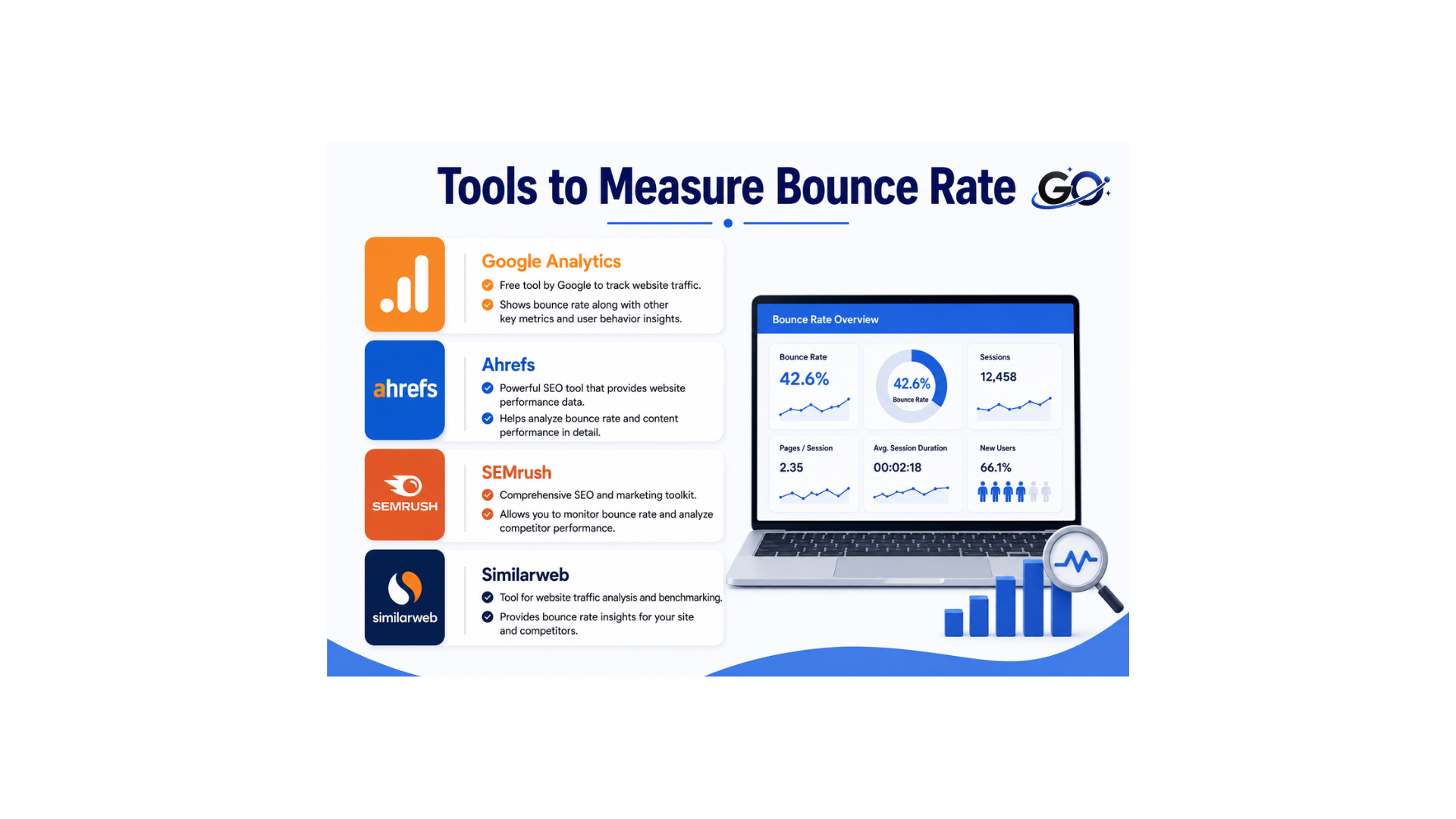
Several tools can help website owners monitor bounce rate and user engagement.
Google Analytics
Google Analytics is one of the most popular tools for tracking website performance. It provides detailed information about user behavior, traffic sources, and engagement metrics.
Ahrefs
Ahrefs offers website analysis tools that help identify engagement trends and content performance issues.
SEMrush
SEMrush provides valuable insights into website traffic, SEO performance, and visitor behavior.
Similarweb
Similarweb allows website owners to analyze traffic patterns and benchmark performance against competitors.
Conclusion
The percentage of visitors to a website who depart after reading just one page is known as the bounce rate, and it is a useful metric. While it is often used as an indicator of engagement, it should not be viewed in isolation. A high bounce rate may indicate issues such as slow page speed, poor content quality, or a mismatch between user intent and the information provided. However, in some cases, a high bounce rate simply means that visitors found the answers they were looking for and left satisfied.
Instead of focusing solely on lowering bounce rate, website owners should prioritize delivering valuable content, improving user experience, and meeting the needs of their audience.By optimizing page speed, creating high-quality content, and encouraging deeper site exploration through internal linking, businesses can improve engagement and strengthen their overall SEO performance.