

Learn what anchor text is in SEO, its types, examples, and best practices to improve rankings, user experience, and website links.Anchor text is one of the most important elements of search engine optimization (SEO). It clarifies the purpose of a linked page for both visitors and search engines. Although anchor text may seem like a small detail, it can significantly impact a website’s rankings, user experience, and overall SEO performance.
When used correctly, anchor text provides context about the destination page and helps search engines determine the relevance of content. Whether you are building internal links within your website or acquiring backlinks from other websites, understanding anchor text is essential for achieving better SEO results.
In this guide, you will learn what anchor text is, why it matters, the different types of anchor text, best practices, common mistakes, and practical examples.
What Is Anchor Text?
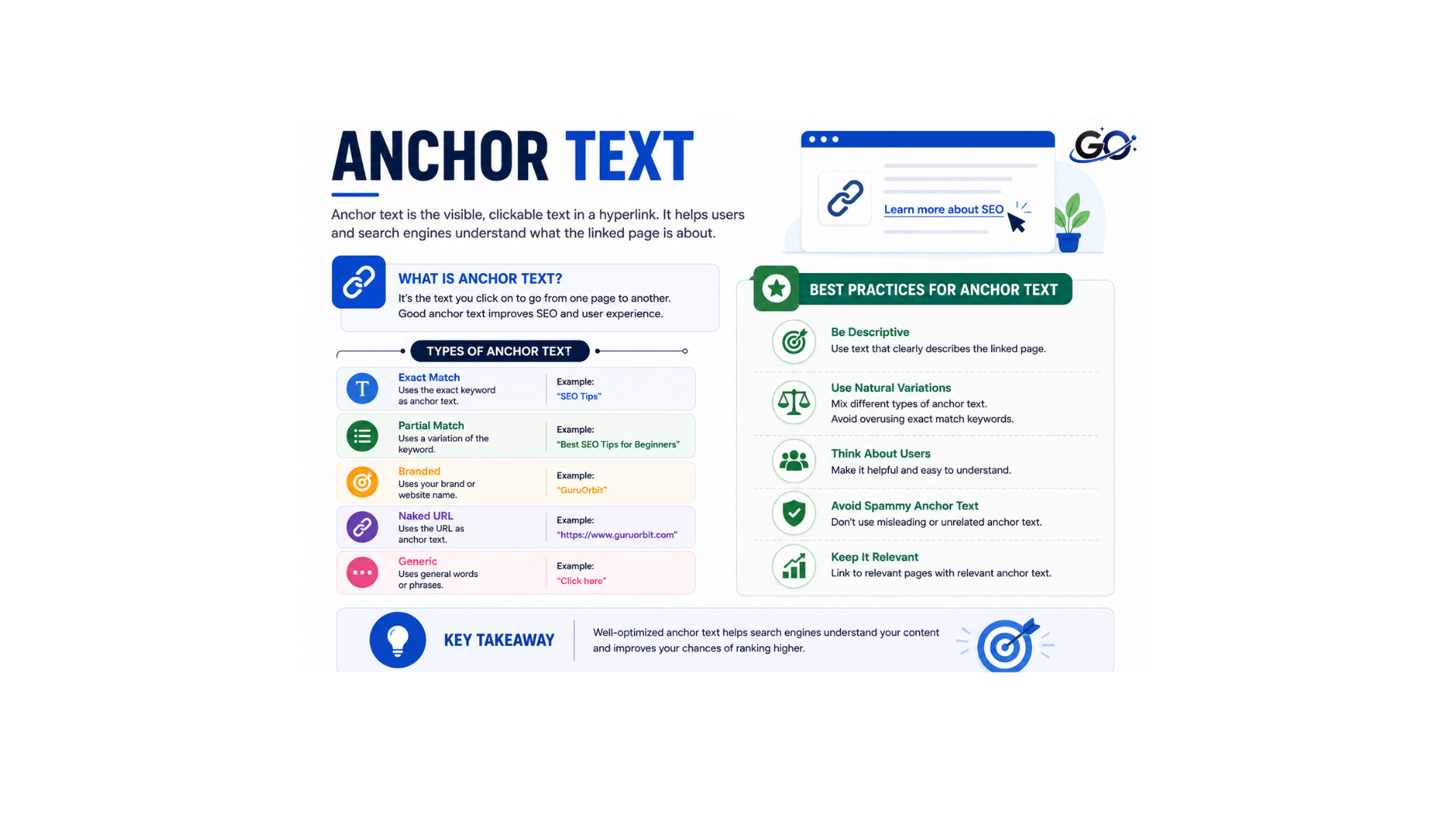
Anchor text is the clickable text in a hyperlink. Clicking on this text allows users to switch between webpages. Anchor text serves as a signal for search engines to comprehend the subject matter and applicability of the linked page.
For example, if a website links to an article about SEO using the phrase “SEO best practices,” search engines may associate the linked page with SEO-related topics.
SEO Best Practices Guide
“SEO Best Practices Guide” is the anchor text in this instance.
Anchor text must be informative and pertinent to the page it points to. This helps users understand where they are going before they click.
Why Is Anchor Text Important for SEO?
Anchor text plays a major role in helping search engines interpret content.
Links are vital for SEO.They aid search engines in comprehending the structure of your website by displaying the connections between your pages.
Google analyses link text to determine the topic of each connected page when it scans your website. Google may not know which page should rank highest for that issue if several links use the same target keyphrase, which could cause competition amongst your own pages.
Enhances Knowledge of Search Engines
In order to comprehend the subject matter of the linked website, search engines examine the anchor text. Relevant anchor text can help improve keyword relevance.
Enhances User Experience
Users can quickly understand what information they will find after clicking a link. This improves navigation and engagement.
Supports Internal Linking
Anchor text helps distribute authority across different pages of a website and improves site structure.
Contributes to Link Building
When other websites link to your content with relevant anchor text, your SEO efforts will be reinforced and your rankings will rise.
How Does Anchor Text Work?
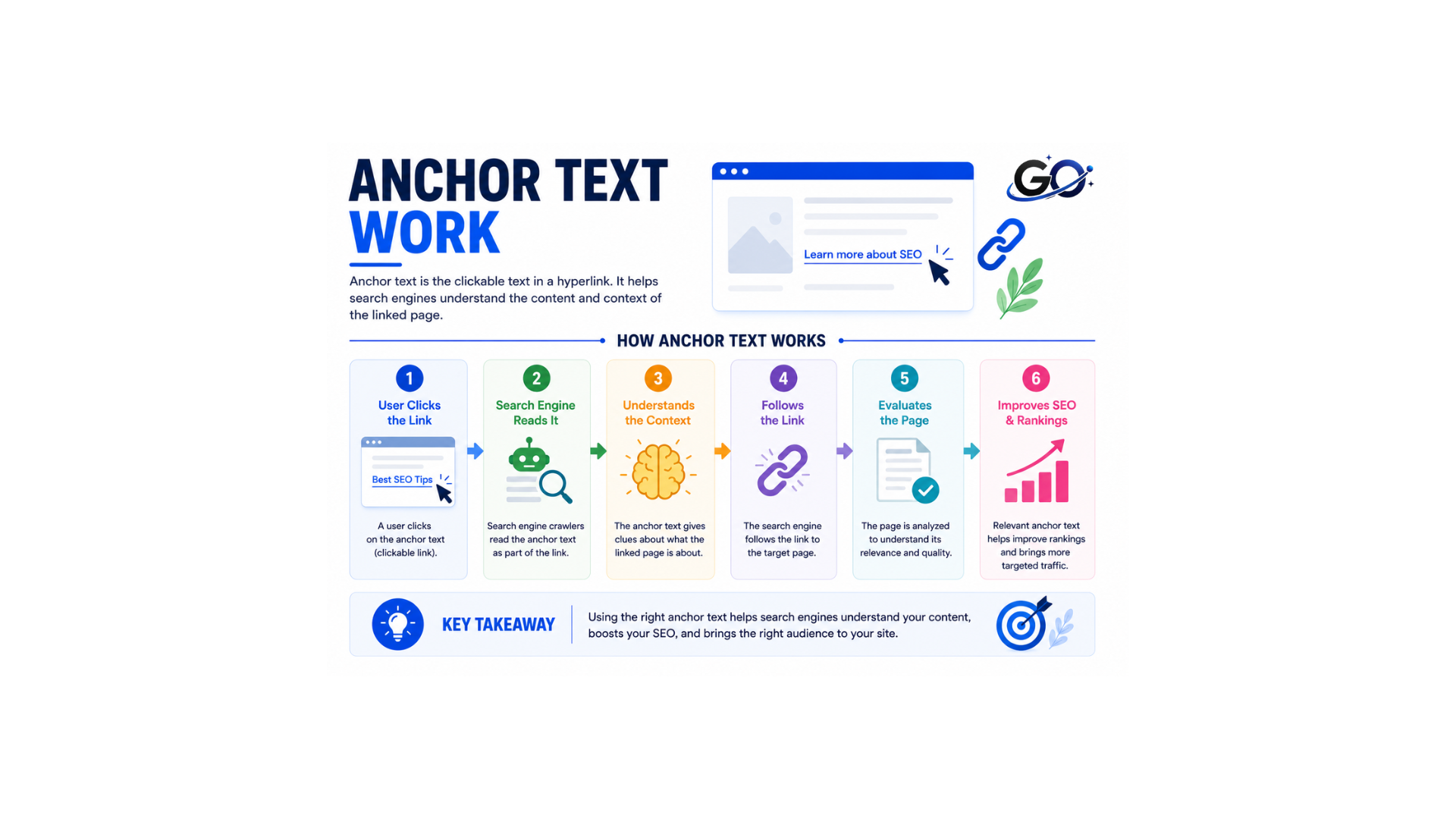
Anchor text works by connecting one page to another through hyperlinks. Search engines crawl these links and analyze the anchor text associated with them.
A very effective distribution of the anchor text kinds in a 1000-word text should look something like this:
7 brand
2 explicit link
1 of the others
Types of Anchor Text
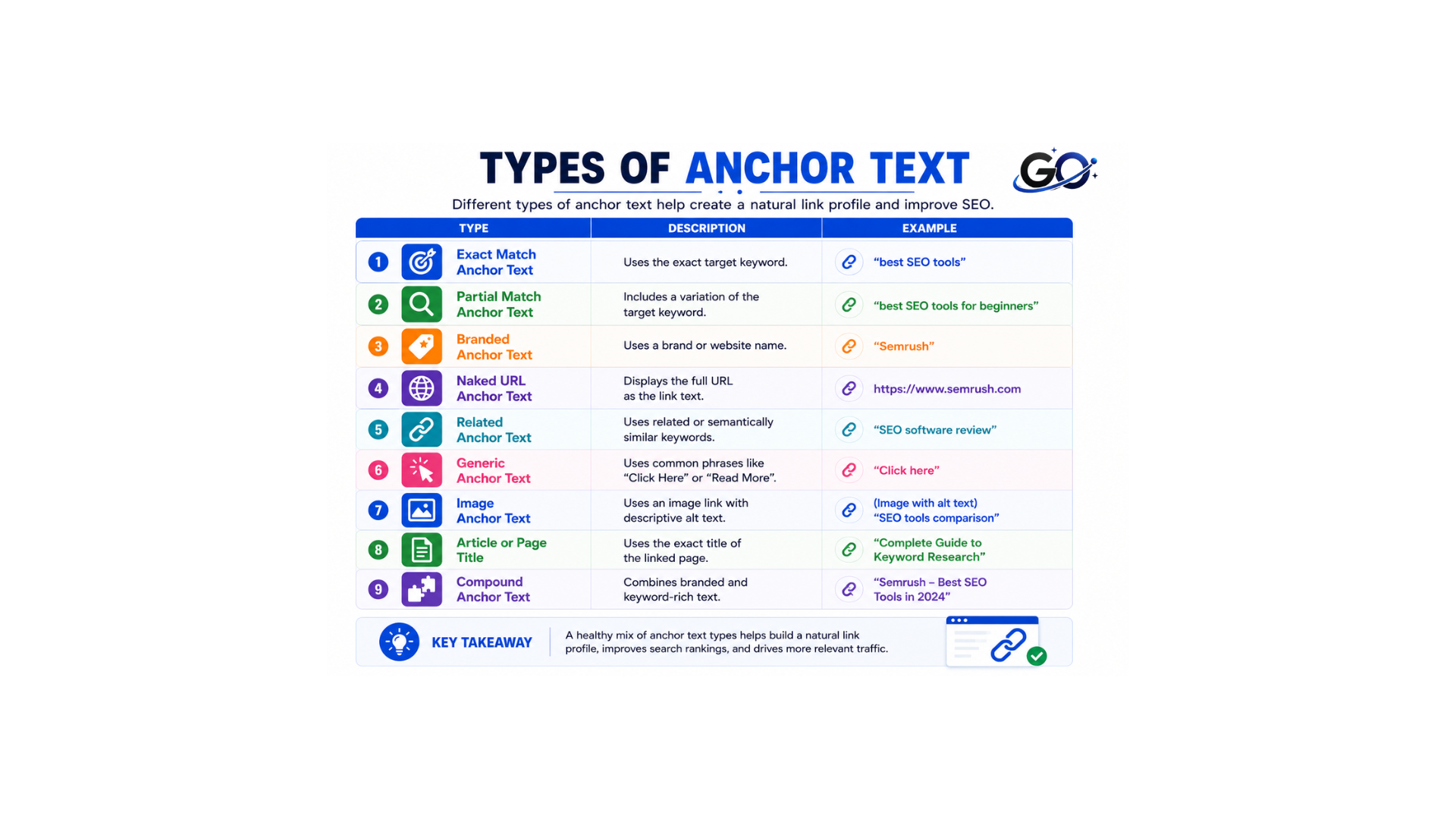
There are several types of anchor text commonly used in SEO.
1. Exact Match Anchor Text
When a link is positioned above the precise keyword that the connected page is targeting, it is known as exact match anchor text, or “money” anchor text.
The linked page may rank higher for that term as a result.
Example:
Anchor Text: “Anchor Text SEO”
2. Partial Match Anchor Text
when you utilise a different version of the keyword that is being targeted by the linked page.
It contains other words to offer more context in addition to the target term (or a portion of it).
Here, for instance, we link to a post about increasing brand awareness using the partial match anchor phrase “raise brand awareness.”
3. Branded Anchor Text
This is the case when the anchor text of your link is a brand name. without adding any more words.
It is helpful when connecting to a business’s homepage or mentioning a source.
4. Naked URL Anchor Text
The exact URL of the link is used as the anchor text in naked anchor text.
The primary purpose of this kind of link is to guarantee that the reader understands exactly where they are being led. such as in government resource lists, bibliographies, and footnotes.
For instance, when listing official health-related websites, the National Institutes of Health (NIH) employs naked links.
5. Related Anchor Text
Similar to partial match anchor text, related keyword anchor text excludes the target term from the linked site.
Instead, this type of anchor text uses synonyms or other similar concepts or phrases.
Here, for instance, we use the anchor text “structured data” to connect to a page.
6. Generic Anchor Text
Non-descriptive terms or phrases that don’t provide visitors (or search engines) with information about what they’ll find by clicking the link are used in generic anchor text.
Examples:
“Click here”
“View more”
“More info”
“Visit This Page ”
The SEO value of generic anchor text is minimal because it doesn’t offer much information. Additionally, it could seem spammy..
7. Image Anchor Text
when a link is placed within an image.
Additionally, the HTML’s alternative text (alt text) acts as the link’s anchor text as there isn’t any true anchor text.
For example, the alt text of an image, “SEO Audit Checklist,” may be regarded by search engines as anchor text.
8. Article or Page Title
This means that the link text should be the precise title of the page or article that is being referenced.
Users and search engines can easily understand what the linked content is about because it is straightforward and informative.
For instance, Shape uses the exact title of another post on the website to link to it.
9. Compound Anchor Text
This type of anchor text contains a brand’s name (or a branded phrase) and some additional words for context.
It’s often used when referring to a brand’s products, locations, or webpages.
The anchor text in the example below points to a particular Google support site.
Anchor Text Examples
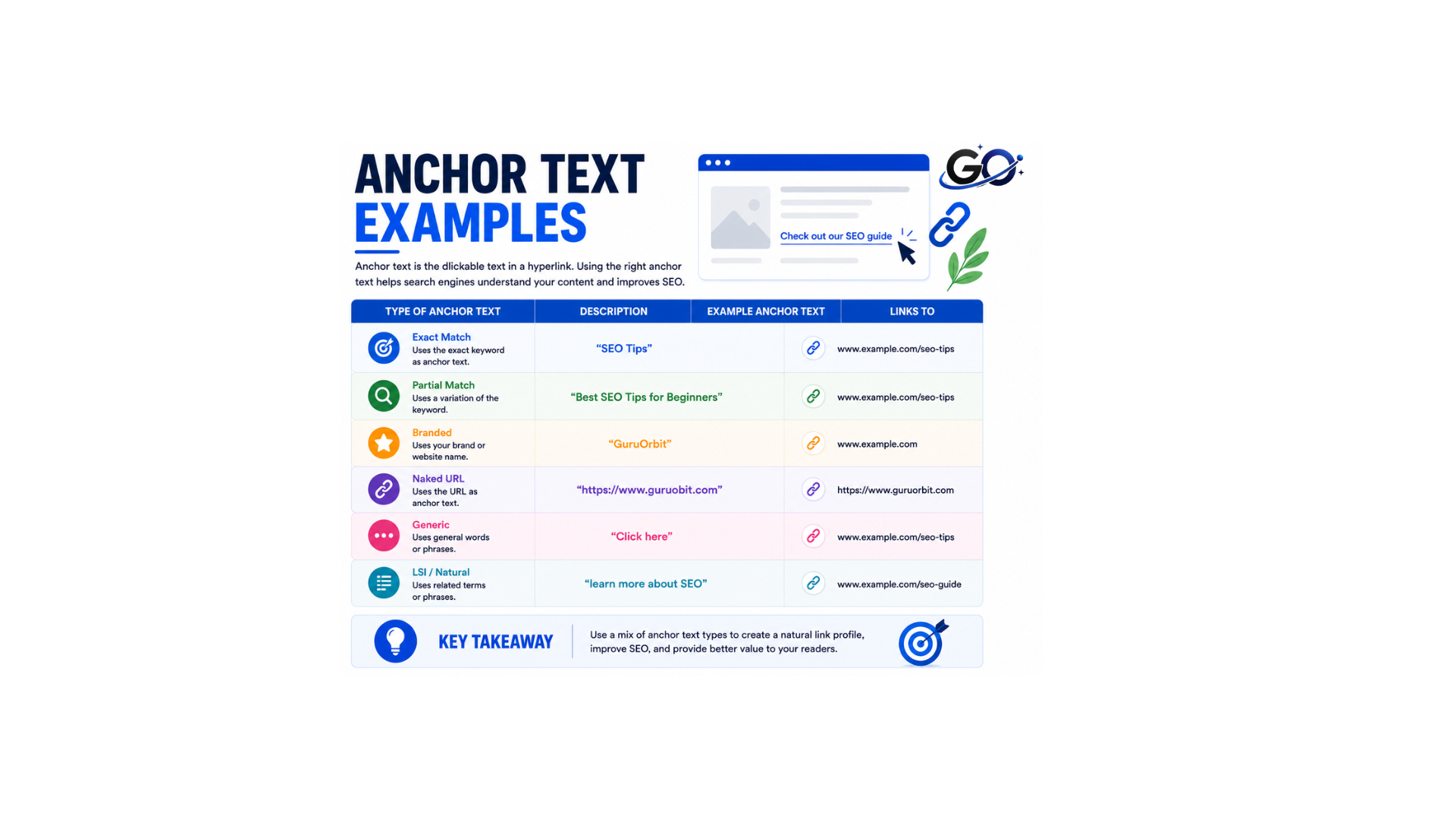
Let’s look at practical examples.
Poor Example
Click here to learn more about SEO.
The anchor text provides little context about the destination page.
Better Example
Learn more about SEO strategies for beginners.
This anchor text clearly describes the linked content.
Best Example
Read our complete SEO strategy guide for higher rankings.
This version is descriptive, user-friendly, and keyword relevant.
Anchor Text and Internal Linking
Internal linking refers to links that connect pages within the same website.
Anchor text is especially important for internal links because it helps search engines understand relationships between pages
But internal links work best when you write good anchor text for them.Every link should have a distinct function and naturally direct readers to relevant subjects. void adding unnecessary or irrelevant links just for the sake of having more connections.
Thoughtful internal linking improves the user experience and helps search engines understand your site’s structure, which is essential for strong SEO performance.
Benefits of Internal Linking
- Better website structure
- Improved crawlability
- Increased page authority distribution
- Enhanced user experience
- Better indexing by search engines
Best Practices for Using Anchor Text
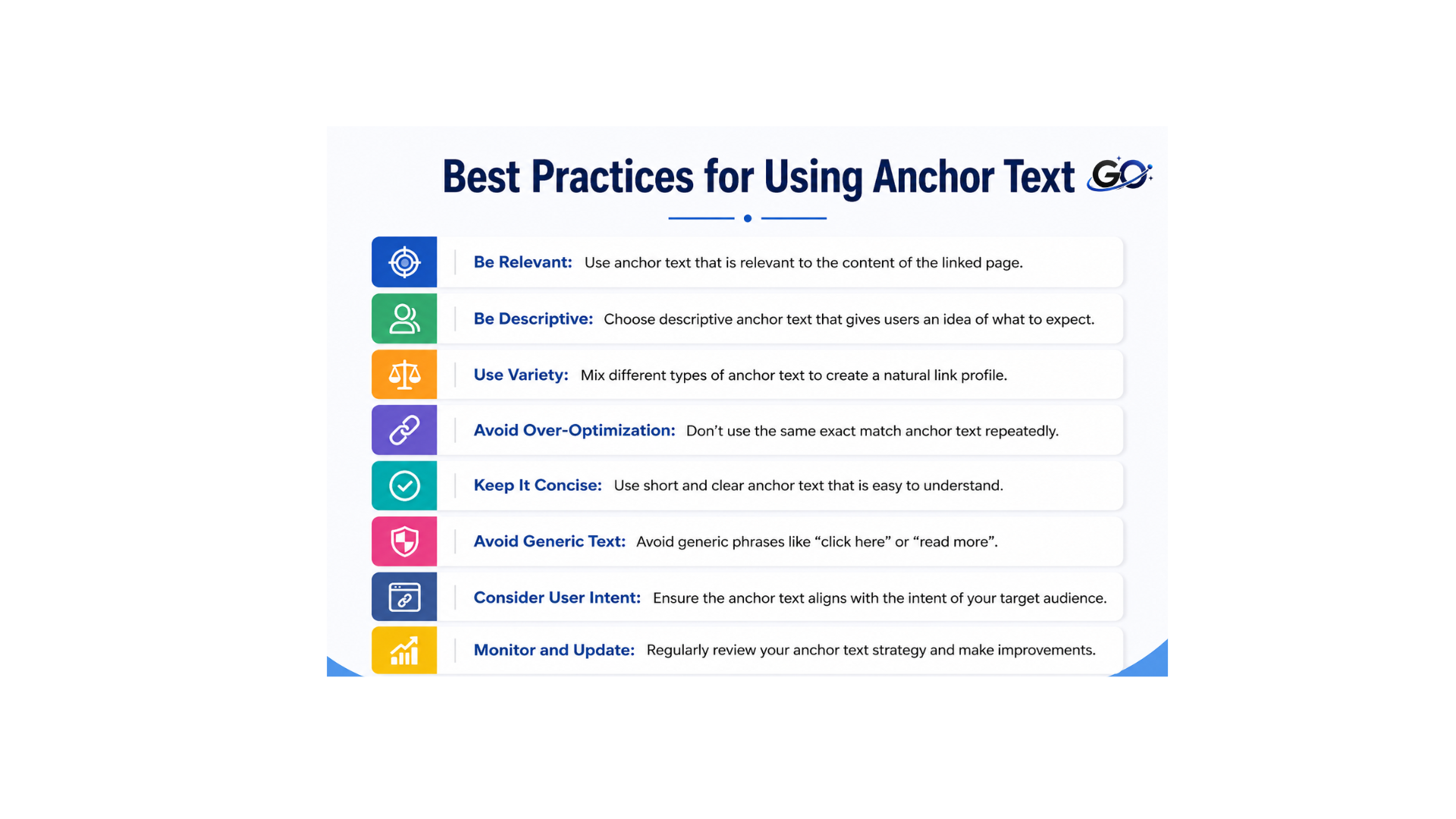
Following best practices can maximize SEO benefits.
Use Relevant Anchor Text
Always ensure the anchor text accurately describes the linked page.
Keep It Natural
Avoid forcing keywords into anchor text. Write naturally for users.
Use Variations
Instead of repeating the same keyword, use different variations.
Prioritize User Experience
Anchor text should help users understand where they are going.
Avoid Over-Optimization
Using exact-match keywords repeatedly may appear manipulative.
Maintain a Balanced Link Profile
Use a combination of anchor text types for a natural SEO strategy.
Anchor Text Mistakes To Avoid
Over-Optimized Exact Match Profiles
Many SEOs establish 30%+ exact match anchors and wonder why their rankings fluctuate. You have a problem if your Ahrefs anchor report appears to be a keyword stuffing experiment.
Ignoring Anchor Diversity
using dozens of connections with the same three or four anchors. Google recognises trends. Real editorial links employ drastically various anchor text, and since people are diverse, your link profile should reflect this.
Aggressive Anchors on Weak Domains
Algorithmic spam detection is specifically developed to identify low-quality links with forceful anchors.
Neglecting Image Alt Text as Anchors
Your anchor text is the alt text that appears when your infographic is embedded or your logo appears on a guest post. When alt tags are empty, you are completely squandering a link signal.
Future of Anchor Text in SEO
As search engines become more advanced, they continue to focus on context, relevance, and user intent. While anchor text remains important, modern algorithms analyze surrounding content and overall page quality as well.
In the future, successful SEO strategies will rely on creating natural, user-focused anchor text rather than manipulating rankings through excessive keyword usage.
Websites that prioritize relevance, quality content, and proper linking practices will continue to benefit from strong SEO performance.
Conclusion
Anchor text is the clickable text used in hyperlinks and is a fundamental part of SEO. It helps search engines understand the topic of linked pages while improving user navigation and website structure. Whether used in internal links or backlinks, anchor text plays a significant role in search visibility and rankings.
By using descriptive, relevant, and natural anchor text, website owners can strengthen their SEO strategy, improve user experience, and create a more effective linking structure. Understanding the different types of anchor text and following best practices will help you maximize the value of every link on your website.