

Learn what Keyword Difficulty in SEO is, how it is calculated, why it matters, and how to choose keywords that improve your search rankings. It helps website owners, bloggers, content creators, and digital marketers understand how difficult it may be to rank for a specific keyword in search engine results. During keyword research, many people focus on search volume and search intent, but keyword difficulty is equally important because it shows the level of competition for a keyword. Understanding keyword difficulty allows marketers to choose realistic keywords and create an effective SEO strategy.
What Is Keyword Difficulty?
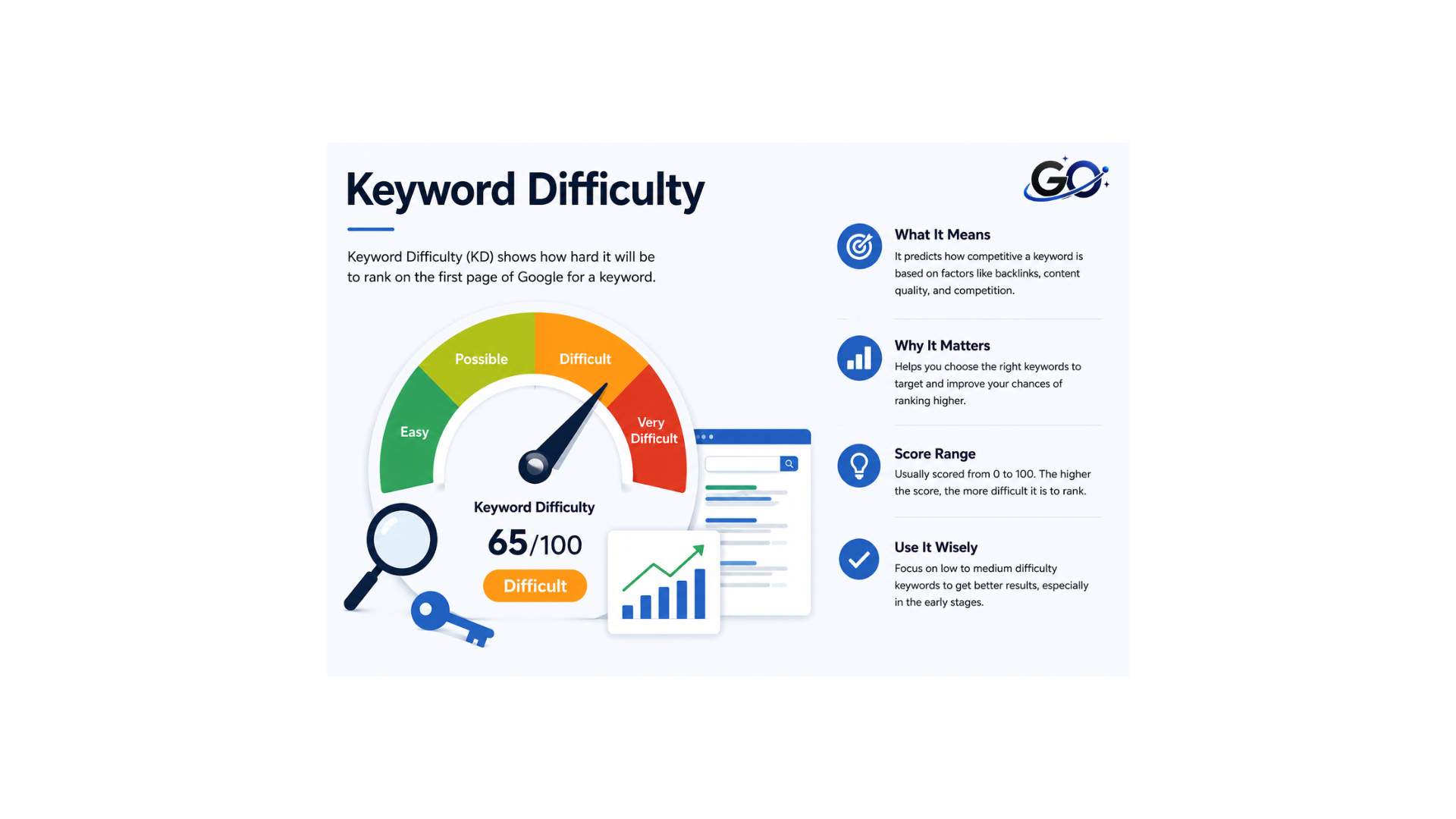
Keyword difficulty in SEO describes how challenging it is to rank for a specific keyword. A user’s search term is the basis for all SERPs. Various keywords have varying degrees of competitiveness since various searches get different SERPs. For instance, highly competitive keywords have a high keyword difficulty since many high-authority websites target that same search term. Keywords with less competition have a lower keyword difficulty.
Why Is Keyword Difficulty Important?
You must regularly incorporate keyword difficulty checks into your content strategy if you want to produce content that ranks and encourages conversions.
You can determine whether a keyword is winnable and how fiercely competitive it is by looking at keyword difficulty scores.
For example, let’s say you recently started a new blog. All of the terms you are looking for are classified as “hard” or “very hard.” The Wall St. Journal and the University of Oxford are two of the major brands whose articles rank highest for those keywords.
There is no realistic possibility that you will rank for such keywords. You can concentrate on keywords with an “easy” or “possible” ranking rather than wasting time and energy trying.
Selecting profitable keywords for content creation will result in consistent traffic growth.
How Is Keyword Difficulty Calculated?
SEO tools calculate keyword difficulty using several ranking factors. One of the main factors is the authority of the websites currently ranking on the first page. High-authority domains are often more difficult to compete against. Another factor is the quality and quantity of backlinks pointing to ranking pages. Content quality, user experience, website authority, and search engine trust signals may also influence the difficulty score. Since each SEO tool uses a unique algorithm, keyword difficulty scores can vary between platforms.
Understanding Keyword Difficulty Scores
Depending on your particular SEO, a decent keyword difficulty score varies.
strategy and the competitive landscape in your niche. However, as a general guideline:
Low Difficulty (0–30): Ranking for these keywords is the simplest. They typically have lower search volumes, but they are ideal for new websites or when targeting long-tail keywords.
Medium Difficulty (31-60): These keywords are moderately competitive. They frequently strike a balance between competition and search traffic. . Established websites with some authority can target these effectively.
High Difficulty (61-100): The most competitive keywords are these ones. They are typically dominated by reputable websites and have large search traffic. . Targeting high-difficulty keywords may require significant time, resources, and a well-established online presence.
In the end, your website’s authority, resources, and overall SEO approach will determine a suitable keyword difficulty score for you. . It’s essential to strike a balance between targeting achievable keywords and aiming for those that offer substantial traffic potential.
Factors That Affect Keyword Difficulty
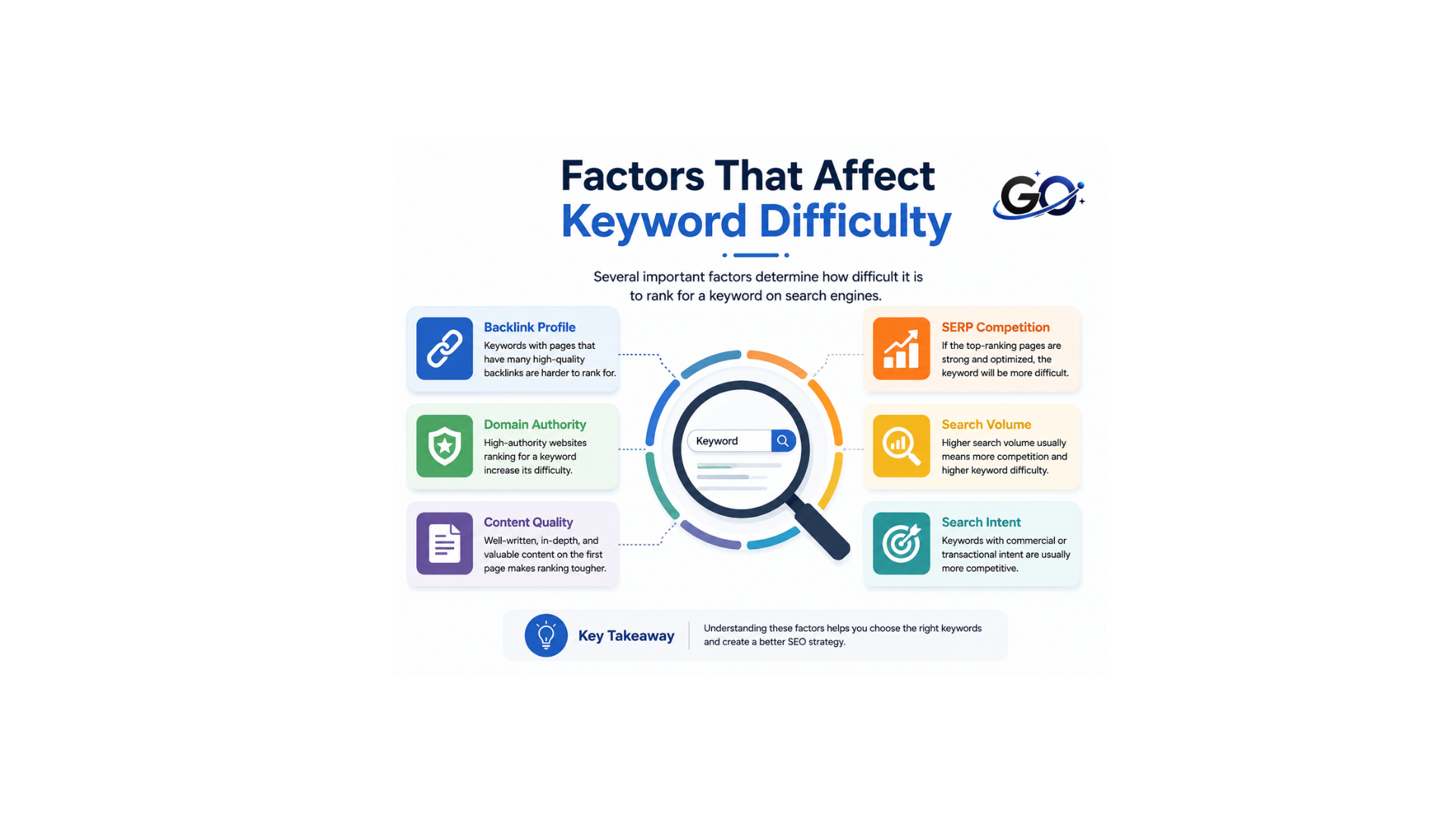
Several factors influence keyword difficulty. The authority of competing websites is one of the biggest factors because established websites generally rank more easily. Backlinks are also important because search engines consider them a sign of trust and credibility. The calibre of the content is another crucial element. . If the top-ranking pages provide detailed and valuable information, new content must offer equal or greater value to compete successfully. User experience signals such as mobile-friendliness, page speed, and site structure can further impact competition levels.
Keywords Reflect Search Intent
It’s best to take both the keyword difficulty score and search intent into account when choosing good keywords.
In Semrush, search intent is indicated by the following letters:
Informational: The searcher is gathering data and frequently does not yet intend to make a purchase.
Navigational: the goal is to locate a certain item or website (such as “in-and-out burger”).
Commercial: the searcher usually evaluates and compares goods with the intention of making a purchase soon. These searchers may also be looking for “How to” articles while attempting to fix a problem.
Transactional: the searcher is about to make a purchase.
Long-tail keywords with a low difficulty score and commercial or transactional intent are the focus of an excellent content strategy.
Keyword Difficulty vs Search Volume
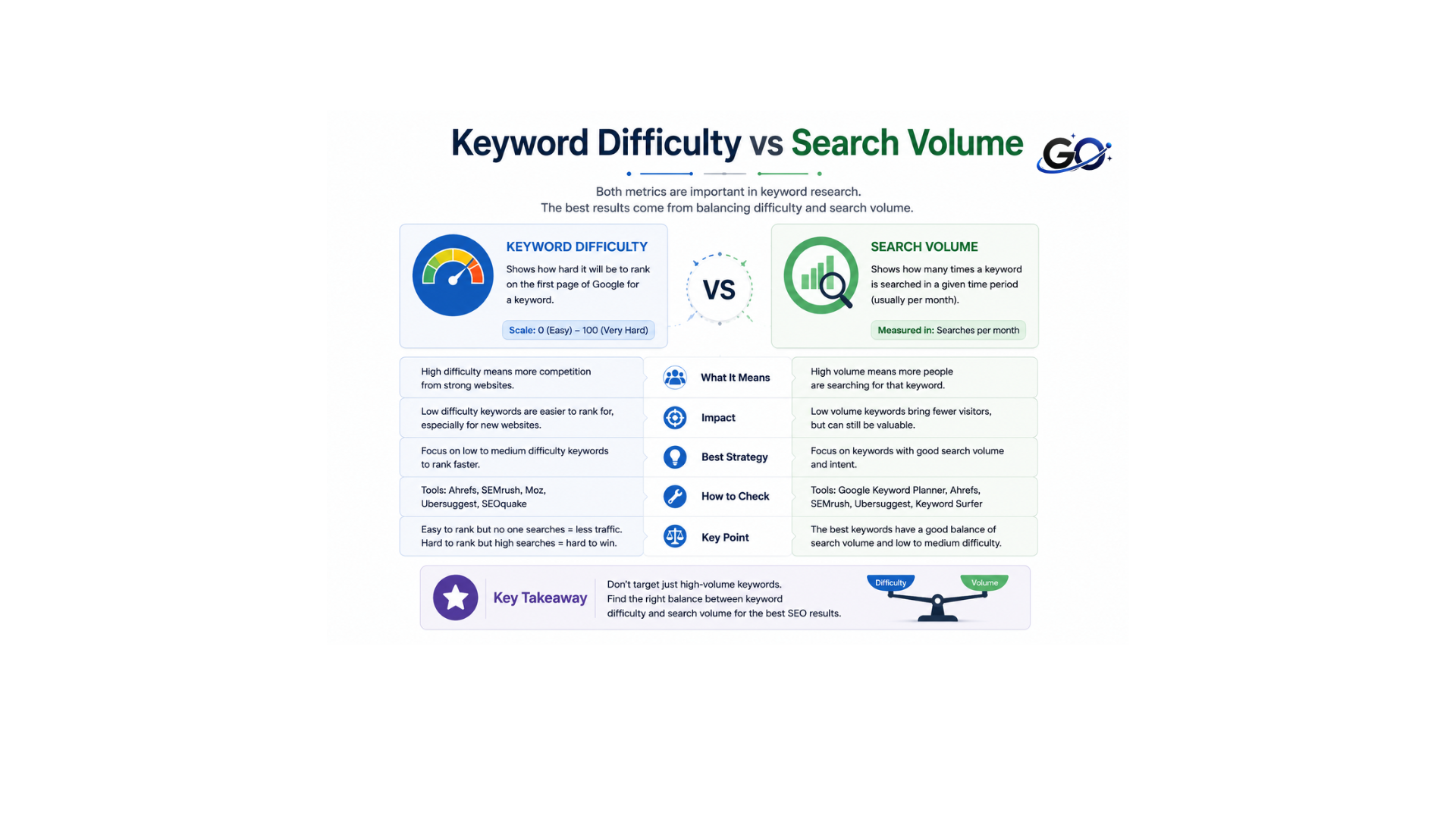
Keyword difficulty and search volume are both important metrics, but they serve different purposes. Search volume measures how many times a keyword is searched within a specific period, while keyword difficulty estimates how hard it is to rank for that keyword. A keyword may have high search volume but extremely high competition, making it difficult to rank for. On the other hand, a keyword with lower search volume and lower difficulty may provide a better opportunity for gaining targeted traffic. Successful keyword research involves balancing both metrics.
Keyword Difficulty and Competition
keyword competition Keyword difficulty and are two distinct SEO metrics that measure different aspects of keyword research.
- Competition is a Google Ads indicator that quantifies the level of difficulty you should anticipate when targeting a keyword in your advertising campaign.The competition metric is unrelated to the organic search results and is only used for advertising.
- In contrast, keyword difficulty quantifies the level of difficulty you should anticipate when attempting to rank for a particular phrase on organic search results pages.
SEO tools calculate keyword difficulty by analyzing the metrics of pages that already rank for the same keyword. Meanwhile, the competition metric is based on the number of advertisers bidding on the same keyword.
The Role of Search Intent in Keyword Difficulty
The motivation behind a user’s search query is referred to as search intent. Even if a keyword has low difficulty, it may not be valuable if it does not match the needs of your audience. Search engines prioritize content that satisfies user intent. Therefore, SEO professionals should consider search intent alongside keyword difficulty and search volume. Choosing keywords that align with user expectations improves the chances of achieving higher rankings and better engagement.
Why Long-Tail Keywords Have Lower Difficulty
Long-tail keywords are longer and more specific search phrases that usually have lower competition. For example, ranking for a broad keyword like “SEO” can be extremely difficult, while a phrase such as “SEO tips for small business websites” may be much easier to rank for. Long-tail keywords often attract highly targeted visitors and provide better conversion opportunities. For new websites, targeting long-tail keywords is one of the most effective ways to gain organic traffic and build authority.
How to Find Keyword Difficulty
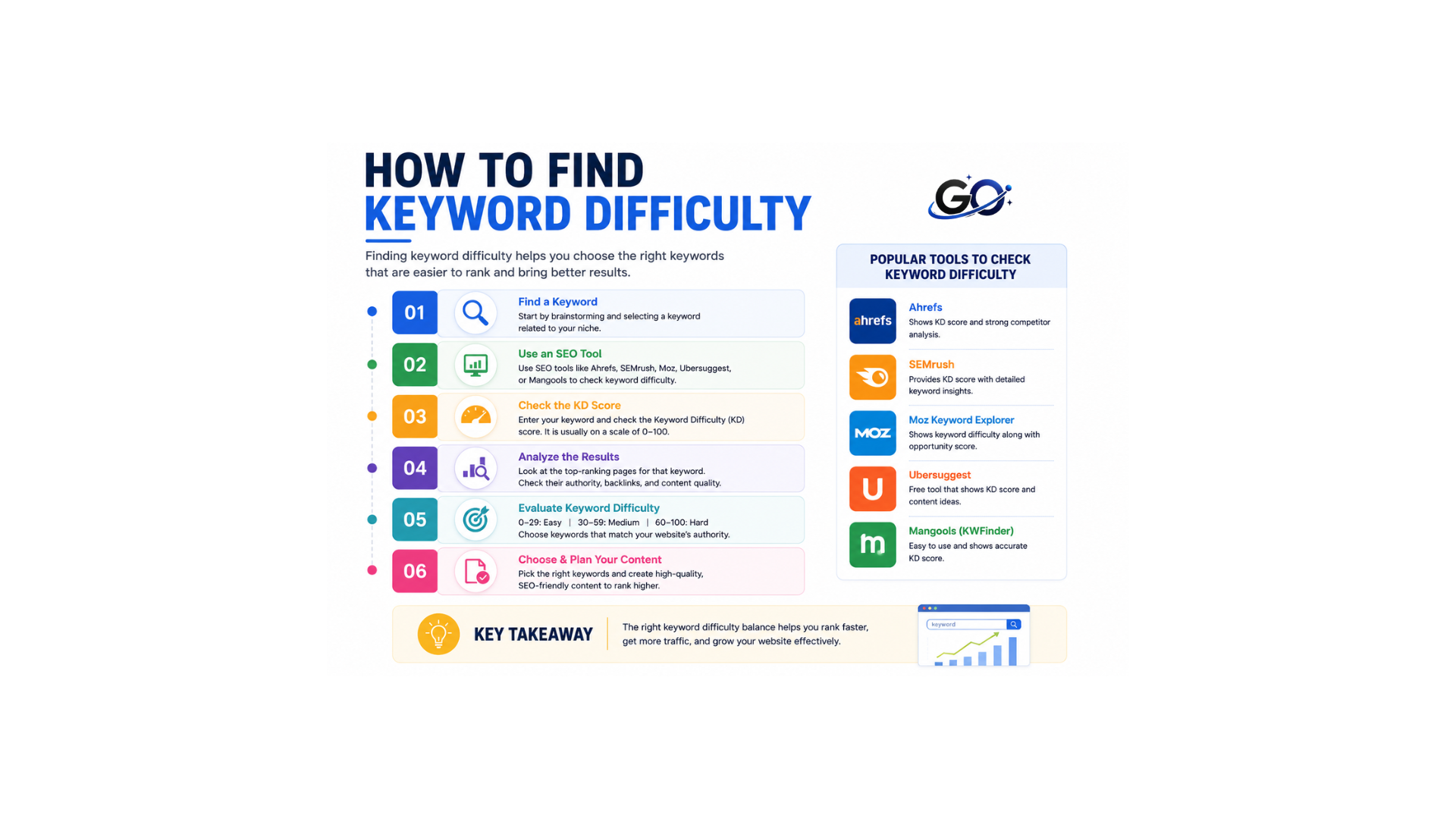
Keyword difficulty can be found using popular SEO tools such as Ahrefs, SEMrush, Moz, Ubersuggest, and KWFinder alternatives. These tools provide a difficulty score along with additional data such as search volume, cost per click, and competition analysis. However, relying solely on automated scores is not always enough. Manual analysis of search results can provide deeper insights into the actual competition and ranking opportunities.
How to Use Keyword Difficulty in Your SEO Strategy
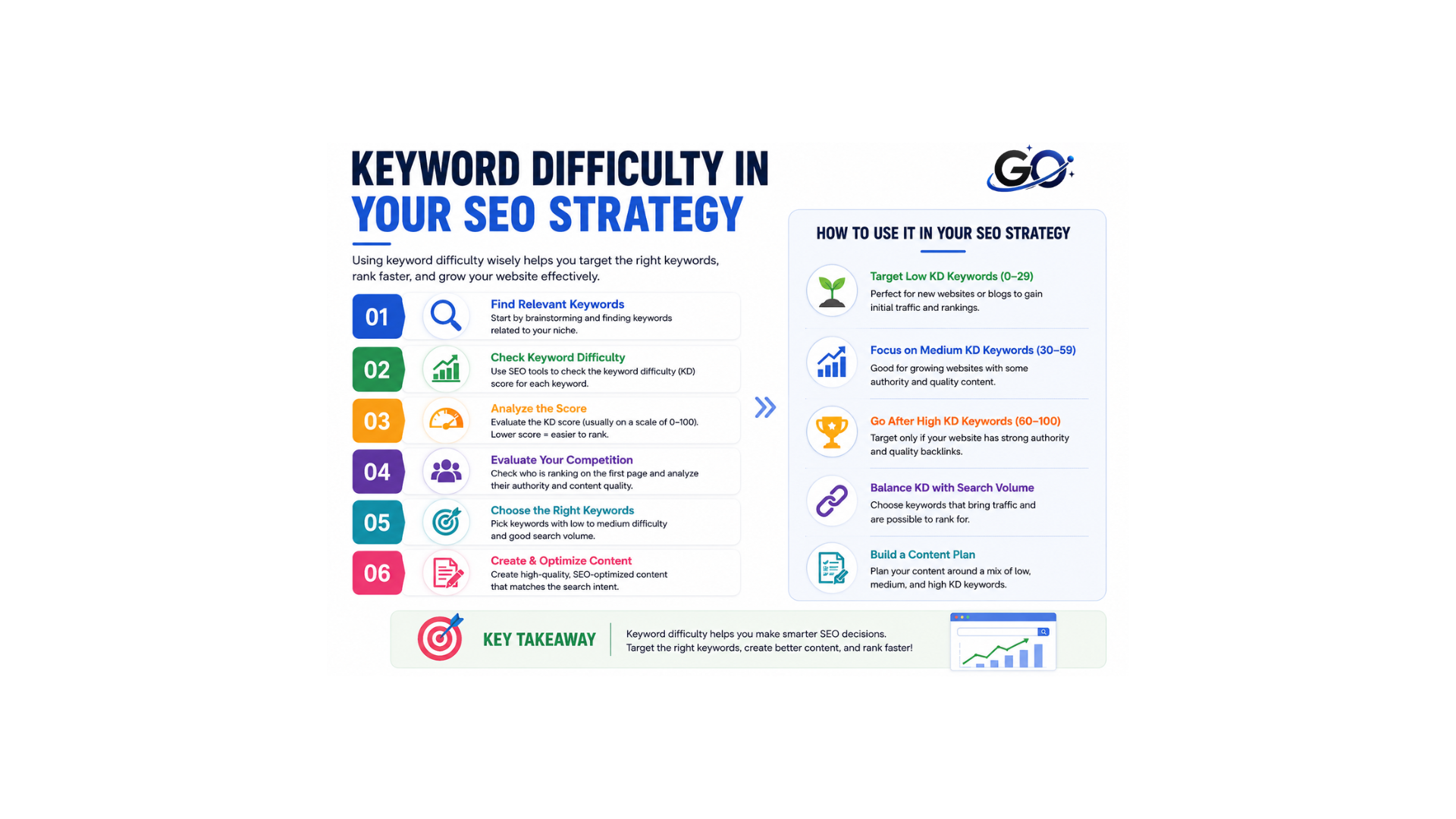
You can choose where to concentrate your efforts for the greatest outcomes by using keyword difficulty. If you target keywords that are too difficult, you can spend a lot of time and resources without seeing any return.
For example, a highly competitive keyword like “best smartphone” will have many authoritative sites already ranking in the top spots and many more trying to get there. On the other hand, a less competitive keyword, such as “best budget smartphone under $300,” will have less rivals, making it simpler to rank higher.
Common Mistakes to Avoid
One common mistake is targeting only high-volume keywords without considering keyword difficulty. This often results in poor rankings and wasted effort. Another mistake is focusing solely on low-difficulty keywords without evaluating their relevance or search intent. Some easy keywords may not attract the right audience or generate meaningful traffic. Ignoring competitor analysis is another common issue. Understanding who currently ranks for a keyword is essential for making informed decisions.
Conclusion
Keyword Difficulty is a crucial SEO metric that helps determine how challenging it will be to rank for a specific keyword. It is influenced by factors such as domain authority, backlinks, content quality, and competition. By understanding keyword difficulty and using it alongside search volume and search intent, website owners can make smarter keyword choices and improve their chances of achieving higher rankings. Whether you are a beginner or an experienced SEO professional, keyword difficulty should be an essential part of your keyword research and SEO strategy.