

Learn how paragraph length affects readability, user experience, and SEO, with tips for creating clear, engaging, and easy-to-read content. One of the most useful things you can do to improve your writing is to understand paragraph length. Knowing how to structure and size your paragraphs improves the clarity, readability, and persuasiveness of your writing, whether you’re writing an academic essay, a business report, a blog post, or a novel.
The structure of a successful paragraph, typical paragraph issues, and solutions are all covered in this guide, along with the appropriate paragraph length for various writing scenarios. See our guide on the number of sentences in a paragraph for a detailed look at sentence counts by style of writing. See the pillar guide on academic writing for students and researchers for a complete overview of Editor World’s academic writing cluster, which includes this article.
What Is Paragraph Length?
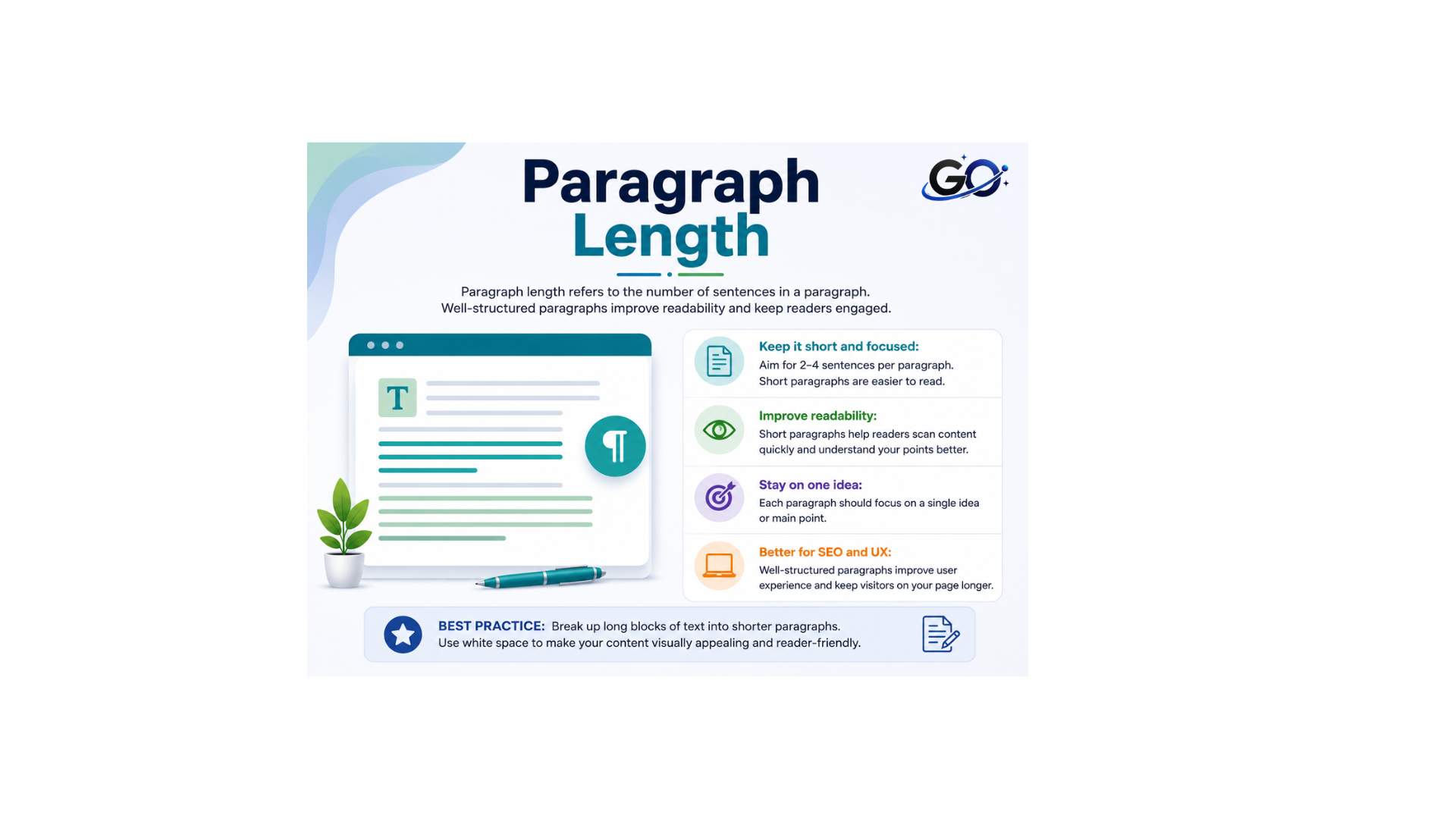
Paragraph length is the amount of written content grouped together to explain a specific idea. The quantity of sentences, words, or lines in a paragraph can be used to gauge it.There isn’t a general guideline stating that each paragraph must have a certain word count. The topic, audience, writing style, and content goal all influence the optimal duration.
When it comes to internet articles, paragraphs that are short and concentrate on a single key idea are often easier to read. Writers should prioritise clarity and logical arrangement over a precise word count.One major idea should be introduced or explained in a well-structured paragraph, together with enough details so that the reader is not overwhelmed.
Why Is Paragraph Length Important?
This is the paragraph length you were aiming for when your word choice is in line with your message. If your paragraphs are too long, your reader will become overwhelmed, and if they are too short, the text may appear jagged. A well-written paragraph is like a dialogue; it develops a concept, gives space for breathing, and recognises when to stop. People are encouraged to continue reading by this equilibrium.
Paragraph Length and Readability
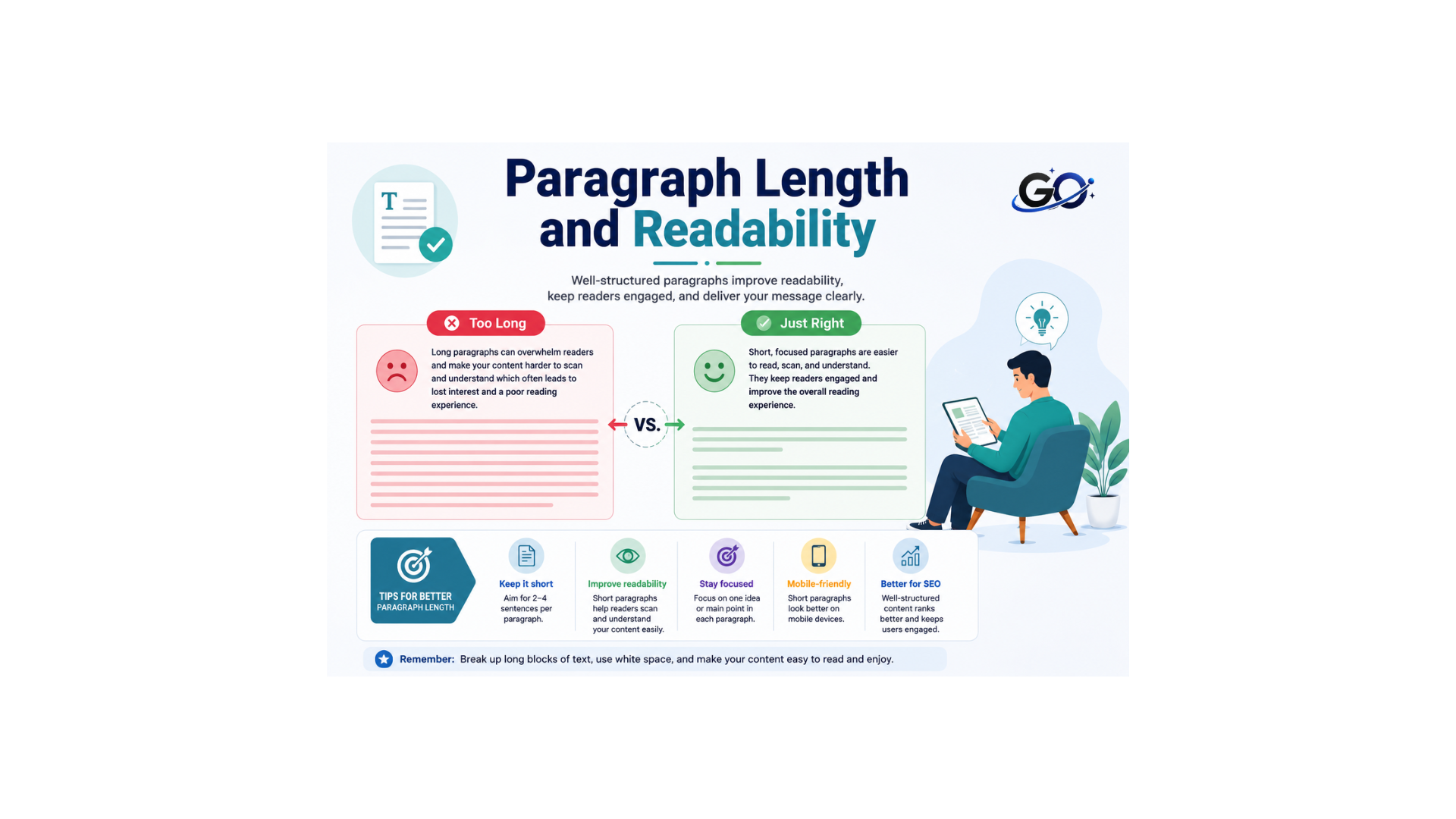
The reader’s experience of your work is influenced by the length of your paragraphs. Long paragraphs could be a sign of intricacy and depth. Short paragraphs often signal speed and clarity.To keep the reader interested, a piece of writing will frequently combine the two by changing the length of its paragraphs.
What Is the Ideal Paragraph Length?
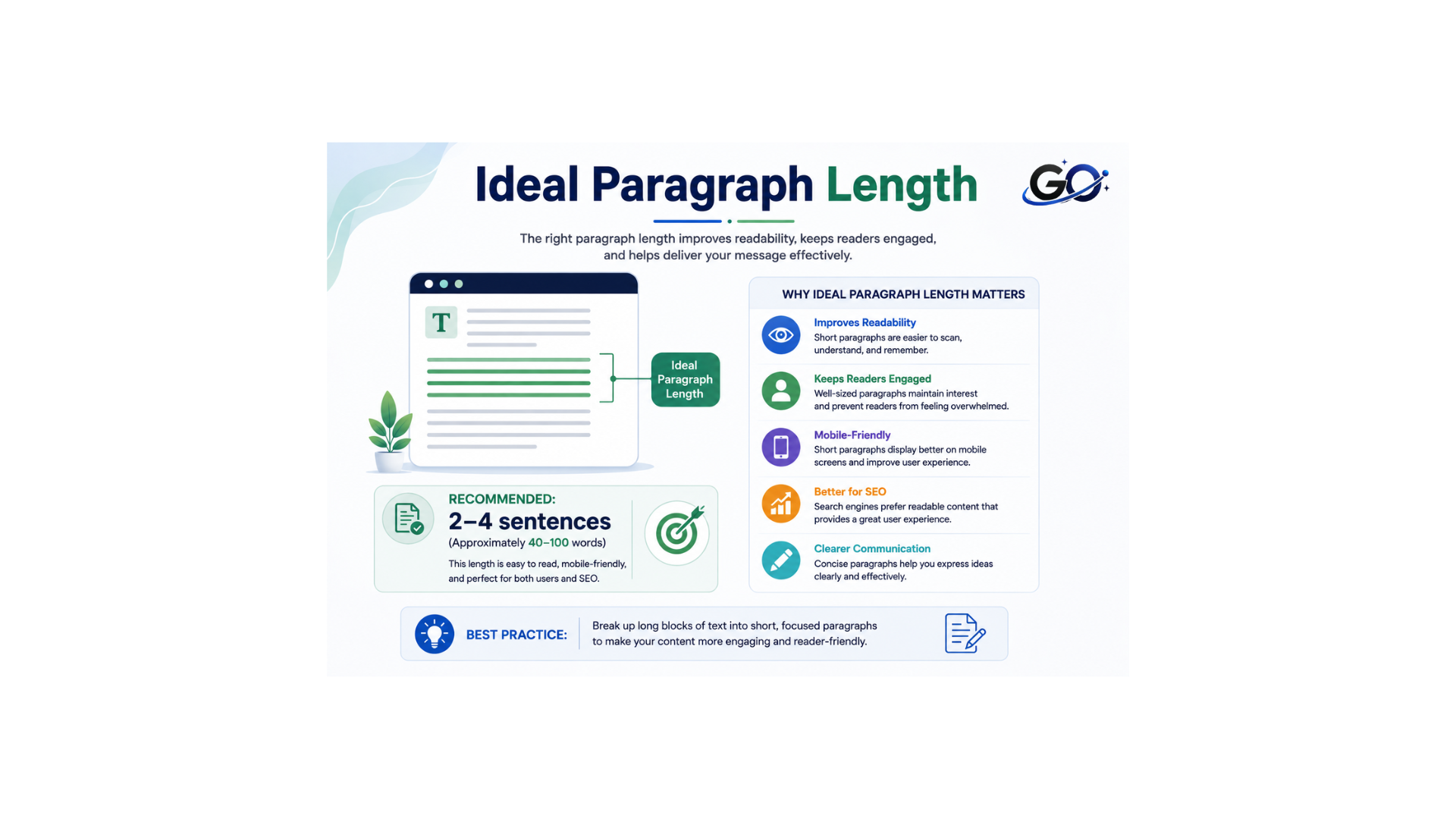
There is no one ideal length for a paragraph. The ideal duration depends on your audience, goal, media, and the complexity of the idea you’re working on. The necessity to thoroughly explore complex arguments with evidence and analysis is reflected in the conventional academic guideline of 5 to 8 sentences, or 100 to 200 words. Because internet readers typically skim rather than read in-depth, modern digital writing favours shorter paragraphs of two to four sentences.
Short Paragraphs
There is very little information in short paragraphs. They can be helpful for introducing a subject, highlighting a crucial point, or giving a brief explanation.
For instance:
For the user experience, website performance is important.
Because the sentence is comprehensive and conveys a single, distinct notion, this brief paragraph works well.
On the other hand, an article’s substance may appear disjointed if it is written in extremely brief paragraphs. It’s possible for readers to think that each sentence has been divided needlessly.
Therefore, the usage of short paragraphs should be deliberate rather than instinctive.
Medium-Length Paragraphs
For the majority of informational content, medium-length paragraphs work well. They maintain the page’s aesthetic appeal while offering ample room to express a concept.
For instance, a paragraph describing how image compression enhances website performance can have multiple related sentences. Because they clarify a single main idea, these lines can be used in tandem.
In guides, blog posts, tutorials, and instructional pieces where readers require some clarification without being exposed to lengthy text passages, medium-length paragraphs are especially helpful.
Long Paragraphs
Long paragraphs with several phrases may be necessary for discussing complex subjects. They could be difficult to read, though, if they have a number of unrelated ideas.
Website performance, image optimisation, mobile SEO, and Core Web Vitals may all be covered in a lengthy paragraph. Despite the fact that all of these subjects are connected to technical SEO, putting them all in one paragraph may cause the structure to become ambiguous.
In this case, breaking up the text into distinct paragraphs facilitates understanding of each concept.
Paragraph Length and SEO
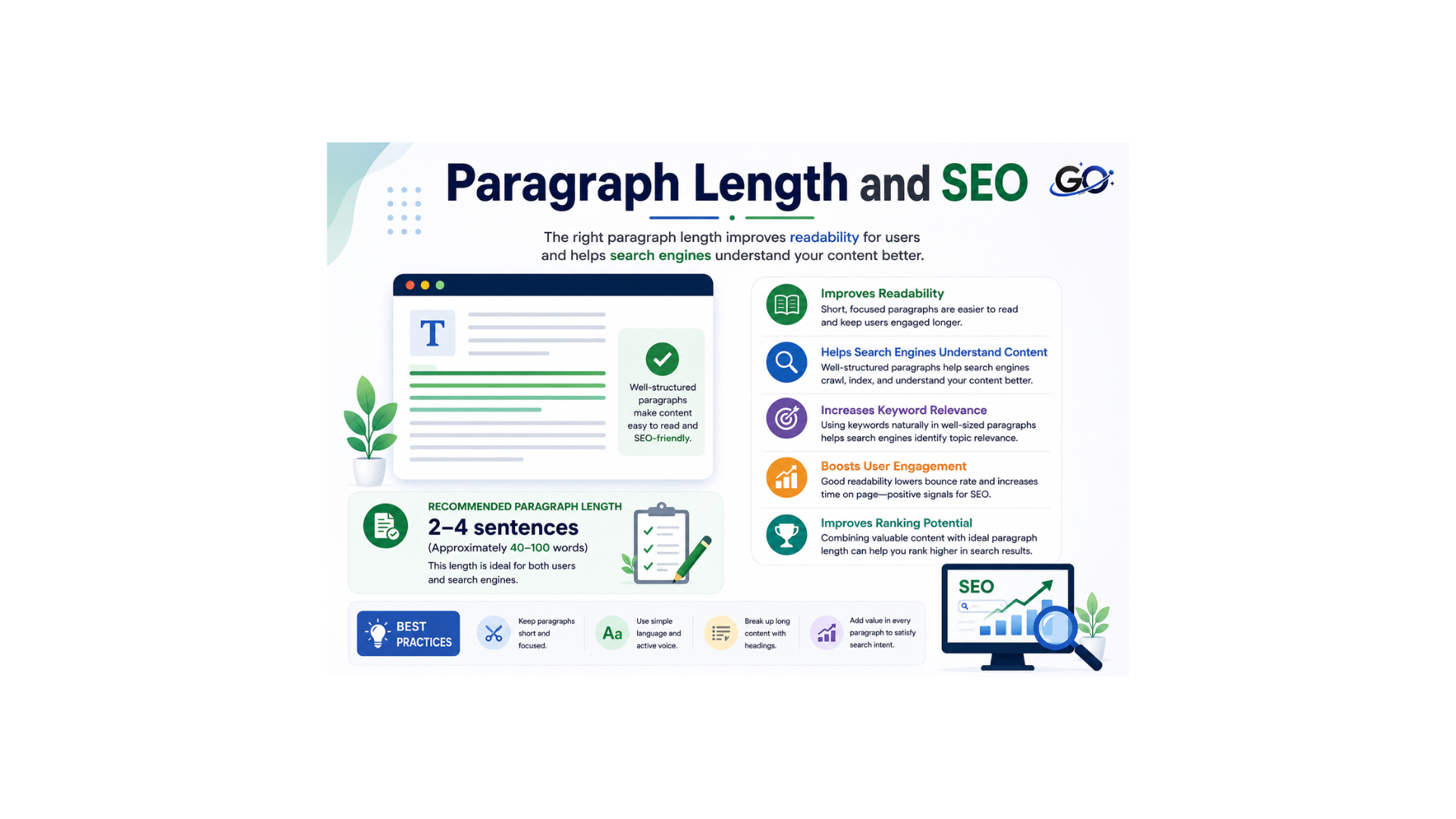
The length of a paragraph does not directly affect one’s Google ranking. Every paragraph on a webpage is not required by search engines to have a certain word count.
However, paragraph structure can enhance the user experience. Visitors can skim, read, and comprehend well-formatted content more easily.
The main goals of SEO content should be to fulfil search intent and offer helpful information. These objectives should be supported by paragraph length, which presents information in an understandable and straightforward manner.
Think about the demands of your audience rather than crafting brief paragraphs just because an SEO plugin suggests them. A paragraph’s length is usually appropriate if it clearly conveys one main theme.
Paragraph Length and Mobile Users
Mobile users frequently use comparatively small screens to read content. On a smartphone, a paragraph that appears decent on a desktop computer could appear significantly longer.
Reading can get tedious when large text blocks occupy the entire screen. Shorter paragraphs increase white space and facilitate content navigation for mobile visitors.
Websites that use responsive design can adjust to various screen sizes, but content structure is still important. The appearance of paragraphs on desktop and mobile devices should be taken into account by writers.
How Paragraph Length Affects User Experience
Numerous elements, such as website performance, navigation, design, accessibility, and content readability, affect user experience. One minor yet helpful aspect of this whole experience is paragraph length.
Well-structured paragraphs make it easier for readers to navigate an article. They are able to swiftly choose which pieces are pertinent to their needs and omit less crucial material.
This is particularly helpful for instructional articles and how-to manuals when readers can be looking for a specific solution rather than reading the entire page.
Paragraph Length in Business Content
The paragraphs are shorter in emails, reports, and business and professional documents. Your goal is to go right to the point in a clear, succinct, and efficient manner. Nobody has the time to go over intricate details in order to comprehend the topic at hand. Shorter paragraphs will make the document easier to read and scan in these circumstances. There will be three to four sentences in each paragraph.
Common Paragraph Length Mistakes
- paragraphs that are too long.Verify if there are multiple primary ideas in the paragraph. If so, divide it into distinct paragraphs. Any sentence that doesn’t directly support the topic sentence should be removed or moved.
- Underdeveloped paragraphs. Extend the core idea with instances, proof, or justification. . Ask yourself how, why, and what does this signify to develop supporting content.
- Topic drift. Strengthen your topic sentence and test every subsequent sentence against it. Move or eliminate a sentence if it is not directly related to the topic sentence.
- paragraphs that are choppy and fragmented. Make sure the ideas flow logically and incorporate transitions between paragraphs. Examine how well your paragraphs are arranged.
- Repetitive paragraph structure. Vary your sentence form and paragraph beginnings. Not every paragraph must have the same structure..
Paragraph Length Best Practices
- One idea per paragraph. Each paragraph should develop a single main point. If you find yourself introducing a second idea, start a new paragraph.
- Match length to context. Academic readers expect detailed paragraphs. Digital readers prefer shorter ones. Know your audience and write accordingly.
- Use transitions. Connect paragraphs with transitional words or phrases, or by referring back to the previous idea while introducing the next one.
- Vary paragraph length. Consistent paragraph length creates monotony. Changing length can highlight important elements and produce rhythm.
- Read out loud. You can find paragraphs that feel too long, too short, or poorly constructed by reading your writing aloud.
- Check visual appearance. Step back and look at your document as a whole. Dense blocks of text with no variation signal that paragraphs may need to be broken up.Review the complete article for overall readability.
Conclusion
Paragraph length plays an important role in making online content clear, organized, and easy to read. Although there is no universal number of words that every paragraph should contain, writers should avoid unnecessary blocks of text and focus each paragraph on a specific idea.
For SEO content, paragraph length should support readability and user experience rather than be treated as a direct ranking factor. Short and medium-length paragraphs can make webpages easier to scan, particularly on mobile devices.
FAQs
Can a paragraph consist of just one sentence?
Indeed, a single sentence can make up a paragraph. This is frequently employed to emphasise a point or make a compelling argument. However, since it might break the flow of your writing and make it choppy, this should only be used sometimes and not become a habit.
How can I determine when to begin a new paragraph?
When introducing a new concept or point, you should begin a new paragraph. It can also be employed to produce a dramatic effect or to present an opposing viewpoint. To keep your paragraph readable, you might want to start a new one if your current one is becoming too lengthy and complicated.
How can I improve the structure of my paragraphs?
A distinct topic sentence, supporting sentences, and a conclusion are all necessary components of a well-structured paragraph. The topic sentence presents the primary idea, the supporting phrases offer proof or clarification, and the final sentence either summarises the major idea or serves as a transition to the following paragraph. eces are pertinent to their needs and omit less crucial material.