

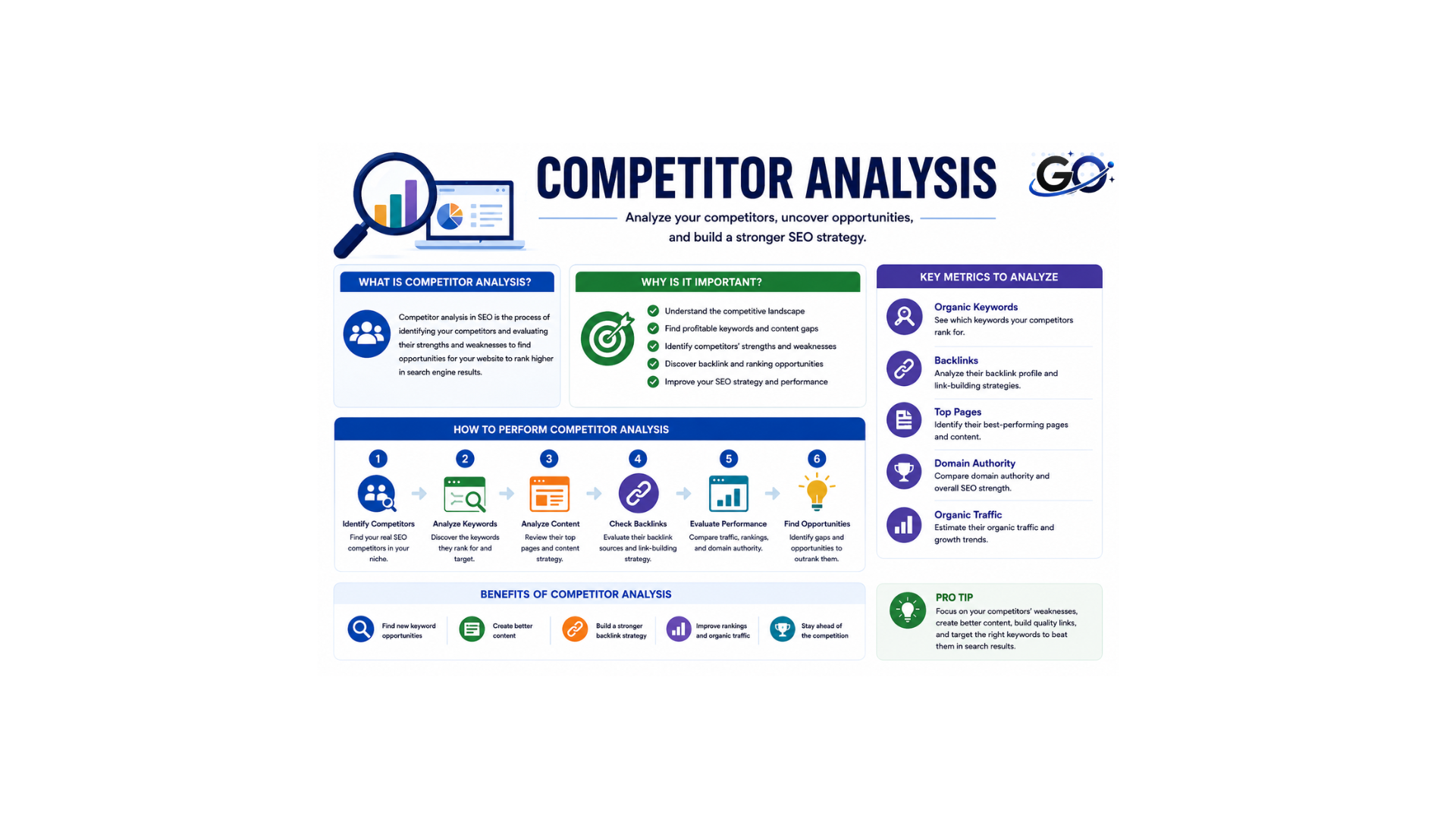
Learn what competitor analysis is, why it matters, and how it helps businesses improve marketing, SEO, and growth strategies. Discover useful tools, key benefits, and practical techniques for staying ahead of competitors.
Understanding your rivals is crucial for success in the cutthroat business world of today. Competitor analysis helps businesses identify market trends, evaluate competitors’ strategies, and discover new growth opportunities…
Why Is Competitor Analysis Important?
Competitor analysis is important because it helps businesses understand the market and identify opportunities for improvement. By studying competitors, companies can learn what customers prefer and which strategies are producing the best results. It also helps businesses avoid common mistakes and stay updated with industry trends. Regular competitor research allows organizations to adapt to changing market conditions and maintain their competitive position. As a result, businesses can improve customer satisfaction, increase sales, and strengthen their brand presence.
Types of competitors
You must find and examine the appropriate rivals in order to gain the most insightful information from competitive analysis.
Direct, indirect, and aspirational competitors are the three categories. Each contributes significantly to your strategy and manifests itself differently on each of the three competitor analysis surfaces.
Direct competitors
Direct rivals provide comparable goods and services and target comparable markets. Since they are the easiest to compare and learn from, analyzing them ought to be your first priority.
Let’s say you have an app that delivers food to urban professionals. Due to its delivery of restaurant meals to the same clientele, DoorDash is a direct rival.
Indirect competitors
Although they provide distinct goods or services, indirect rivals address the same fundamental demand. After direct rivals, they are worth examining because shifts in their tactics frequently indicate more significant changes in the market that impact demand.
Meal kit businesses like HelloFresh are indirect competitors for food delivery apps since they cater to people who are busy and want home-cooked meals, but they do it by delivering ingredient kits instead of restaurant meals that are ready to eat.
Aspirational competitors
Even if you’re not vying for the same clients, aspirational competitors are business titans that you respect and model your approach after. When you intend to expand outside your current business strategy, research them.
Uber is an aspiring rival for a food delivery app. It provides a comparable service and targets a similar population, but their platform also enables package delivery and ride-hailing. As the app grows, it may add these services.
Benefits of competitor analysis
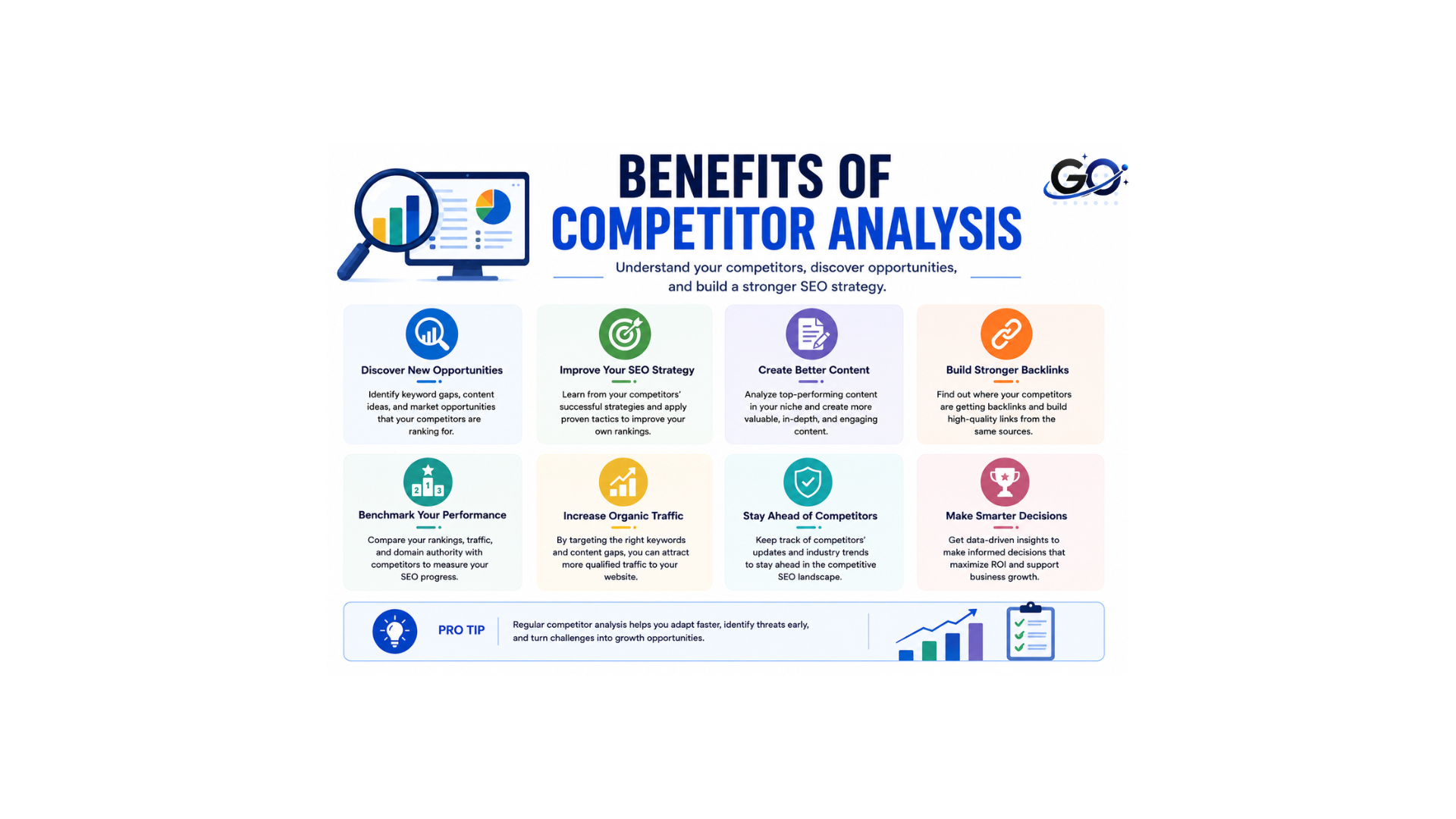
Now that you understand the definition of a competitive analysis, consider whether it’s useful for the development of the business. The following are some advantages that this kind of analysis offers:
Helps build better marketing strategies:
You may develop your own marketing strategy once you know how and where your competitors are connecting with their customers and how much they are spending on advertising.
Identifies under-served opportunities:
Conducting a competitor analysis makes it easier to identify any products or services that customers want but are currently unable to obtain. Finding these underutilized chances allows you to come up with a way to satisfy the wants of your clients.
Let’s capitalize on their weaknesses:
When you understand your competitor’s weaknesses, you can use them to your advantage. For example, if they don’t have the resources or capabilities to do something and you do, you can help fill that need and grow in the market.
Help you make well-informed decisions:
Whether you’re planning or making real-time decisions, using a competitor analysis can help you make more strategic decisions and investments.
Key Elements of Competitor Analysis
A successful competitor analysis focuses on several important factors. These include products and services, pricing strategies, website performance, content marketing, social media presence, customer reviews, and overall brand reputation. Businesses should evaluate how competitors attract customers, promote their products, and engage with their audience. Analyzing SEO performance, keyword rankings, and backlinks can also reveal valuable insights. By examining these elements, companies can identify strengths, weaknesses, opportunities, and areas for improvement.
How to conduct a competitor analysis
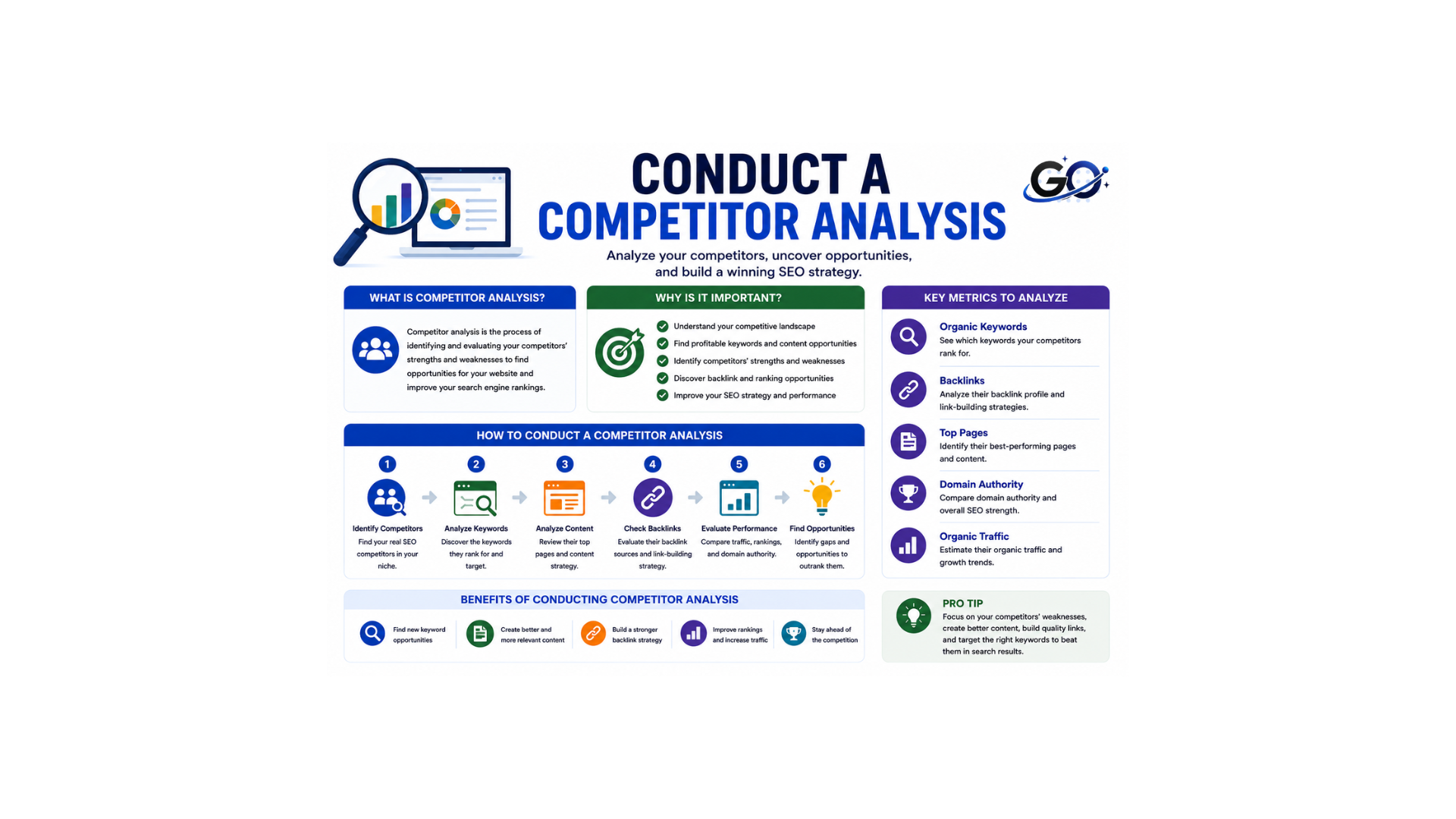
You can complete a competitor’s study all at once or as a side project in addition to your other assignments. The goal is to develop a report that turns your suspicions into facts, that you can then use to inform your strategy.
At a high level, the steps are:
- Identify your key competitors
- Gather the right information
- Analyze and organize your findings
- Turn insights into actions
- Continuously measure results
1. Identify your competitors
Make a list of every business that a potential client might select in place of you. You can get a baseline understanding by researching products online or by asking artificial intelligence (AI) tools, and going from there.
In your list, include direct competitors offering similar products, and indirect competitors solving the same problem in a different way.
At this stage, you want to have a database with the competitors listed, links to their websites, and the ways you’re going to measure them. See the section above for the key things you might want to note down.
2. Gather information
Look for information that demonstrates how each rival operates Examine their website, pricing page, product demonstrations, client testimonials, social media posts, and any published case studies.
Note down facts like what they sell, how they sell it, and how customers respond. You should have a spreadsheet full of information once you’ve completed this.
3. Analyze and organize
Sort your findings into areas of your business you want to improve. Sales? Marketing? If it’s very area, move forward with a holistic approach.
If you want more structure, a framework option to try is the strengths, weaknesses, opportunities, threats (SWOT) method, by putting together a feature comparison table that can help you spot opportunities quickly.
4. Apply what you’ve learned
This is the stage where you turn your insights into actions. This might mean refining your product roadmap, adjusting your pricing, strengthening your messaging, or building new campaigns that highlight your advantages.
5. Continuously measure results
Check in regularly to see what’s changed in your performance and in theirs. Competitors shift quickly (even based on the work you’re doing), so treat this as an ongoing process, not a one-off project. Try to have quarterly or monthly reviews with updated competitor insights.
Profile your competition’s target customers
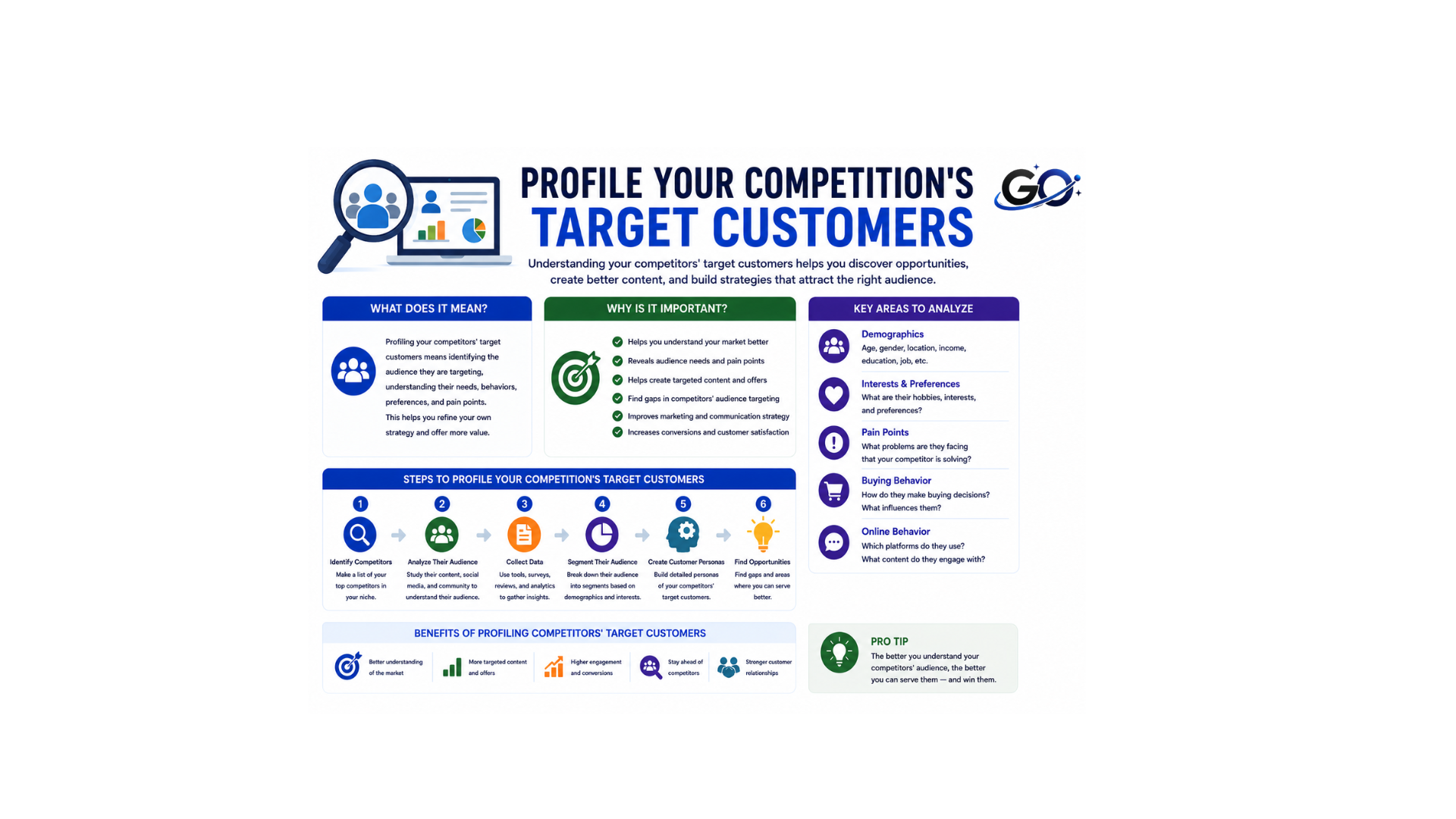
A company is nothing without its customers. You can learn a lot about your competitors’ company by getting a sense of who they sell to. To identify the ideal client for any firm:
• Go over their mission statement.
• Observe the type of messaging they employ.
• Keep tabs on their social media interactions.
• Check to see if their content highlights any current clients.
Make use of this data to create a profile of the target market for your rivals’ goods and services. Since these are your competitors, these client profiles will likely match your own target customers, so pay attention to even minor variations.
Competitor Analysis in SEO
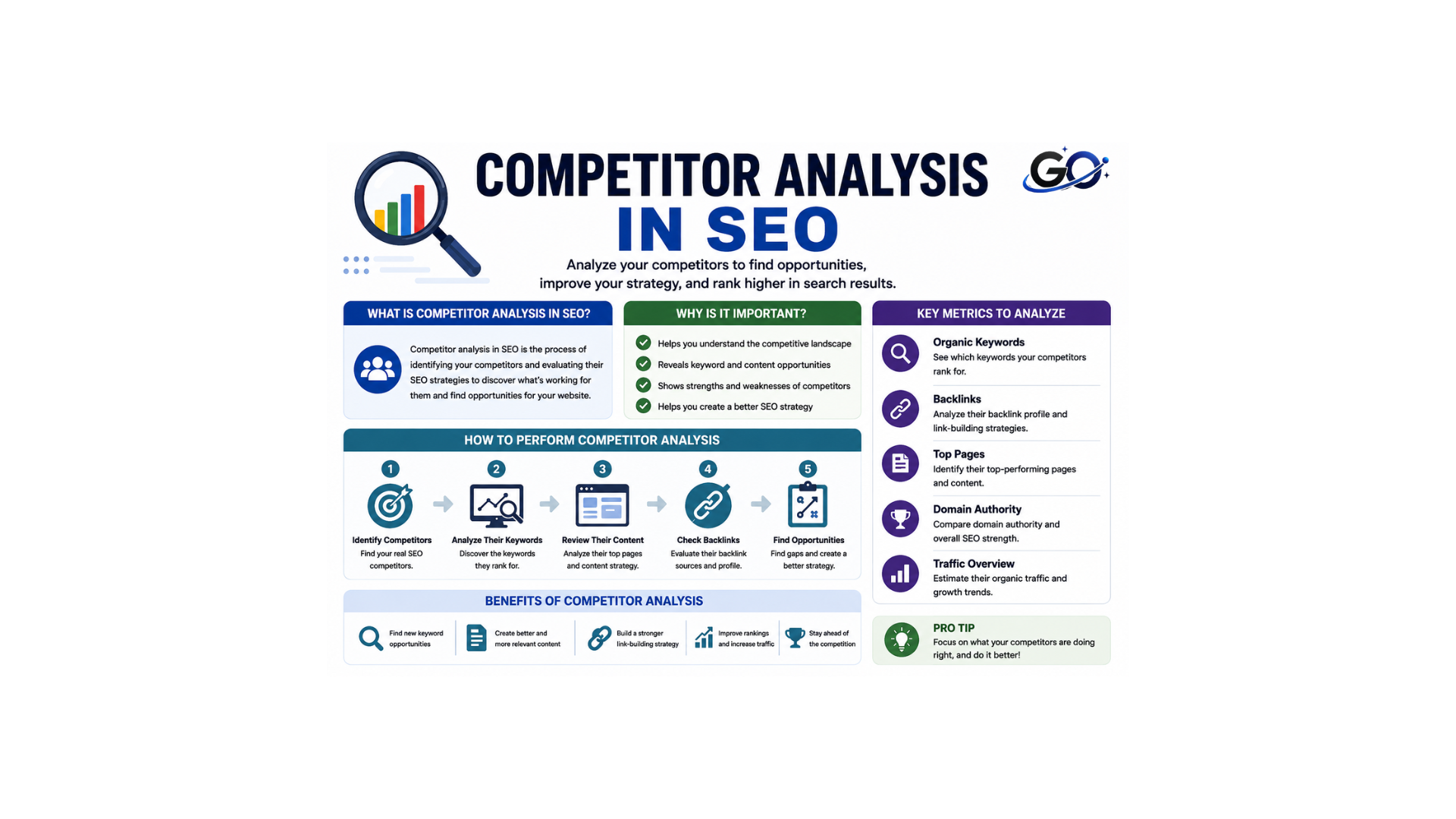
Competitor analysis plays a major role in search engine optimization (SEO). By studying competitors’ websites, businesses can discover valuable keywords, backlink opportunities, and successful content strategies. SEO competitor analysis helps identify which pages generate the most traffic and which topics attract the target audience. It also provides insights into domain authority, search rankings, and technical SEO practices. Using this information, businesses can create higher-quality content, improve website performance, and achieve better rankings on search engines such as Google.
Best Competitor Analysis Tools
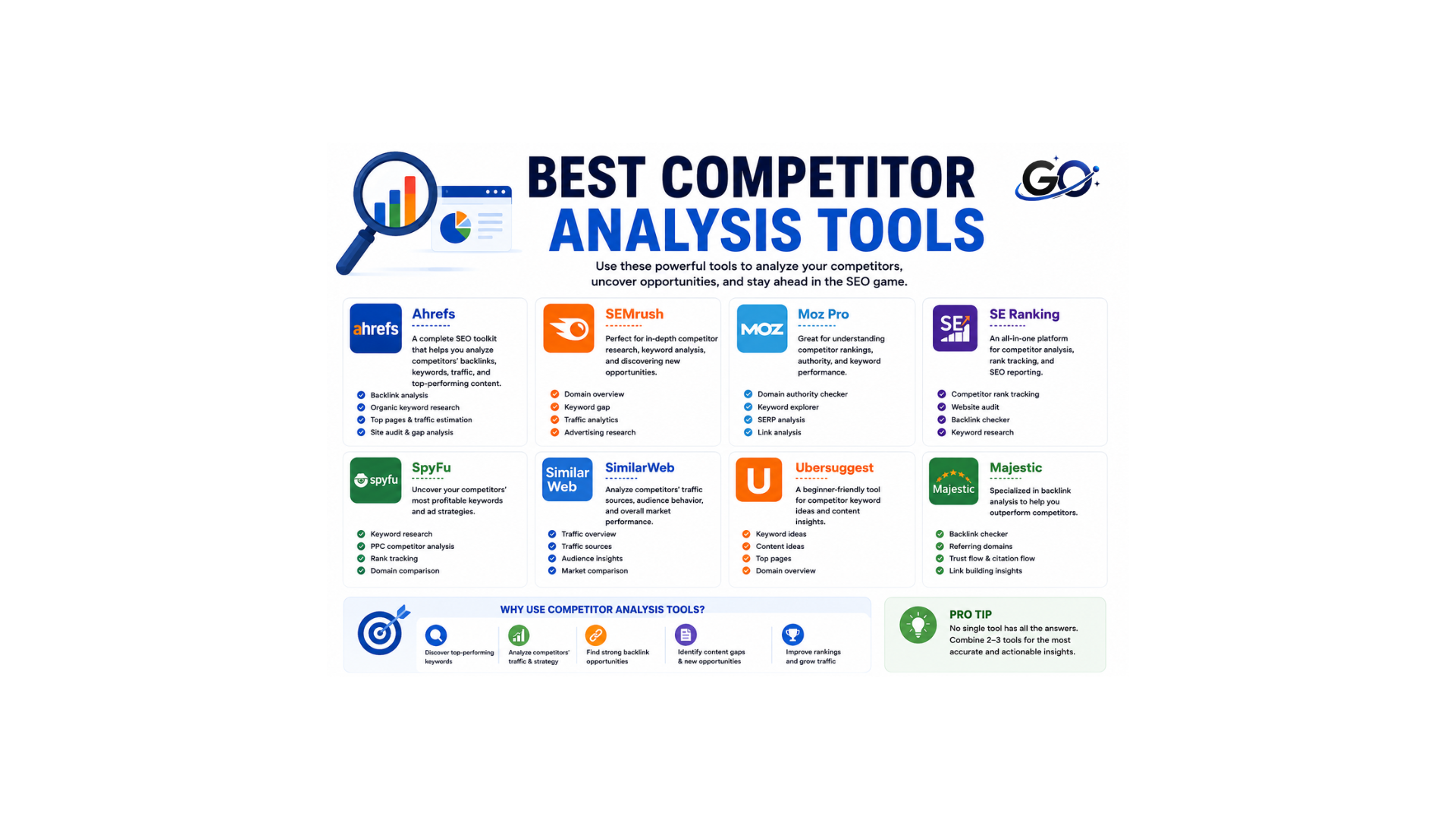
Several tools can help businesses perform effective competitor research. Google Search is useful for identifying competitors and analyzing their online presence. Ahrefs and SEMrush provide detailed information about keywords, backlinks, and website traffic. SimilarWeb offers insights into audience behavior and competitor traffic sources. Moz Pro provides domain authority metrics, keyword research, and site audits, while SE Ranking offers rank tracking, competitor monitoring, and backlink analysis. SpyFu helps uncover competitors’ SEO and PPC strategies, Ubersuggest is useful for keyword research, content analysis, and traffic insights, and Majestic specializes in backlink analysis with Trust Flow and Citation Flow metrics. These tools help businesses gather reliable data and make informed strategic decisions.
Conclusion
A crucial procedure that aids companies in comprehending their market, assessing rivals, and spotting areas for development is competitor analysis. By analyzing products, pricing, marketing strategies, SEO performance, customer feedback, and industry trends, businesses can make informed decisions and strengthen their competitive position.
Whether you are a startup, blogger, eCommerce store owner, or established company, competitor analysis provides valuable insights that support long-term success. Regularly monitoring competitors enables businesses to adapt to market changes, improve customer satisfaction, and stay ahead of the competition.
In a rapidly evolving business environment, competitor analysis is not just an option, it is an essential strategy for growth, innovation, and sustained success.