

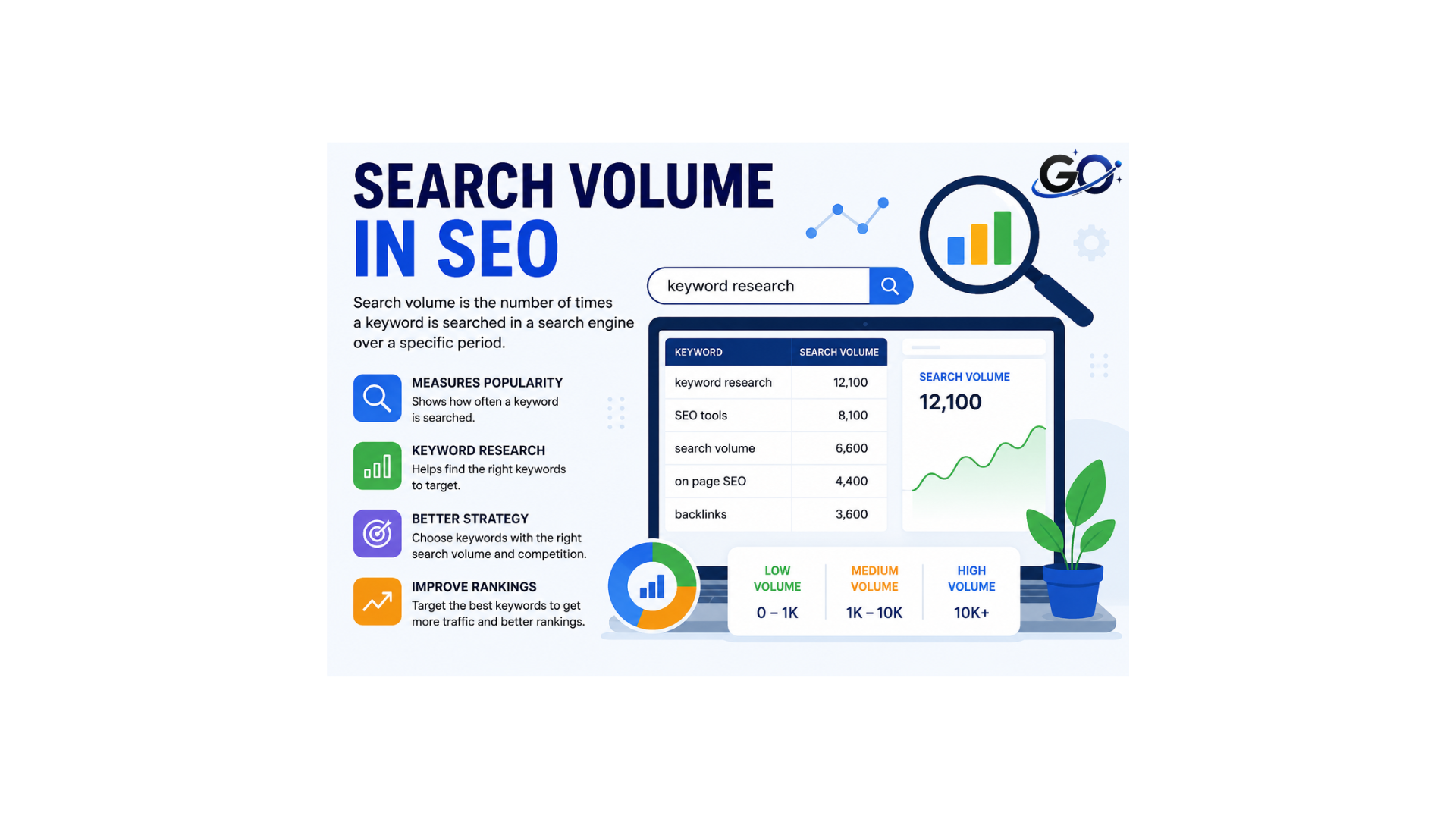
Search volume in SEO refers to the average number of times a keyword is searched in search engines each month. It helps marketers identify popular keywords, estimate traffic potential, and choose the best terms to target for higher rankings and visibility.It is one of the most important metrics in keyword research because it helps determine the popularity and demand for a particular keyword. By analyzing search volume, marketers, bloggers, and businesses can identify which topics users are actively searching for and estimate the amount of organic traffic a keyword may generate.
Search volume data is commonly provided by keyword research tools such as Google Keyword Planner, Ahrefs, SEMrush, Moz, and Ubersuggest. Understanding search volume allows SEO professionals to prioritize keywords, create targeted content, improve search engine rankings, and develop more effective SEO strategies that align with user interests and search behavior.
Why Is Search Volume Important in SEO?
Webmasters like you may better understand user behaviour and search intent by knowing search volume. As we just discussed, a topic’s popularity is indicated by terms with a large search volume. Therefore, if you are able to uncover high-volume keywords, you will be able to provide focused content that can potentially draw in a large number of visitors to your website and captivate the interest of a broad audience.
Avoid the temptation of merely packing your article with popular keywords. Your ranking won’t necessarily rise as a result. In fact, Google considers this strategy to be “black hat,” a deceptive approach that they actively discourage.
Rather, your material has to be excellent, pertinent, and naturally incorporate these keywords.
Conversions are also impacted by search traffic. Just remember that the relationship is complex. Although high search volume keywords can attract visits, actual conversions rely on a number of factors, including the quality of the product or service, the relevance of the content, and the user’s entire experience.
How Search Volume Is Measured
Search volume refers to and is measured using various tools and platforms that collect data on user search behavior relevant to results from organic searches. This is a summary of how search volume is usually calculated.
Keyword research tools gather this information and present it in an easy-to-understand format. For example:
- SEO: 110,000 monthly searches
- SEO Audit: 18,000 monthly searches
- Keyword Research: 12,000 monthly searches
- Local SEO Services: 8,000 monthly searches
Although these figures are helpful, they are estimates rather than exact numbers. Different SEO tools may report slightly different search volumes because they use different databases and algorithms.
Types of Search Volume Keywords
High Search Volume Keywords
High-volume keywords receive thousands or even millions of searches every month.These terms are very well-liked and frequently get large amounts of traffic.
Examples include:
- SEO
- Digital Marketing
- Web Design
- Content Marketing
The main challenge with high-volume keywords is competition. Many websites target these terms, making it difficult to achieve top rankings.
Medium Search Volume Keywords
Medium-volume keywords balance the potential for both traffic and competitiveness. While still generating significant traffic, they are frequently simpler to rank for than high-volume keywords.
Examples include:
- SEO Audit Checklist
- Best SEO Tools
- Local SEO Strategy
These keywords are often ideal for growing websites and businesses.
Low Search Volume Keywords
Low-volume keywords receive fewer searches but are usually more specific. These keywords frequently have greater conversion potential and less competition.
Examples include:
- SEO Audit for Small Business
- Local SEO for Dentists
- Keyword Research for Beginners
Long-tail keywords generally fall into this category and can be highly valuable for niche websites.
What Does a Good Keyword Search Volume Look Like?
If you twist your arm for a definitive answer, a good keyword search volume is 100 – 1000 searches a month, as this would likely provide good levels of organic traffic. However, a “good” keyword traffic depends on a number of variables, such as industry, seasonality, competition, and search intent, to mention a few.
For instance, a small, highly specialised business would view 500 searches per month as a big volume, whereas a large, well-established business might view it as a low volume. A ‘good’ keyword search volume will also vary depending on location, too.
The best approach is to choose keywords that balance search volume, competition, and relevance to your audience.
Search Volume and Keyword Difficulty
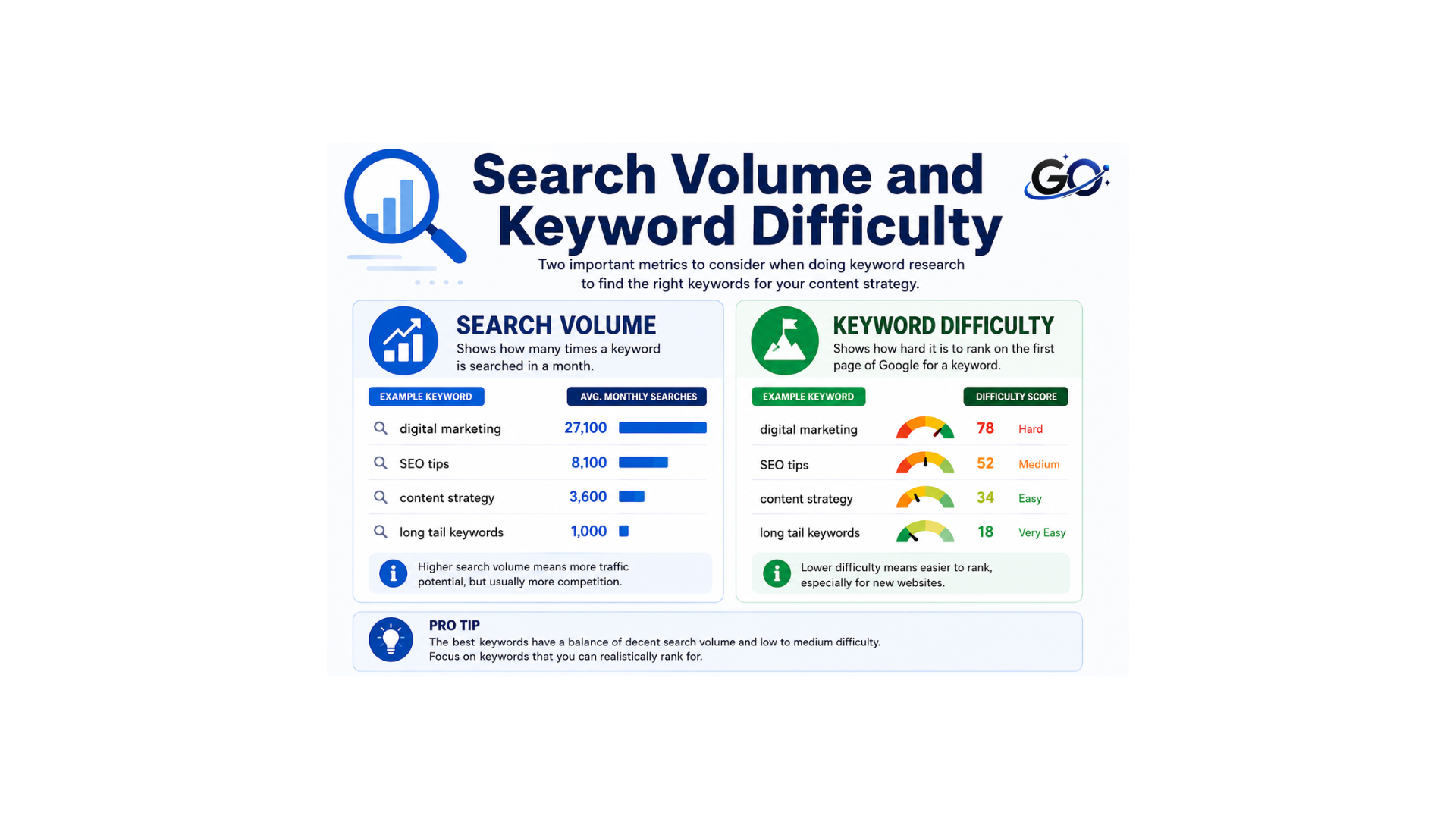
Search volume alone does not determine whether a keyword is worth targeting. Keyword difficulty is another important factor.
Search volume tells you how many people search for a keyword.
The difficulty of ranking for a certain keyword is indicated by its keyword difficulty.
For example:
Keyword A:
- Search Volume: 50,000
- Difficulty: High
Keyword B:
- Search Volume: 2,000
- Difficulty: Low
While Keyword A may offer more traffic potential, Keyword B may provide faster SEO results because it is easier to rank for.
Successful SEO strategies focus on finding keywords with a healthy balance between search volume and competition.
Search Volume and Search Intent
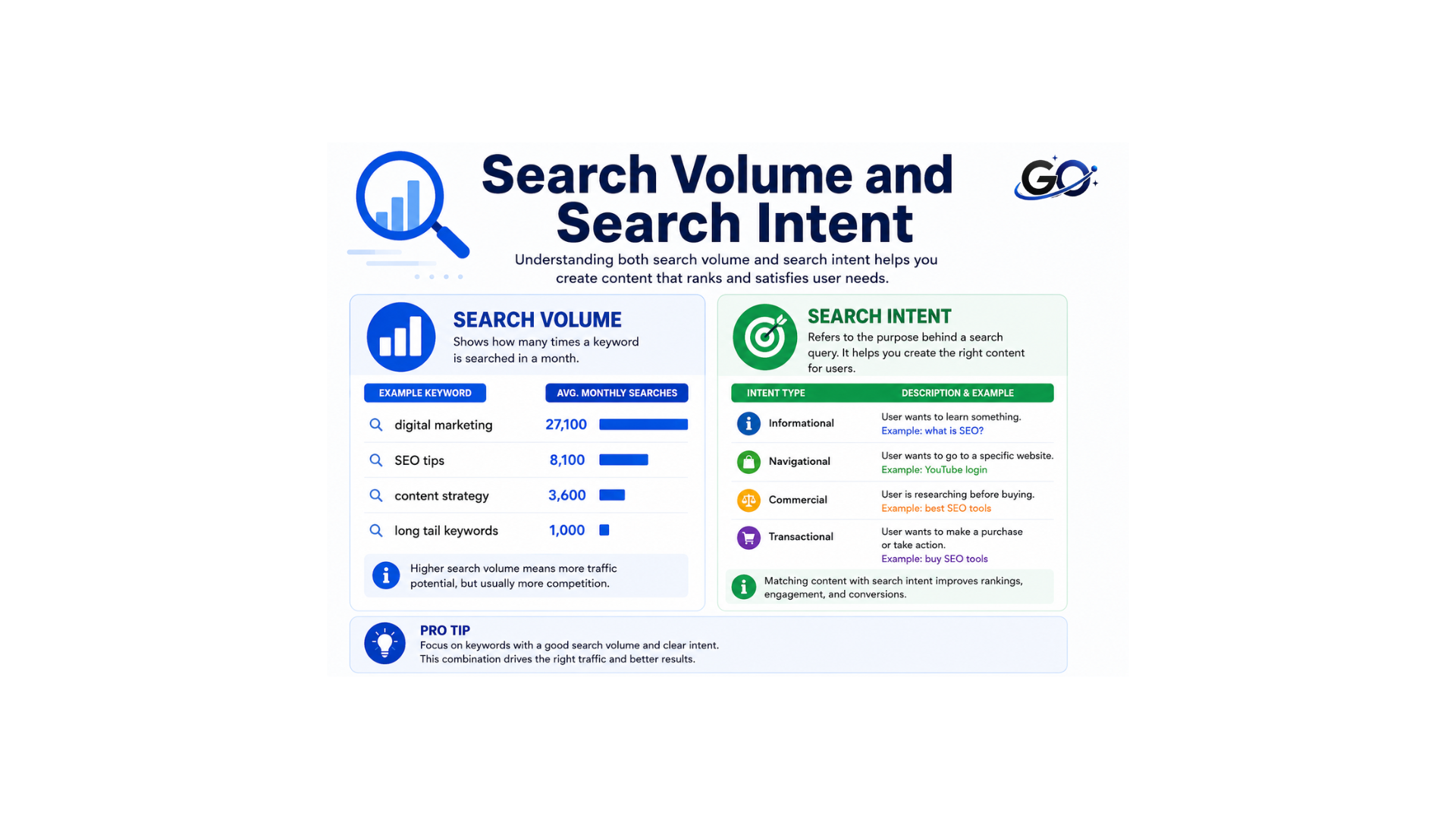
The motivation behind a user’s search is referred to as search intent. Comprehending intent is equally as crucial as comprehending search volume.
There are four primary types of search intent:
Informational Intent
Users want information.
Examples:
- What is SEO?
- How to increase website traffic?
Navigational Intent
Users want to visit a specific website.
Examples:
- Facebook Login
- YouTube
Commercial Intent
Users are researching products or services.
Examples:
- Best SEO Tools
- Ahrefs vs SEMrush
Transactional Intent
Customers are prepared to act or buy anything.
Examples:
- Buy SEO Software
- Hire SEO Expert
Keywords with strong commercial or transactional intent often generate higher conversions, even when their search volume is lower.
Best Tools for Checking Search Volume
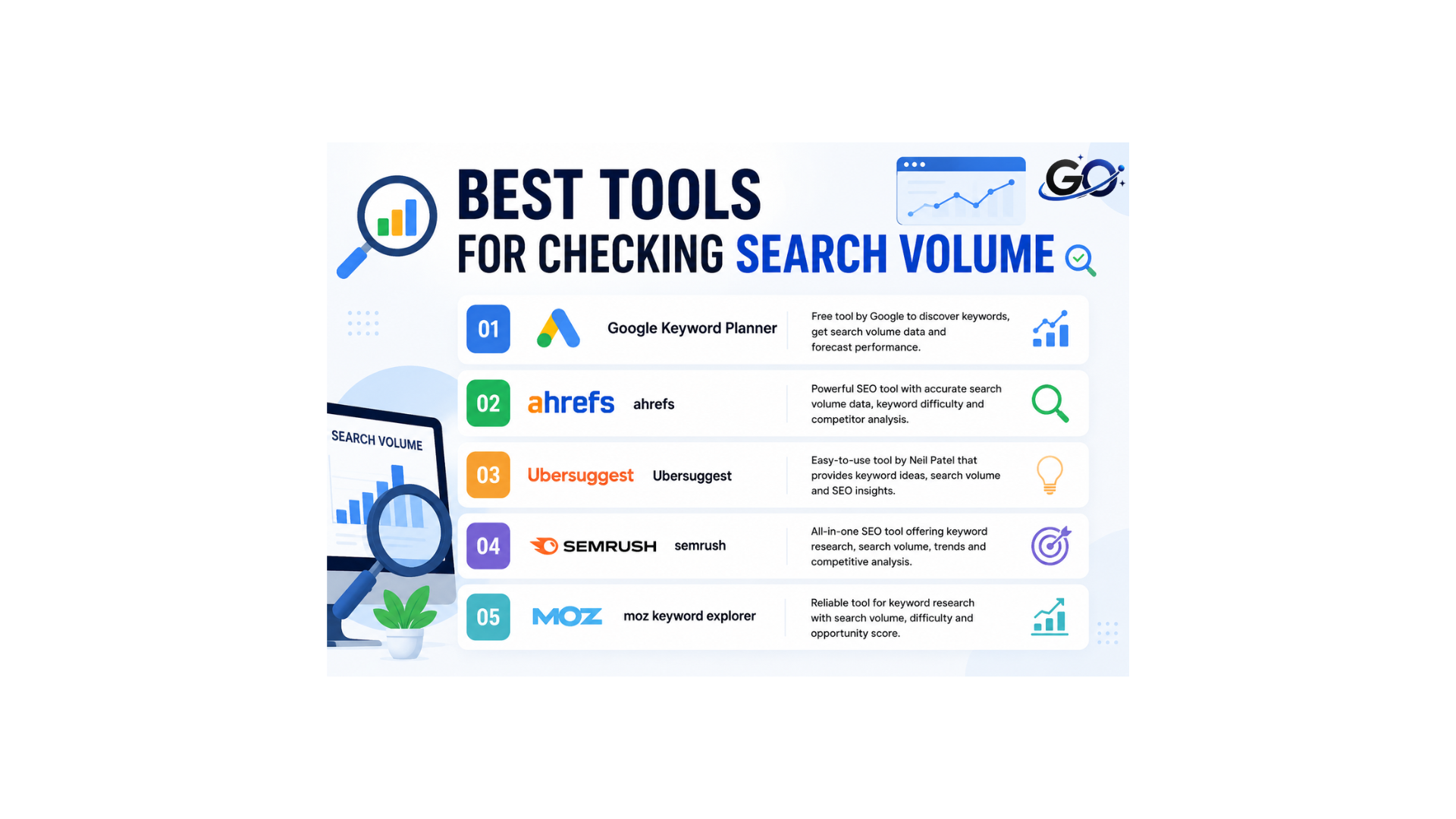
Several SEO tools provide keyword search volume data.
Google Keyword Planner
Google Keyword Planner is one of the most trusted keyword research tools. It provides keyword ideas and estimated monthly search volumes directly from Google.
Ahrefs
Ahrefs is a popular SEO platform that offers keyword research, search volume data, competitor analysis, and backlink tracking.
SEMrush
SEMrush helps marketers analyze keyword performance, search volume trends, and competitor strategies.
Ubersuggest
Ubersuggest is beginner-friendly and provides search volume, keyword difficulty, and content ideas.
Moz Keyword Explorer
Moz offers keyword suggestions, search volume estimates, and SEO opportunity analysis.
Factors That Affect Search Volume
Several factors can influence keyword search volume.
Seasonality
Some keywords become more popular during specific times of the year.
Examples include:
- Christmas Gifts
- Black Friday Deals
- Summer Vacation Packages
Trends
Trending topics often experience sudden increases in search volume.
Examples include:
- New technology launches
- Viral social media trends
- Major sporting events
Geographic Location
Search volume can vary significantly from one country to another. A keyword that is popular in the United States may have a lower search volume in Pakistan or other regions.
Industry Changes
New products, services, and technologies can influence user search behavior and keyword demand.
How to Use Search Volume in Your SEO Strategy
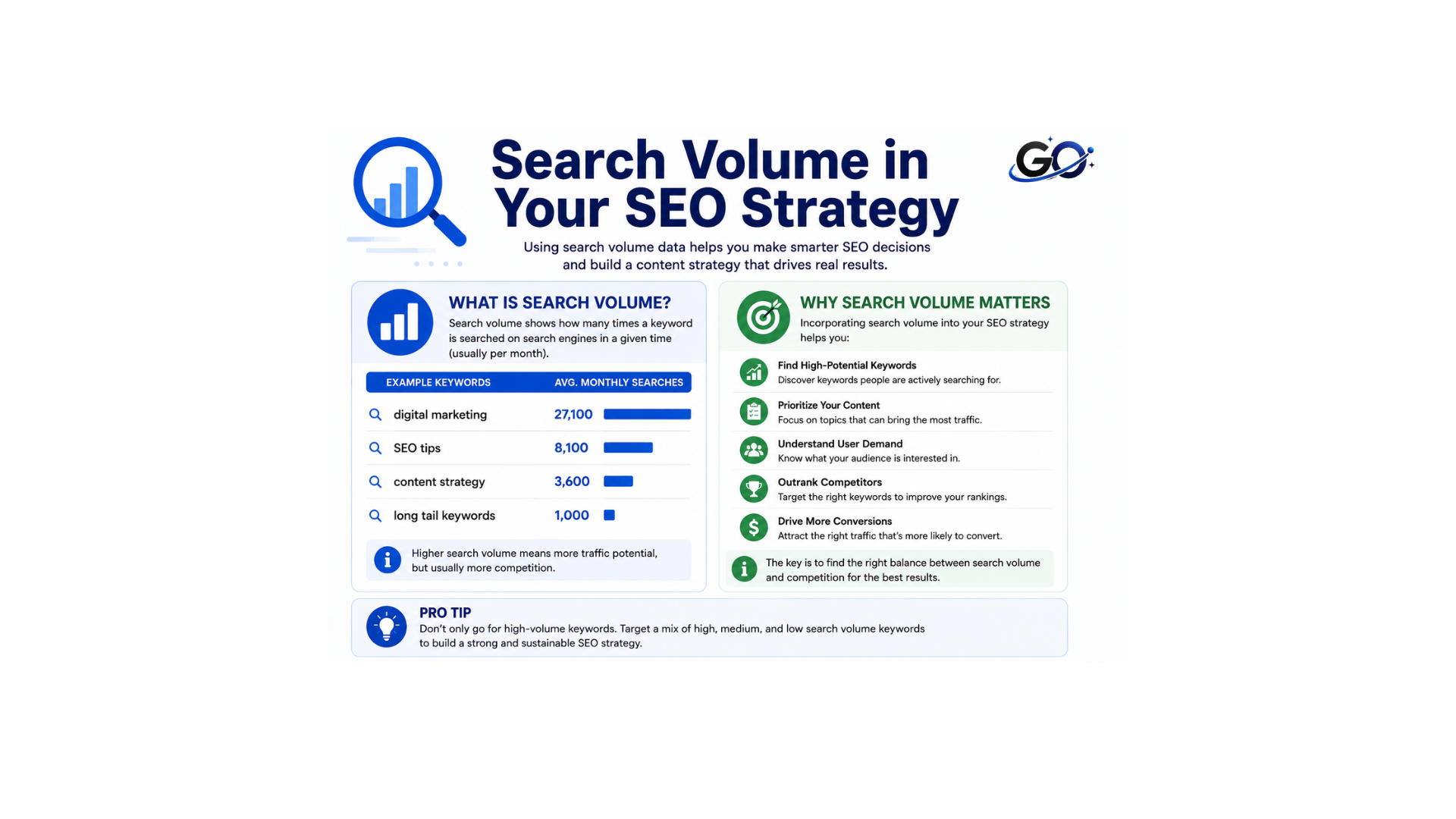
As fascinating and valuable as keyword search volume is, it’s just one piece of the SEO puzzle. HHigh search volume is simply that—search volume.Your plan must take into account a plethora of additional aspects, such as competition and user intent.
To diversify your sources of traffic, focus on a combination of long-tail, medium-volume, and high-volume keywords. Create top-notch content that answers consumer questions and delivers value.
By adjusting your keywords and SEO strategy in line with trends and consumer preferences, you can position your site to attract more traffic and convert more visitors.
Common Mistakes to Avoid
Many website owners misuse search volume data. Common mistakes include:
- Targeting only high-volume keywords.
- Ignoring keyword difficulty.
- Overlooking user intent.
- Focusing on traffic instead of conversions.
- Neglecting long-tail keywords.
- Using outdated keyword research data.
Avoiding these mistakes can improve your SEO results and help you create a more effective content strategy.
Conclusion
Search volume is a fundamental SEO metric that shows how often users search for a specific keyword within a given period. It helps marketers identify popular topics, estimate traffic potential, and make informed keyword targeting decisions. Although keywords with high search volume can generate a lot of traffic, there is frequently fierce competition for them. Therefore, successful SEO strategies balance search volume with keyword difficulty, relevance, and search intent. By understanding and using search volume effectively, businesses can create better content, improve search engine rankings, attract qualified visitors, and achieve long-term growth through organic search.