

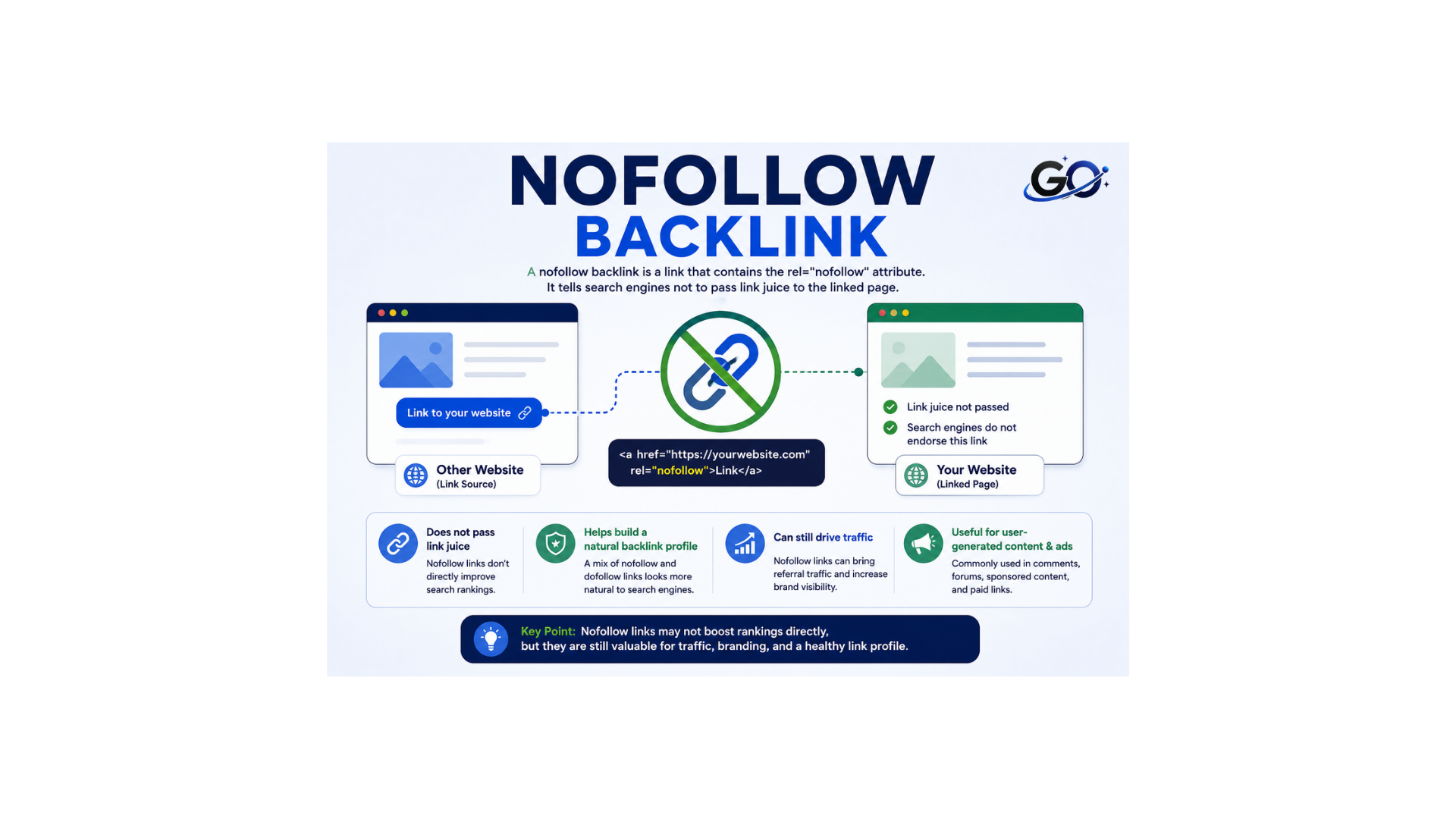
Nofollow backlinks can increase website visibility, drive referral traffic, and help build a natural and diverse backlink profile.Backlinks that connect one website to another are what we mean when we talk about links on a website. Companies who spend money on SEO could have a thorough backlinking plan to try to obtain backlinks from several sources.Internal links that connect one page on your website to another landing page on the same website are not considered nofollow links.
An on-page SEO strategy that maximises meta tags, headlines, content, and images includes internal links.Conversely, backlinking is a component of an external link off-page SEO strategy that also includes social media, content marketing, and link creation. For your information, there is a third kind of SEO known as technical SEO that addresses sitemaps, structured data, and page speed.
How Do Nofollow Backlinks Work?
A nofollow backlink indicates to a search engine that it shouldn’t be regarded as a typical endorsement. When crawling, indexing, and assessing webpages, search engines are free to choose how to use that signal.
In certain circumstances, link characteristics may be interpreted by modern search engines as suggestions rather than strict directives. This implies that website owners shouldn’t trust that a nofollow link would be ignored entirely.
The most crucial thing to remember is that a link’s nofollow feature does not prevent users from clicking on it. The backlink can still produce useful referral traffic if the connected page has a relevant audience.
Why Are Nofollow Backlinks Important?
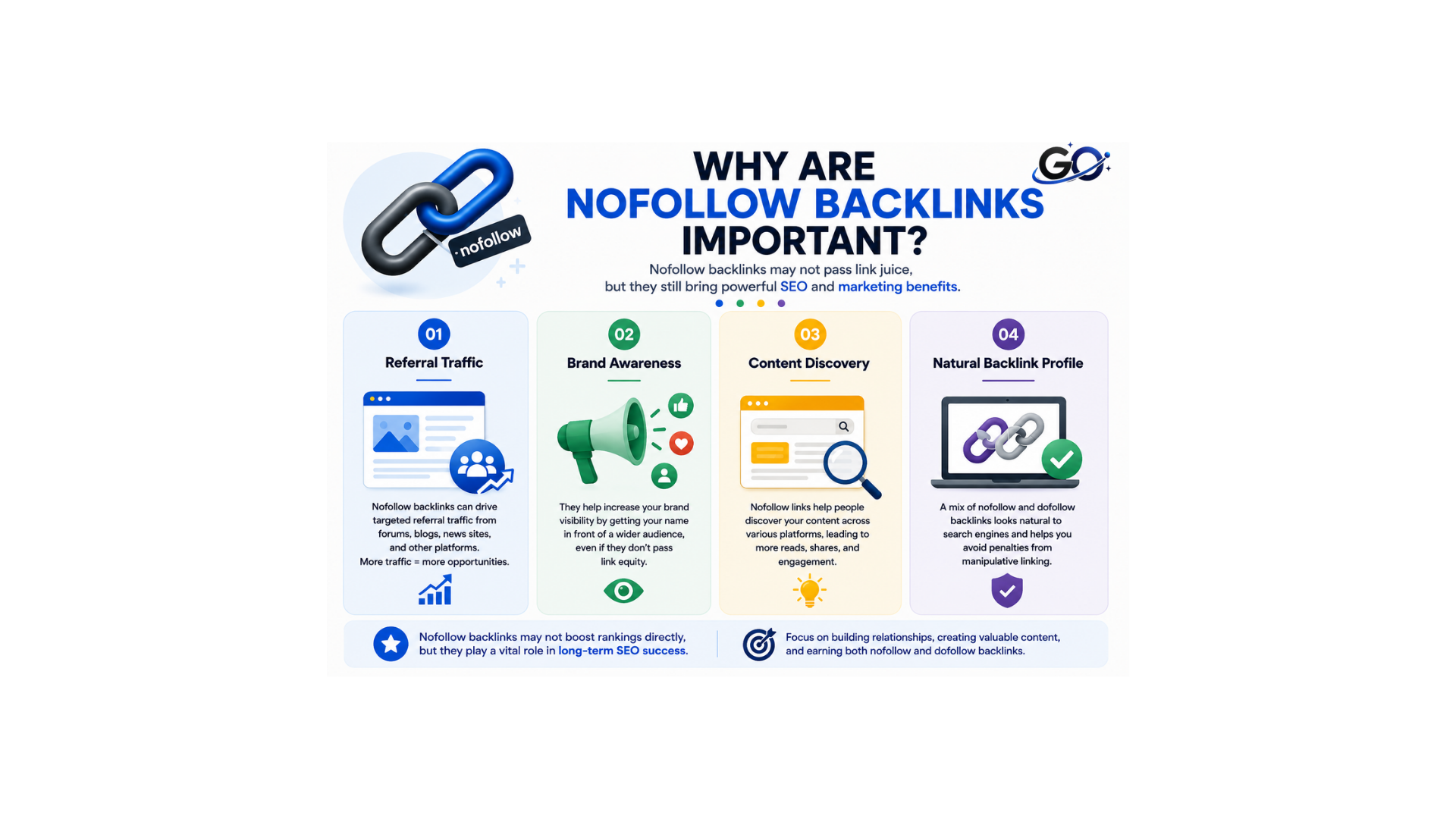
Nofollow backlinks can provide several benefits beyond traditional link equity.
Referral Traffic
Visitors that come to your website via links on other websites are known as referral traffic. High-quality backlinks can boost total website traffic by directing relevant readers to your content. Links on reputable and pertinent websites can draw readers who are actually interested in your material. Additionally, this traffic may increase engagement and generate conversion chances.
Brand Awareness
Increased brand recognition makes your company or website more recognisable and memorable. Your brand’s visibility on pertinent websites and online platforms can be raised with high-quality backlinks. Credibility and trust can be increased when your brand is mentioned in reliable and pertinent sources. Over time, users will grow more accustomed to your brand if it is consistently visible online. Increased website traffic, searches, and prospective clients can all be boosted by strong brand recognition.
Content Discovery
Through many online sources, content discovery aids people in finding your website and important information. By linking your content to pertinent websites and channels, backlinks can facilitate content discovery. Users can access your pages and read more of your material by clicking on these links. This can improve audience engagement, referral traffic, and website visibility.
Natural Backlink Profile
A genuine backlink profile is what search engines look for. Because they indicate that you are creating high-quality content that other websites want to connect to, natural backlink profiles show authority. However, your profile may look spammy if it simply has dofollow links. Search engines want to see that you have a varied profile with as many dofollow and nofollow links as you can.
Nofollow vs. Dofollow Backlinks
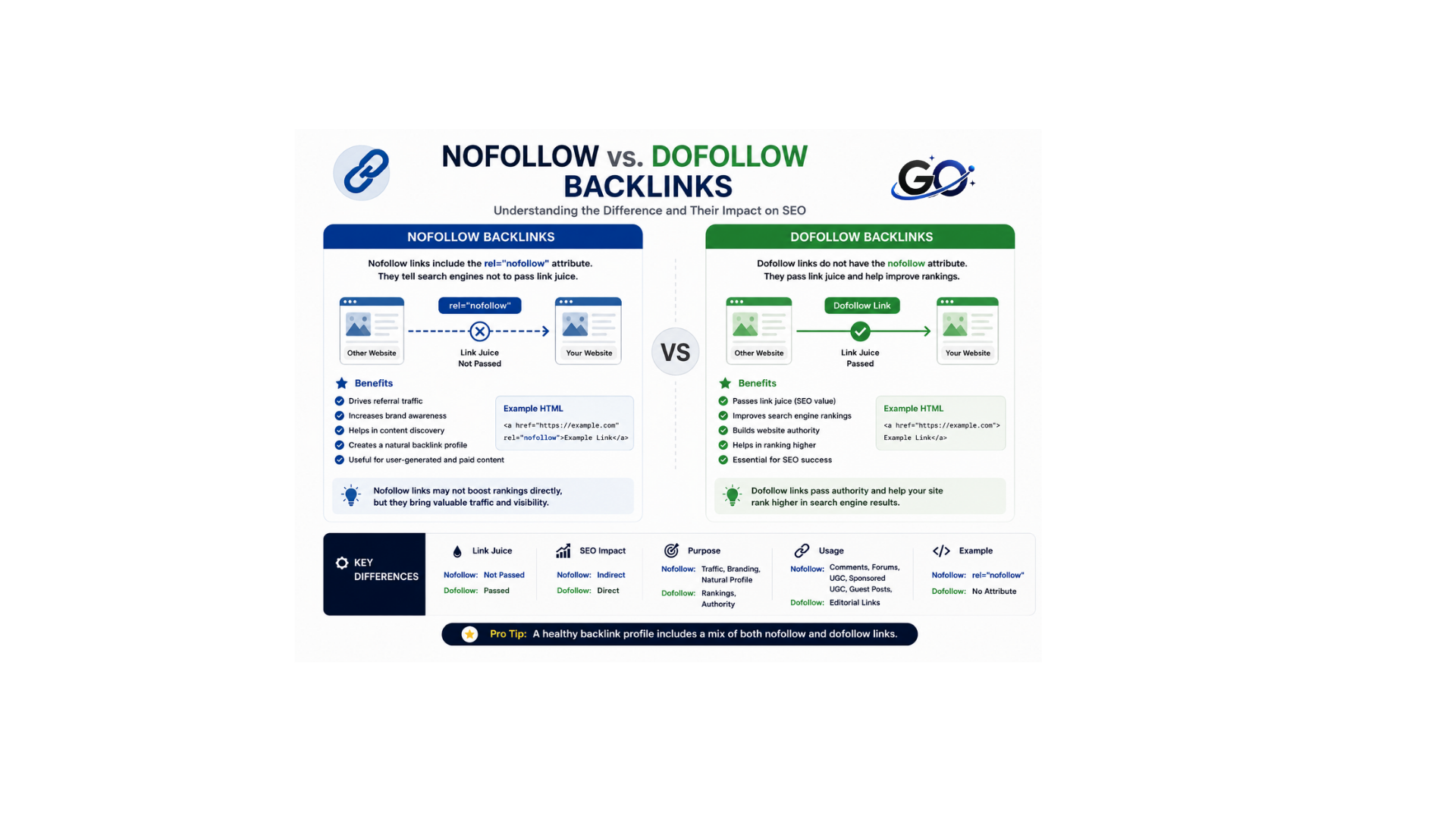
The existence of a link relationship attribute is the primary distinction between these ties.
A normal link may look like:
<a href=”https://example.com/”>Example Website</a>
A nofollow link may look like:
<a href=”https://example.com/” rel=”nofollow”>Example Website</a>
While the second offers a nofollow indication, the first is typically regarded as a regular link.
Users can click on both URLs, though. Both have the potential to increase brand awareness and referral traffic.
As a result, a backlink’s worth shouldn’t be determined solely by its followability.
Nofollow, UGC, and Sponsored Links
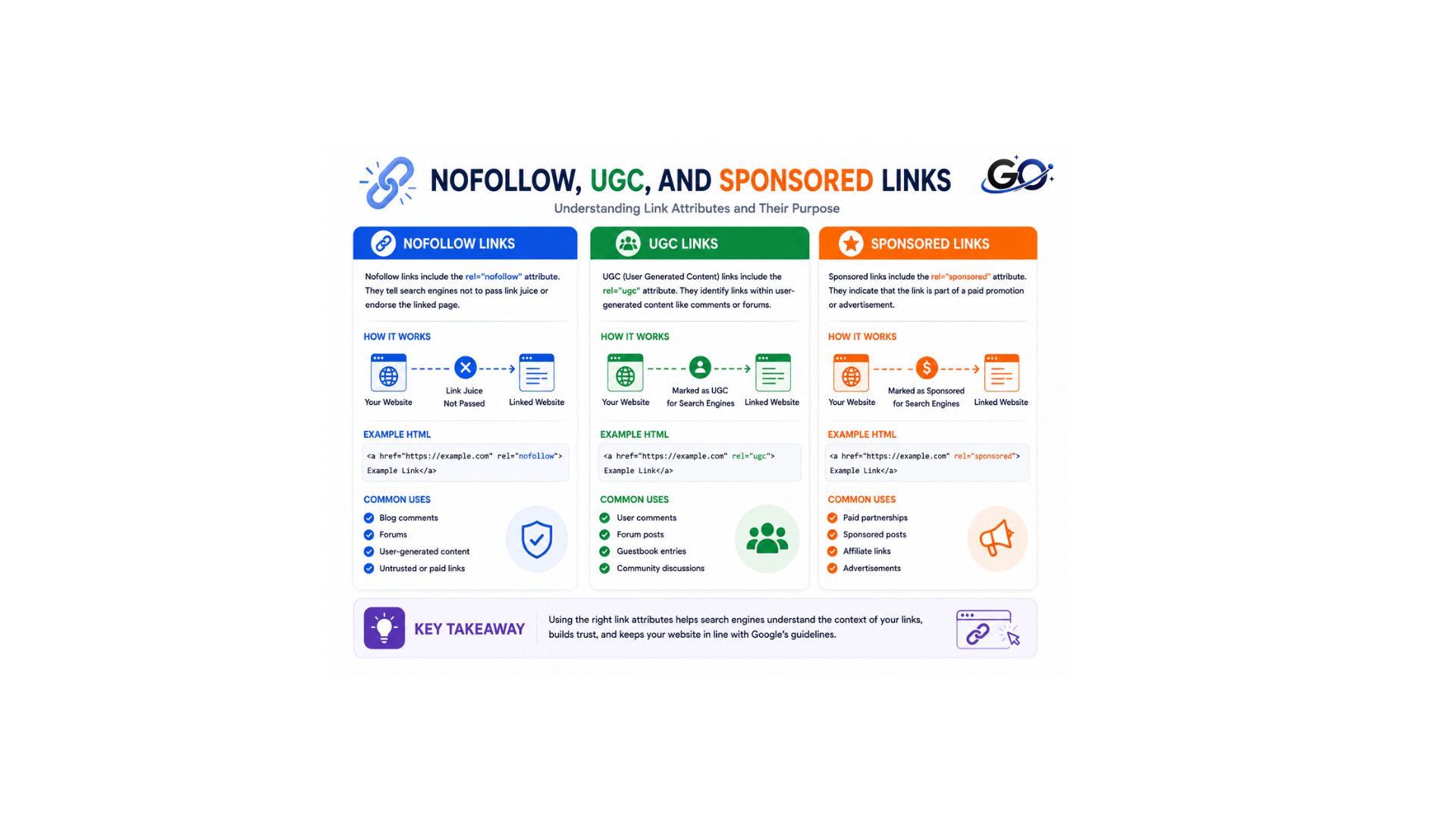
Website owners can use different link attributes to provide additional context.
Nofollow Links
Nofollow links indicate to search engines that they shouldn’t be interpreted as conventional endorsements. They can still help people find your website and generate referral traffic. Additionally, a natural and varied backlink profile can benefit from these links.
UGC Links
Links made within user-generated content, like comments, forum posts, and community debates, are known as UGC links. To assist search engines in identifying this kind of link, they employ the rel=”ugc” element. Links from user-generated content (UGC) can improve content discovery and drive appropriate referral traffic.
Sponsored Links
Sponsored links are used for sponsorships, paid advertisements, and other business dealings. To make it obvious to search engines what they are, they frequently employ the rel=”sponsored” feature. These connections can draw in targeted referral traffic and raise brand awareness.
Where Are Nofollow Backlinks Commonly Found?
Nofollow links can appear across many types of websites.
Forums
Nofollow or user-generated content (UGC) features are frequently used in forums for links shared by community members. This makes it easier to discern between editorial and user-generated links.
Blog Comments
Many websites apply nofollow attributes to comment links to discourage spam and reduce incentives for automated link building.
Social Platforms
Links shared through social media profiles and posts may use different link attributes or platform-specific systems. They can still provide significant referral traffic and exposure.
Sponsored Content
Paid placements may use sponsored or nofollow attributes depending on the relationship and implementation.
Large Publishing Websites
Some major publications use nofollow attributes for external links, particularly where links are user-generated, promotional, or otherwise not intended as editorial endorsements.
The impact of nofollow links on page ranking
The majority of experts think that search engines mostly disregard nofollow links. They don’t pass authority, to put it another way. Dofollow backlinks, on the other hand, are a ranking factor that can improve your SERP performance.
Google will examine your backlink profile to see whether you are involved in spammy activities, such as buying backlinks, because they have rigorous criteria that website owners must adhere to. Your page ranking may suffer if you don’t have a healthy ratio of dofollow to nofollow links.
Consequently, nofollow links may have an indirect effect on your rankings even when they have no direct effect. Increasing organic website traffic, which boosts conversions, is the main objective of SEO.
Best practices for using nofollow links
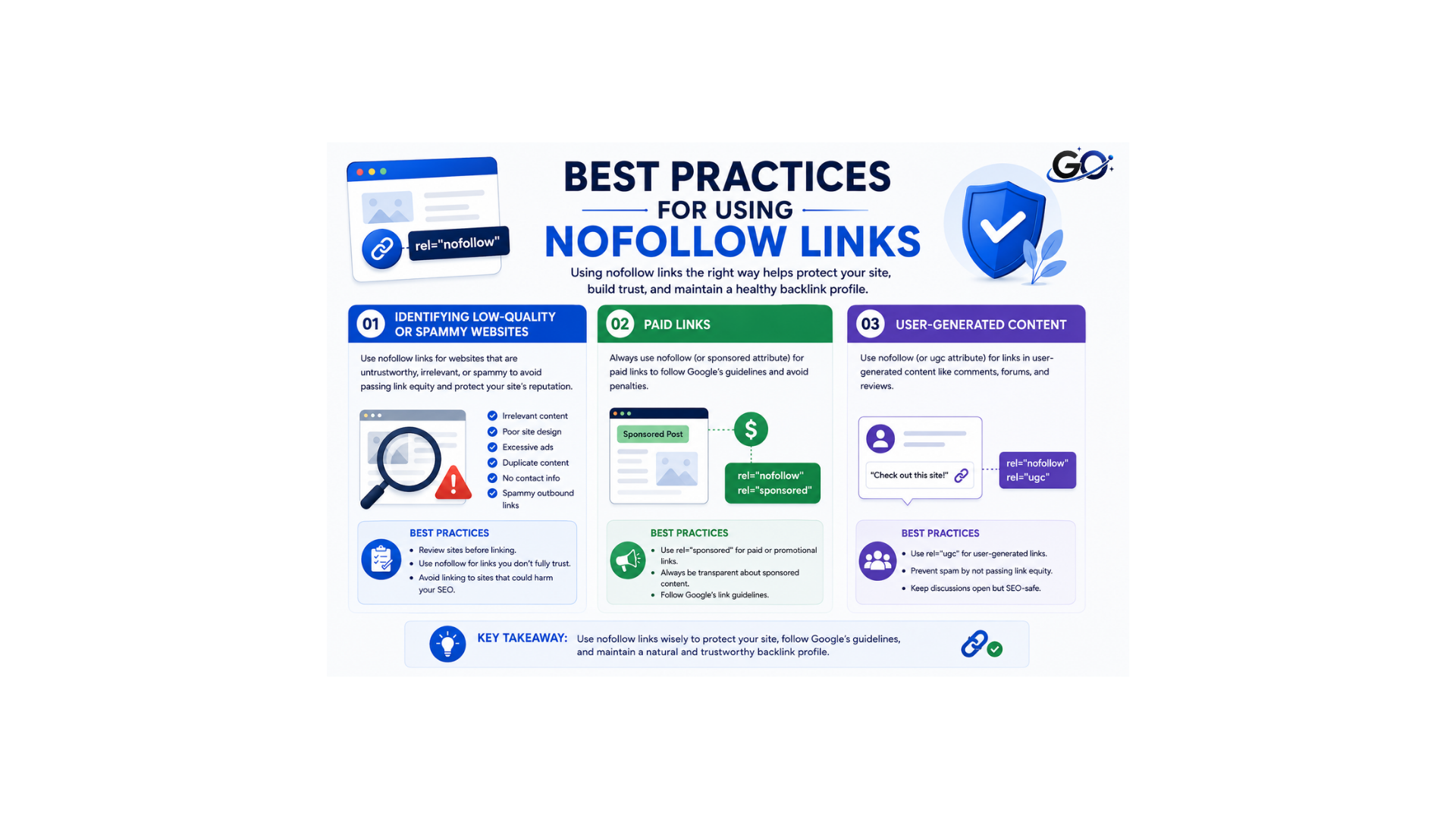
The kind of links you use is the most crucial aspect of your external link strategy. Despite the fact that nofollow links do not transfer authority from one website to another, both dofollow and nofollow links are crucial. Nevertheless, there are situations in which using nofollow links rather than dofollow links is suitable, such as:
- Identifying low-quality or spammy websites
Links to poor-quality websites or those that search engines would deem spammy can be made using nofollow links. You may use nofollow links to stop your website from transferring authority to another if you’re writing a blog and want to reference your source but it’s on a low-quality domain.
- Paid links
If you have been paid to supply a link, you should always utilise the nofollow tag. Google’s Webmaster Guidelines mandate that all sponsored and paid links be marked as nofollow. Any sponsored links seen on blogs and other websites fall under this category. Furthermore, the term “paid links” refers to more than just financial transactions. Rather, Google views any connection you provide in return for anything—cash, goods, or services—as a sponsored link. In theory, Google even views link exchanges—in which two websites trade backlinks—as a breach of the rules.
- User-generated content
User-generated content, such as comments on social networks or forum posts, should always include a nofollow link. The nofollow attribute, in this instance, signals to search engines that you’re not trying to use these links as a method of advertising. Since anyone can comment on blogs and forums, it’s always better to be safe to not pass authority to unknown and low-quality sites.
Common Nofollow Backlink Mistakes
Although the question of whether nofollow links pass authority is up for debate, there are a number of falsehoods that are just untrue. Let’s examine some frequent fallacies about nofollow links.Your business may suffer from nofollow links. Your company won’t suffer from nofollow links.
Rather, if you use them properly, you can avoid fines that lower your rankings and improve your search engine ranking. Furthermore, when discussing other companies, some of the most reputable websites exclusively employ nofollow links. For example, a reputable online magazine may use the nofollow feature to link to your company name. This doesn’t harm your company; it just doesn’t transfer the authority of that website to yours.
How to Check Nofollow Backlinks
You can inspect a webpage’s HTML code to determine whether a link contains rel=”nofollow”, rel=”ugc”, or rel=”sponsored”.
Backlink analysis tools can also help identify referring domains and link attributes across your website’s backlink profile.
When reviewing nofollow backlinks, consider:
- Referring website
- Page relevance
- Link placement
- Anchor text
- Referral traffic
- Link attribute
- Website reputation
This provides a more complete picture of backlink quality.
Conclusion
An external link with the rel=”nofollow” property is a nofollow backlink. It indicates that the link should not be interpreted as a typical editorial endorsement by the publisher.
Nofollow backlinks can nevertheless have significant advantages even though they differ from conventional followable connections. They can help with content discovery, build a natural backlink profile, raise brand awareness, and produce referral traffic.
Instead of attempting to gather a certain quantity of nofollow or followable links, the best strategy is to concentrate on relevance and usefulness. Engage in pertinent forums, produce worthwhile material, employ digital public relations, and obtain real mentions from respectable websites.
FAQs About Nofollow Backlinks
What is a nofollow backlink?
A backlink that instructs search engines not to transfer traditional link equity to the connected website is known as a nofollow backlink. It makes advantage of the HTML code’s rel=”nofollow” property. These links can still lead to referral traffic and assist users in finding your website. Comments, forums, paid content, and social media platforms are frequent places to find nofollow backlinks.
Are nofollow backlinks good for SEO?
Indeed, when they originate from reliable and relevant websites, nofollow backlinks can still be beneficial for SEO. They might boost online presence, brand awareness, and referral traffic. Nofollow links are among the various link types that are typically seen in a natural backlink profile. Therefore, even in the absence of direct transmission of traditional link equity, nofollow backlinks can bolster an overall SEO strategy.
Do nofollow links pass link equity?
Nofollow links have historically been used to indicate to search engines that link equity should not be sent through the link. But for crawling and indexing reasons, Google now views nofollow as a suggestion rather than a strict directive. Thus, a nofollow link does not ensure that no value would be taken into account. The context, source, and relevancy of the link may also affect its possible SEO value.
Where can I get nofollow backlinks?
Social media accounts, blog comments, internet forums, company directories, and pertinent community websites can all provide you with nofollow backlinks. Additionally, you can get them through interviews, guest posts, digital PR, and helpful material that others share. Instead of making links at random, concentrate on reliable and pertinent sites. Getting a lot of backlinks is not as crucial as quality and relevancy.
Should I build nofollow backlinks?
It is possible to incorporate nofollow backlink creation into a natural and well-rounded link-building approach. They can enhance brand visibility, diversify your backlink profile, and increase referral traffic. Think about the authority, relevancy, and prospective audience of the website rather than just whether a link is dofollow or nofollow. Aim to obtain backlinks organically by creating worthwhile content and developing sincere online connections.