


Keyword Research for Beginners helps you understand how to do Keyword Research for Beginners effectively and find valuable keywords. With Keyword Research for Beginners, you can analyze search intent and target the right audience. This Keyword Research for Beginners guide teaches proven Keyword Research for Beginners techniques to improve SEO performance, create relevant content, increase organic traffic, and build a strong foundation for long-term search engine success.
What Are Keywords?
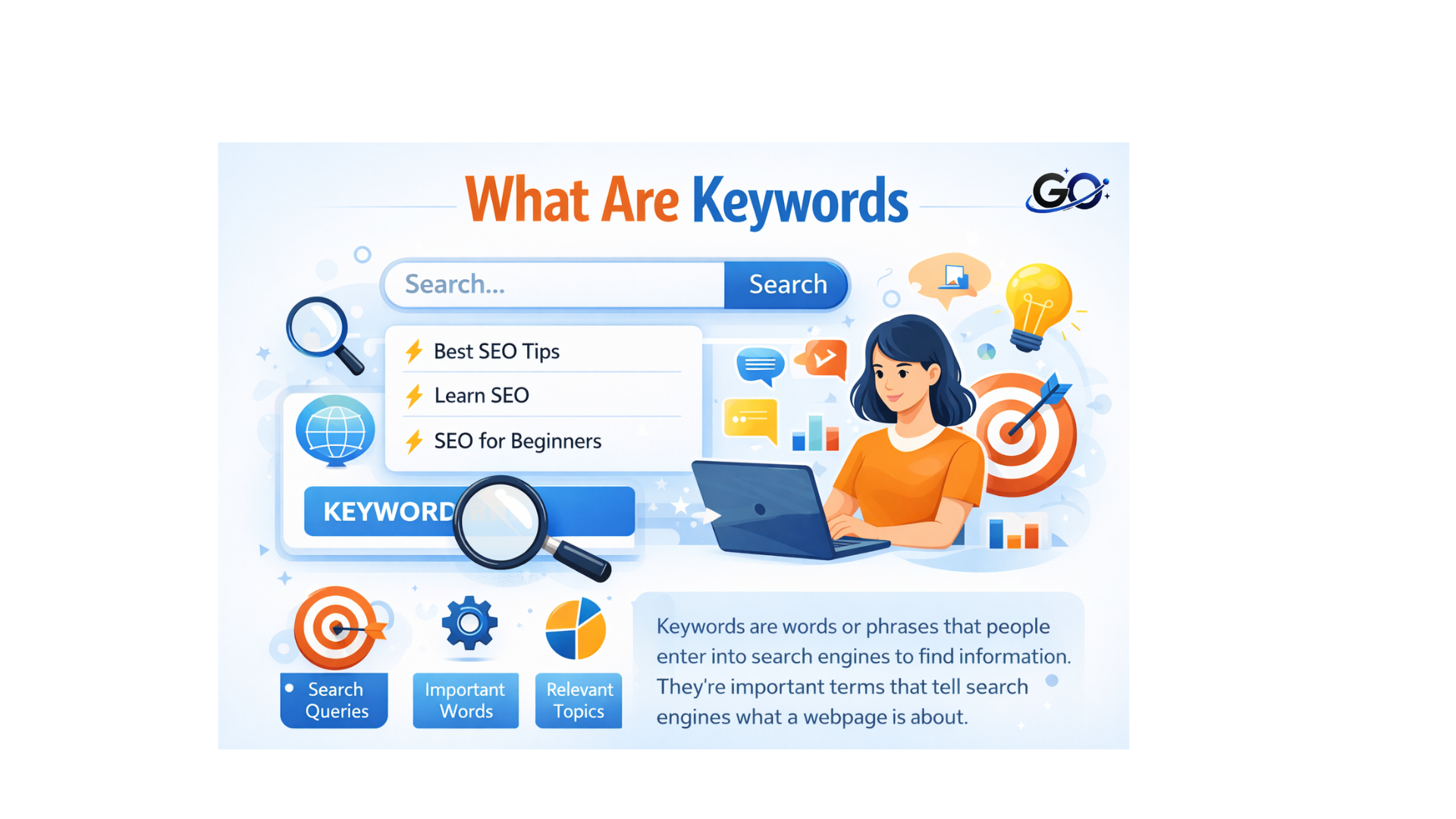
These are the terms and phrases that users enter search engines; they are often referred to as search queries or SEO keywords. The method used by SEO experts to find terms and phrases that people use on search engines like Google is known as keyword research.
Why Is Keyword Research Important?
Keyword research is the foundation of SEO. No matter how hard you try, you won’t obtain Google traffic if no one is looking for what you’re writing about.
Finding out what people are entering into Google and other search engines is only possible through keyword research. Knowing this will help you avoid producing material about topics that no one is looking for. According to an Ahrefs survey, 90.63% of pages receive no traffic from Google, which is probably mostly due to the error that many website owners make.
How to Tell Which Keyword to Use?
1. Relevant
Each page’s purpose or the supplied product should be reflected in the keyword. The likelihood that a visitor will become a customer increase with the keyword’s relevance to your offerings.
2. Search Volume
Most people mistakenly believe that a good keyword is just one that accurately and appropriately characterizes the good or service. That isn’t true. As long as there is a high number of searches, the good keyword is the one that people look for, even if it is misspelt like “life streaming.” To choose the best term for your goal, you must understand your target audience and the language they speak.
3. Competition
Your target term should be able to compete for pages 1-2 of the search engine results page. When you employ keyword research tools, they will analyze keyword difficulty, or how difficult it is to compete, into numbers or color bars. Domain authority in relation to other websites determines the difficulty of a keyword. To boost your authority, you might need to start spending money on advertisements or purchasing more backlinks. Considering this, you may need to think about whether it would be wise to invest more to compete in particular keywords.
4. Search Intent
The purpose of a user’s search is referred to as search intent.
There are four common types:
- Informational: “How to use an air fryer”
- Navigational: “YouTube login”
- Commercial: “Best air fryer under $100”
- Transactional: “Buy Philips air fryer online”
Knowing search intent enables you to produce the appropriate kind of content.
Keyword Difficulty (KD)
Shows how difficult it is to rank organically on search engines.
Lower KD is generally better for new websites.
Cost Per Click (CPC)
The amount advertisers pay for one click in Google Ads.
Higher CPC keywords often have strong commercial value.
Paid Difficulty (PD)
Shows how competitive a keyword is for paid advertising campaigns.
Types of keywords
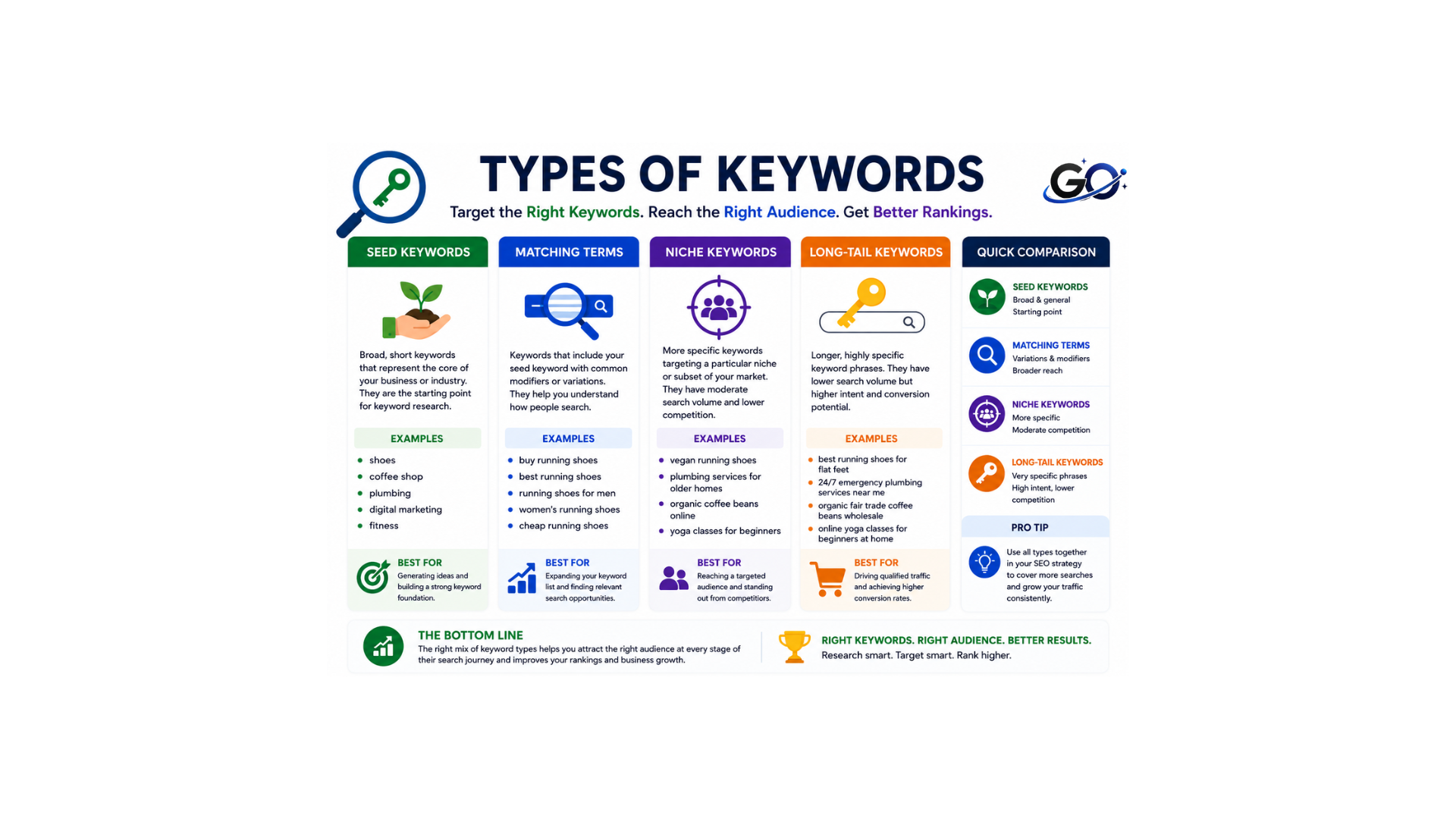
Understanding the various kinds of keywords, we use for SEO is the next step after learning what keyword research is. In this phase, we check for the precise terms and phrases (search queries) that users enter the search engine to find what they’re looking for. Three primary categories of search queries exist.
Seed Keywords
Seed keywords are search terms like “air fryer” that people use to find a product or a specific purpose in a more general meaning. Because even lengthier search queries usually employ these seed terms as their foundation, they typically have a high search traffic. To provide a list of potential keywords, each keyword research tool requests a seed term.
Matching terms
These are suggestions for keywords that correspond to the words in your seed keywords. Keywords Explorer offers two settings for the Matching terms report.
displays keyword concepts that, regardless of their exact location or order, contain every word in your seed term. Thus, if “coffee machine” is our seed term, we will obtain the following keyword suggestions:
coffee vending machine
Machine gun Kelly coffee shop
Niche Keywords
Niche keywords, on the other hand, are searches that go further to cover a little more information of the search intent; for example, they may be utilized as a category page of your website.
Examples:
- Philips air flyer
- Gaming laptop
- Running shoes for men
Long-tail Keywords
To make a better start, we advise SEO novices to concentrate on long-tail keywords. Long-tail keywords are essentially search terms that contain three or more words. They typically include models, price points, and hues.
Your website will appear on more SERPs if it is optimized around each kind of keyword. Both when a buyer searches for your product and when they don’t, your website will appear.
Examples:
- Philips HD9218 black air fryer
- Best gaming laptop for students
- Affordable running shoes for beginners
Why Long-Tail Keywords Are Good for Beginners
- Lower competition
- Easier to rank
- Higher conversion rates
- More targeted audience
Keyword Research Process
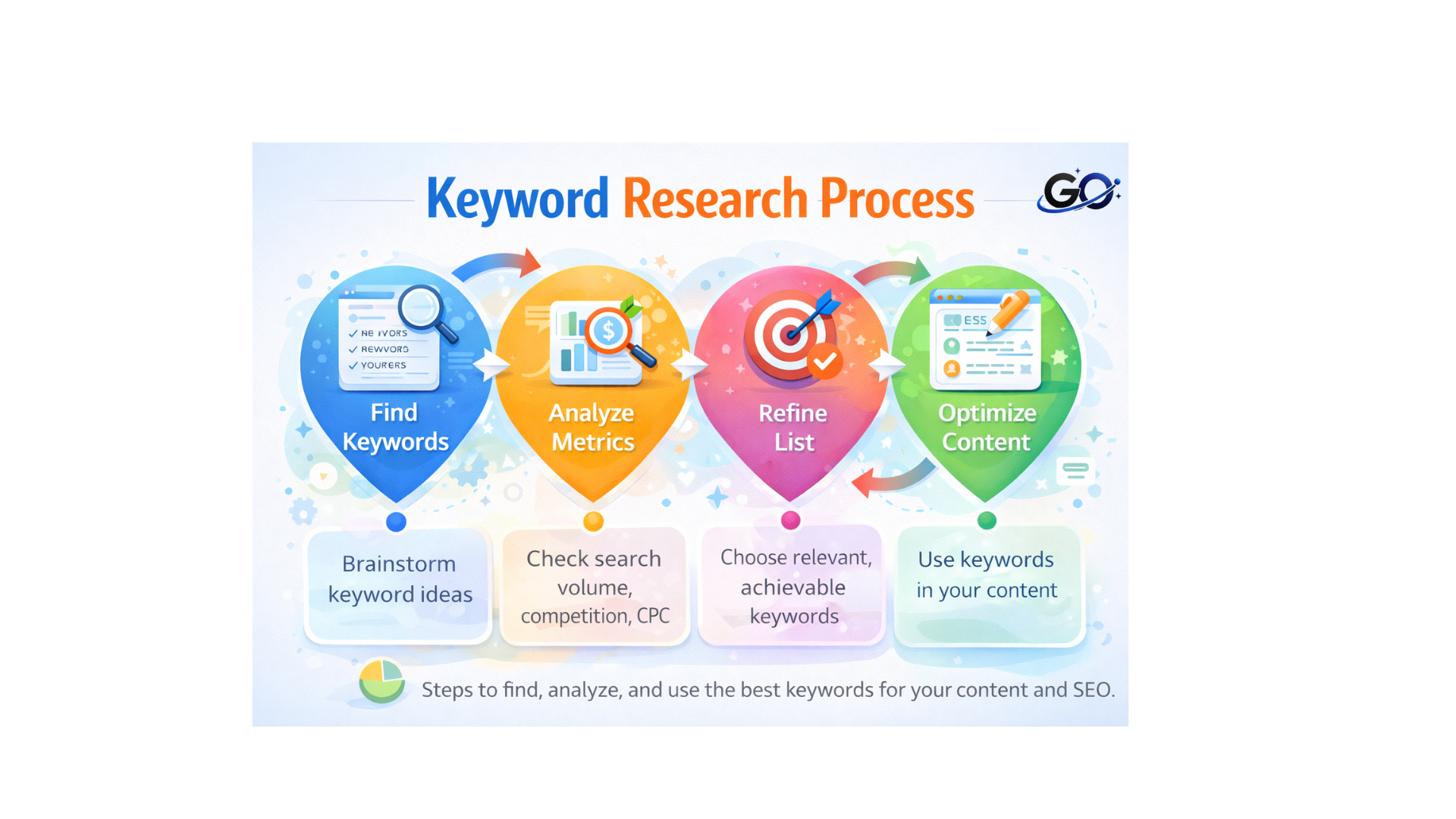
For novices, here is a straightforward, step-by-step method for conducting keyword research.
Step 1: Choose a Topic
Start with a broad subject pertaining to your company or website.
Example:
- Fitness
- Technology
- Cooking
Step 2: Find Seed Keywords
Consider basic terms that people might look for online.
Example for fitness:
- Gym
- Weight loss
- Home workout
Step 3: Use Keyword Research Tools
You may find vital SEO information and keyword suggestions with the aid of keyword research tools.
Popular tools include:
- Google Keyword Planner
- Ahrefs
- Moz Keyword Explorer
- Ubersuggest
- SEMrush
- Google Trend
Some tools are free, while others offer advanced paid features.
Keyword Research Tools
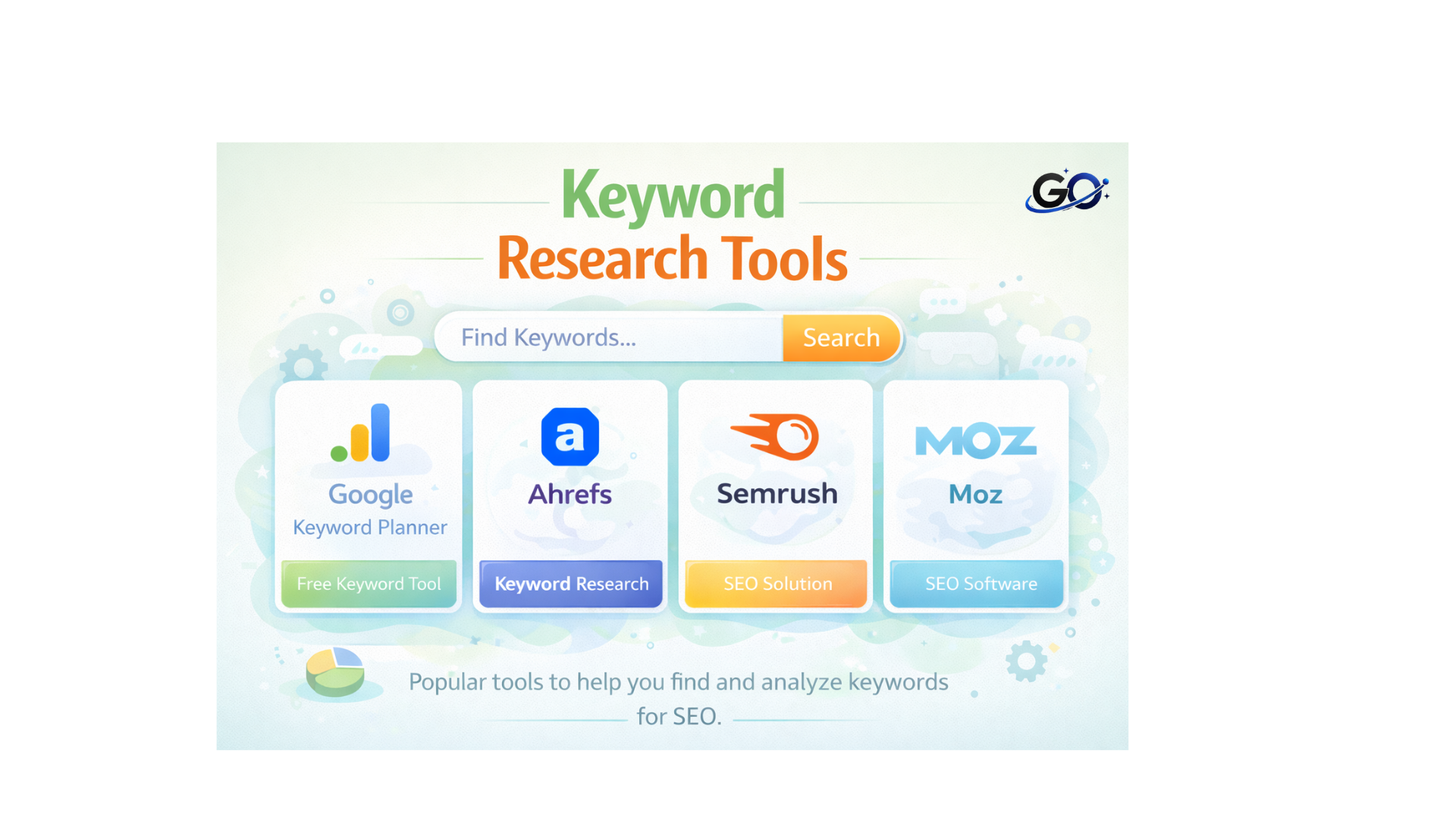
Google Keyword Planner
One of Google’s most reliable tools for keyword research is Google Keyword Planner. Using Google’s search data, it assists bloggers, SEO experts, and digital marketers in finding high-performing keywords. For SEO and Google Ads campaigns, the tool offers precise search volume, competition level, CPC estimations, and keyword recommendations. The data is regarded as trustworthy for determining consumer search behavior and market demand since it originates straight from Google.
Ahrefs
SEO professionals and agencies all over the world utilize Ahrefs, a potent all-in-one tool for keyword research and SEO. Advanced keyword analysis, competitor research, backlink tracking, and rank monitoring are among its capabilities. Ahrefs enables users to examine competitors’ top-performing pages, identify profitable keywords, and assess keyword difficulty. It is one of the best tools for increasing website visibility and organic traffic because of its large database and precise SEO metrics.
Moz Keyword Explorer
Moz Keyword Explorer is a professional SEO tool designed to simplify keyword research and content optimization. It provides detailed insights such as keyword difficulty, organic CTR, and ranking opportunities. Moz helps marketers identify valuable keywords with strong ranking potential while avoiding highly competitive terms. The platform’s user-friendly interface and reliable SEO metrics make it a preferred choice for beginners and experienced SEO professionals alike.
Ubersuggest
Ubersuggest is a beginner-friendly keyword research and SEO analysis tool developed by Neil Patel. It offers keyword suggestions, SEO difficulty scores, backlink data, and content ideas in a simple and easy-to-understand format. Ubersuggest is especially popular among bloggers, freelancers, and small business owners because it provides useful SEO insights at an affordable cost. It helps users discover low-competition keywords that can improve search engine rankings and website traffic.
SEMrush
SEMrush is a comprehensive digital marketing and SEO platform used by businesses and agencies around the world. It offers site audits, backlink tracking, competitor analysis, advanced keyword research, and advertising information. SEMrush enables users to track keyword rankings, discover content opportunities, and create effective SEO strategies based on real-time market data. Its powerful analytics and reporting tools make it one of the leading platforms for professional digital marketing campaigns.
Google Trends
Google Trends is a free tool by Google that helps users analyze search trends and popular topics across different regions and time periods. It is highly useful for identifying trending keywords, seasonal searches, and audience interests. Marketers, bloggers, and content creators use Google Trends to create timely and relevant content based on current search behavior. The tool also allows users to compare multiple keywords and understand how search interest changes over time.
Tips for Better Keyword Research
- Focus on user intent
- Use long-tail keywords
- Analyze competitors
- Update keyword research regularly
- Use multiple keyword tools
- Create high-quality content
- Track keyword rankings
Conclusion
A crucial component of SEO and digital marketing is keyword research. It helps businesses find the right keywords, understand user search behavior, and improve website rankings on search engines. Finding useful keywords and increasing organic traffic is made simpler by tools like Ahrefs, Ubersuggest, Moz Keyword Explorer, Google Trends, SEMrush, and Google Keyword Planner. Proper keyword research leads to better content, higher visibility, and long-term online success.