

In digital marketing, a niche is a subset of a broader market that concentrates on a certain audience, interest, need, or issue. Businesses select a speciality to target a more focused demographic rather than attempting to reach everyone.
For example, SEO for small firms is a more specialised specialty, but digital marketing is a large industry. In a similar vein, home workouts for novices may constitute a niche within the larger fitness market.
What Is a Niche?
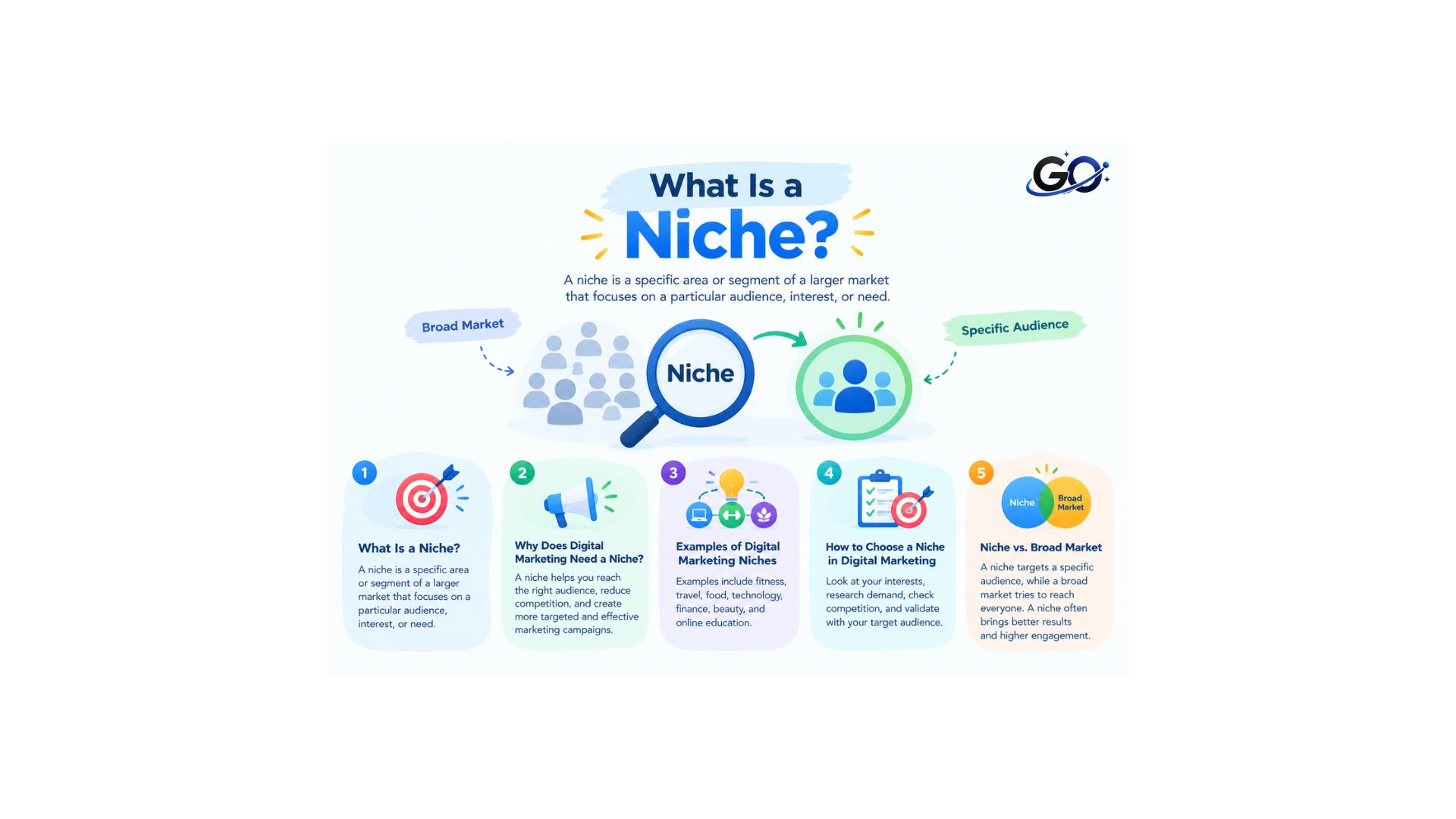
A niche is a specific group of people with shared interests, needs, or problems. In other words, it’s your target audience. Companies focus on this group to offer solutions tailored to them. In return, they aim to earn their loyalty by providing a unique value proposition.
A well-defined, powerful niche gives direction to companies for focusing their efforts and operations to please a specific group of people rather than everyone.
It says a lot about your product, marketing strategy, and the brand reputation within your audience. The more you narrow down your niche, the easier it is to brainstorm tailored content. These outputs will be more specific to your client’s preferences and interests. It also gives you a better chance to compete.
What Does Digital Marketing Niche Mean?
A niche in digital marketing is a clear area where you help a specific audience get a specific result. It can be based on a service, such as SEO for ecommerce brands.It might be focused on a particular sector, such as care provider marketing. Lead generation for business-to-business enterprises is one example of how it can be audience-based.
Here is what is actually happening. A generalist says, we do SEO, PPC, social, email, websites, branding, and probably fix your printer if you ask nicely. A specialist says, we help ecommerce brands increase repeat sales through email marketing, paid ads, and conversion focused content. Guess which one sounds more believable.
Why Does Digital Marketing Need a Niche?
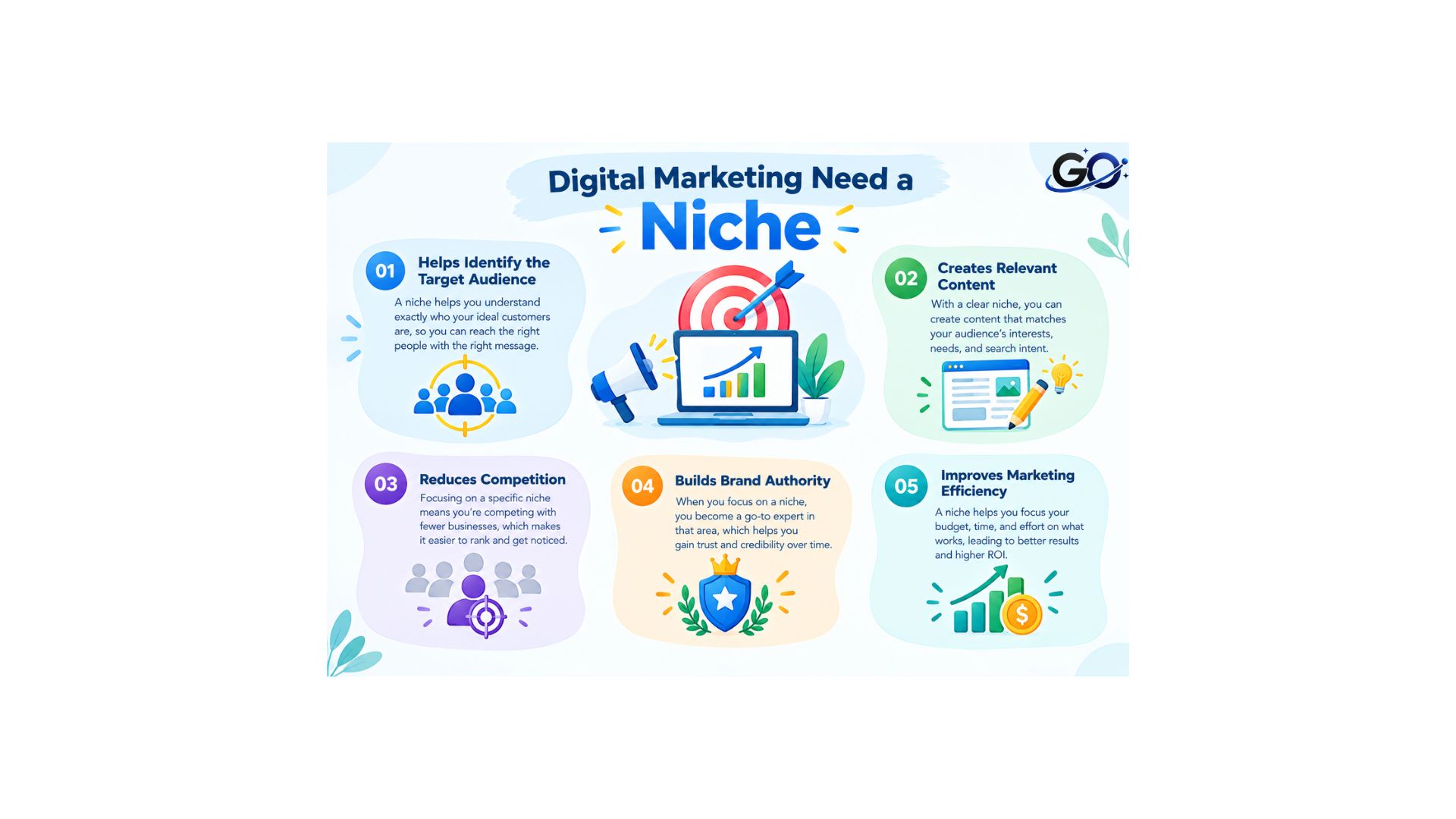
Choosing a niche can provide several benefits for businesses and marketers.
Helps Identify the Target Audience
Understanding your ideal audience is made simpler with a niche. Their requirements, interests, difficulties, and search habits can all be determined.
You can use this information to produce material that directly responds to their queries and issues.
Creates Relevant Content
You may produce content about subjects that are important to your audience when you concentrate on a certain niche.
For example, articles about locating clients, producing writing samples, establishing freelancing prices, and honing writing techniques can be published on a website devoted to freelance writing.
Those who are truly interested in the subject may be drawn in by this targeted content.
Reduces Competition
There is a lot of competition in broad marketplaces. A company can concentrate on less competitive subjects and markets by focusing on a particular niche.
A website might focus on more specialised subjects like “content marketing for small businesses” rather than fighting for a general keyword like “marketing.”
Builds Brand Authority
Establishing your brand as an informed resource can be achieved by regularly releasing helpful content in a certain niche.
Visitors may become more trusting of your website or business when they find useful information on several relevant themes.
Improves Marketing Efficiency
Marketers can develop more targeted ads when there is a definite niche. Based on their target demographic, they can select pertinent platforms, messages, content formats, and keywords.
Marketing campaigns may be more successful with this focused approach.
Examples of Digital Marketing Niches
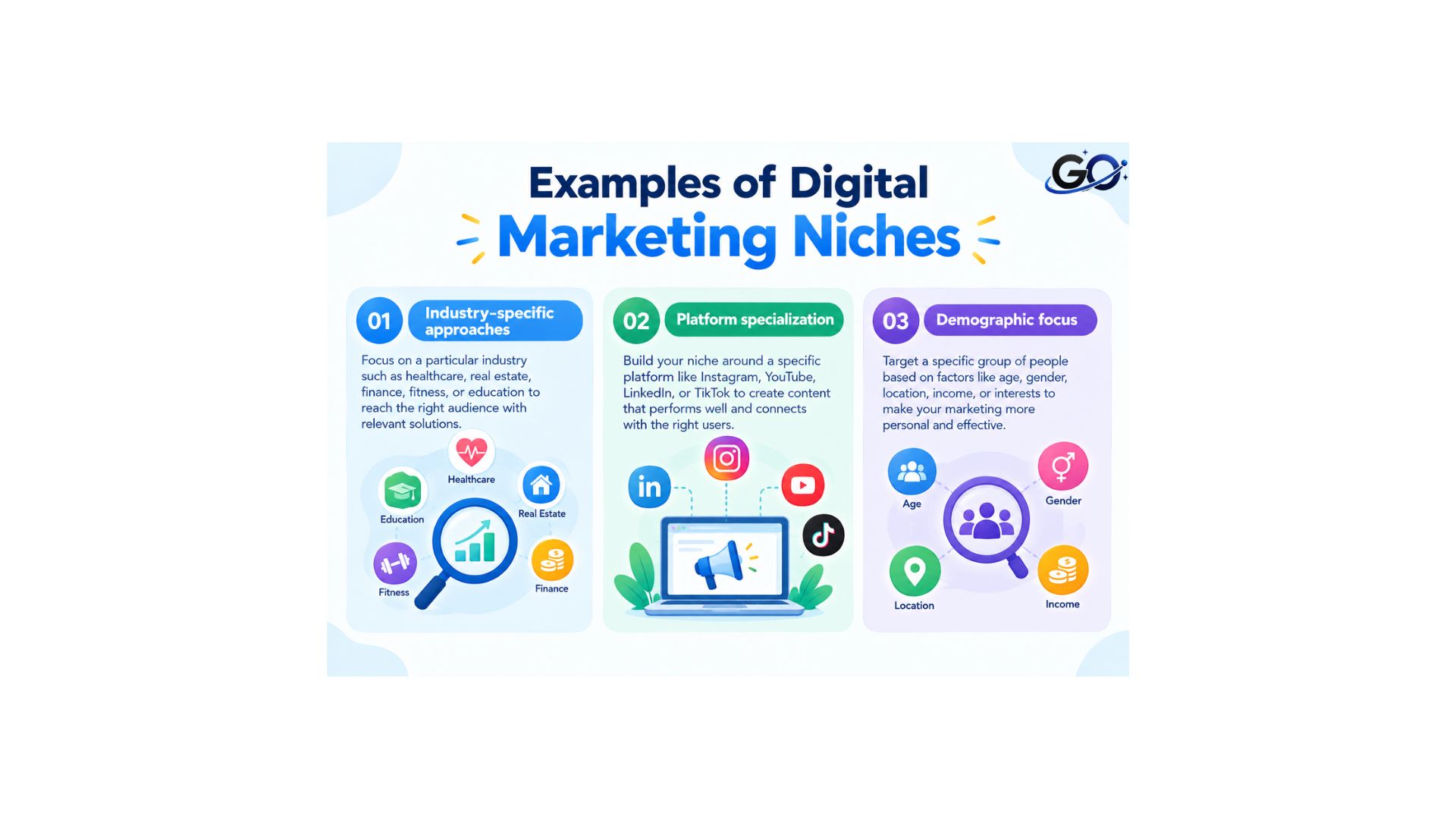
Industry-specific approaches
Many companies succeed by focusing on particular sectors. For instance, an agency might focus on social media for financial or healthcare services instead of providing general marketing services.
Platform specialization
Some companies establish themselves as the go-to source for a certain channel by focusing on their expertise in that particular platform. For example, concentrating only on LinkedIn profile optimisation or Pinterest marketing.
Demographic focus
Some describe their speciality based on the target population they cater to, such as Gen Z marketers or resource-constrained small firms.
Types of Niches in Digital Marketing
Different businesses can define their niches in different ways.
Industry-Based Niche
This approach focuses on a particular industry.
For example, a marketing agency may specialize in healthcare, education, real estate, or e-commerce.
Audience-Based Niche
An audience-based niche focuses on a particular group of people.
For example, a website may target students, freelancers, small business owners, or beginners.
Problem-Based Niche
A problem-based niche focuses on solving a specific challenge.
For example, a business could specialize in helping websites improve page speed or helping small businesses generate leads online.
Interest-Based Niche
An interest-based niche targets people who share a specific interest.
Examples include photography, gaming, travel, blogging, fitness, and personal development.
How to Choose a Niche in Digital Marketing
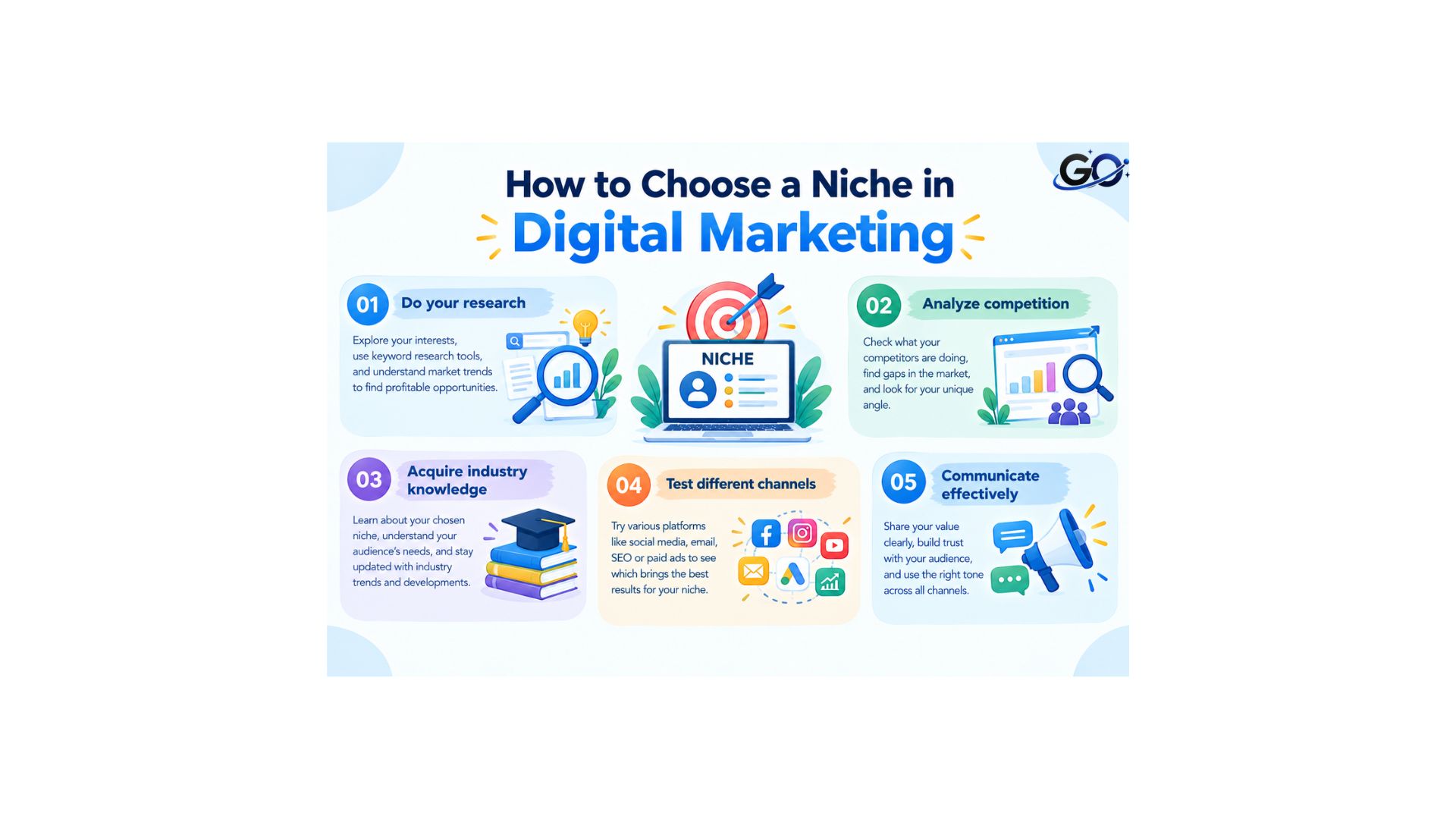
Adopting techniques that strongly connect with your target audience is essential for marketing to a niche. We’ll look at some best practices here that can help you succeed in niche marketing.
Do your research
You must have an almost obsessive interest in your particular market. To develop specialised marketing strategies, take the time to investigate and identify the firmographics, psychographics, pricing preferences, quality expectations, and demographics of your target audience.
Analyze competition
Analyzing your competition involves closely examining other businesses within your niche to identify their strengths and weaknesses, helping you to differentiate your offerings and find opportunities for growth.
Some questions you should ask yourself are:
- Who are your competitors’ customer personas?
- How is their customer journey different than yours?
- Which marketing techniques are working for them?
- How are they building brand loyalty?
Acquire industry knowledge
Acquiring industry knowledge is essential for niche marketing as it enables you to understand the broader market dynamics, trends, and customer needs, positioning your business as a thought leader.
Test different channels
Testing different channels involves experimenting with a wide range of marketing platforms (email, SMS, direct, advertising, or social media platforms) to identify the most effective ways to reach and engage your target niche market.
Not sure where your loyal customer base comes from? Collecting customer feedback and surveying them can help you better understand where to find more prospective customers.
Communicate effectively
Niche markets often have specific jargon or language that resonates with their members. Use this to your advantage by incorporating it into your marketing messages. This creates a sense of familiarity and understanding that can strengthen customer relationships.
What Is a Niche Marketing Strategy?
A niche marketing strategy concentrates marketing efforts on a particular market segment or target.
Marketers develop focused content and campaigns targeting a well-defined audience rather than a single, universal message.
For example , a business offering website services might focus on small business owners that require reasonably priced website solutions. The demands of that demographic can then be the focus of its content, ads, and landing pages.
An effective niche marketing plan typically incorporates social media, SEO, audience and keyword analysis, helpful content, and other pertinent digital marketing platforms.
Niche vs. Broad Market
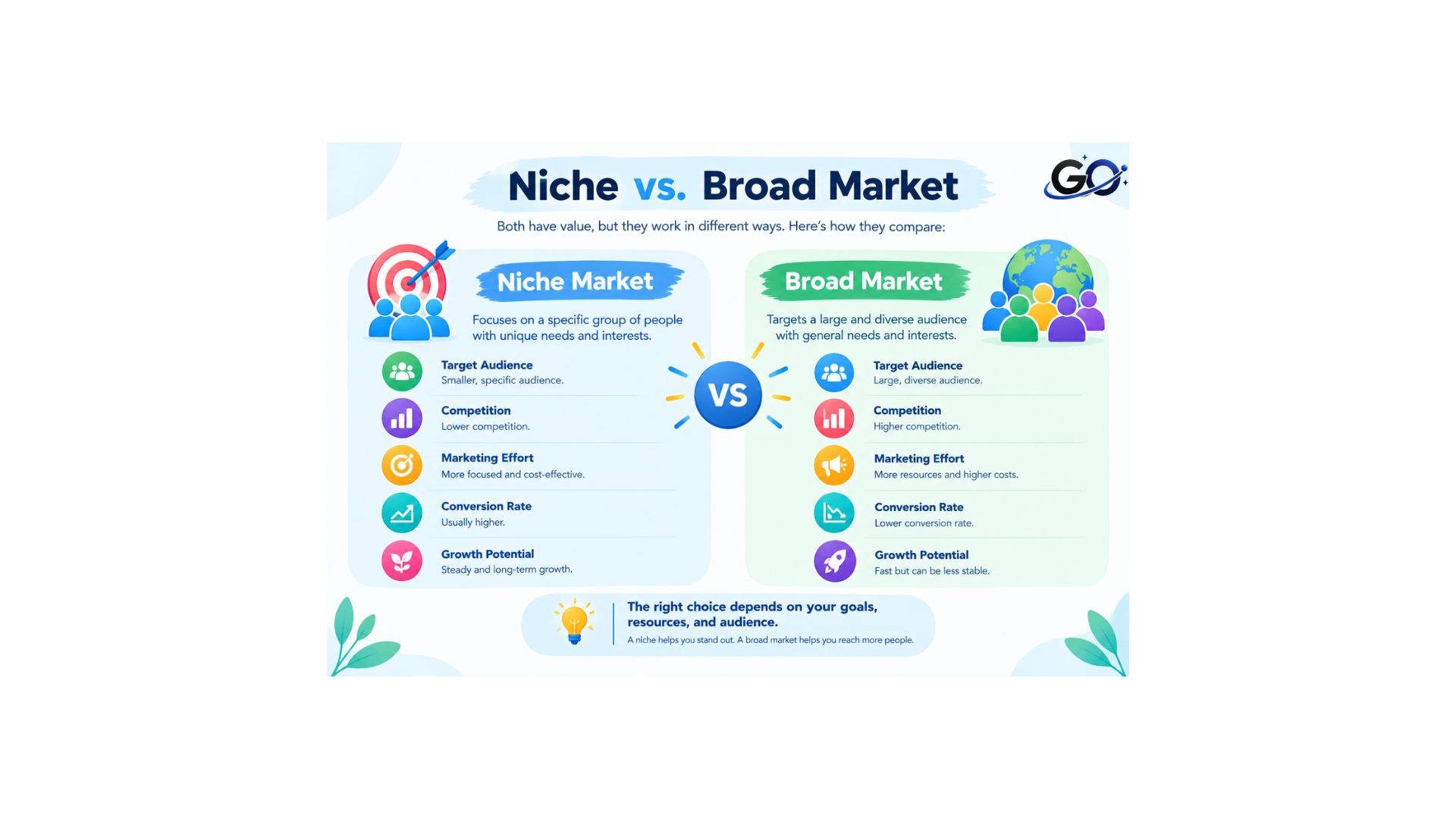
A broad market targets a large and diverse audience, while a niche focuses on a smaller and more specific segment.
For example:
Broad market: Digital marketing
Niche: SEO for local restaurants
In a large market, there can be more prospective clients, but there might also be more rivals. A specialisation might provide a more focused audience and more focused marketing opportunities.
The best option relies on your objectives, available resources, level of experience, and target clientele. .
Common Niche Marketing Mistakes
When implementing a niche marketing strategy, be cautious of these potential pitfalls:
- Choosing a niche that’s too narrow: Ensure there’s enough market demand to sustain your business
- Neglecting market research: Base decisions on data rather than assumptions about your audience
- Poor positioning: Clearly communicate what makes your offering unique within the niche
- Inconsistent messaging: Maintain a coherent brand voice across all content pillars
- Failing to adapt: Monitor social media trends and be ready to evolve as your niche market changes
Conclusion
In digital marketing, a niche enables companies to concentrate their efforts on a particular market sector or demographic. Marketers can provide more pertinent content and focused campaigns by comprehending the requirements and preferences of a specific audience.
Choosing the right niche requires research, audience understanding, competition analysis, and a clear marketing goal. With a focused approach, businesses can build authority, attract relevant visitors, and develop stronger relationships with their target audience.
FAQs About Niches in Digital Marketing
1.What does identifying a segmented market mean to a business?
A niche market refers to specific target needs or preferences within a given large market. Geographical location and psychographic information (interests, attitudes, and values) are used by businesses to categorise niches in terms of both pricing and quality.
2. What advantages can speciality marketing offer the company?
Niche marketing has many advantages, such as increased brand loyalty because of the closer ties with consumers. Additionally, companies can offer a distinctive value proposition and stand out from the competition by competing with fewer brands. Budget optimization is another benefit of specialty marketing.
3. Should Beginners Choose A Narrow Niche Straight Away?
It’s not always necessary for beginners to immediately select a narrow specialisation. They can better grasp their audience and investigate other subjects by beginning with a more expansive speciality. They can eventually focus more narrowly in order to gain credibility and draw in a certain audience.
4. Which marketing techniques work best to target a niche?
To ascertain whether a business can succeed in a certain field, niche marketing relies on thorough study. Early industry understanding is crucial, and businesses must identify the essential characteristics of both their speciality and the entire market. Because diverse marketing strategies can target distinct niche markets, variety is also crucial.
5. Do companies generate new market niches?
When businesses recognise and address unmet customer demands, they open up new markets. This is the result of a combination of in-depth study, industry knowledge, and creative marketing techniques. Developing a new niche is the most effective way to gain a market position.