
Navigational keywords are search terms people use when they already have a specific website, brand, page, or online destination in mind. Instead of searching for general information, users enter a navigational query to quickly find a particular website or resource.
Navigational keywords include things like “Facebook login,” “YouTube,” “Ahrefs dashboard,” and “Google Search Console.” Because the searcher already knows where they want to go, these terms demonstrate unambiguous user intent.
What Are Navigational Keywords?
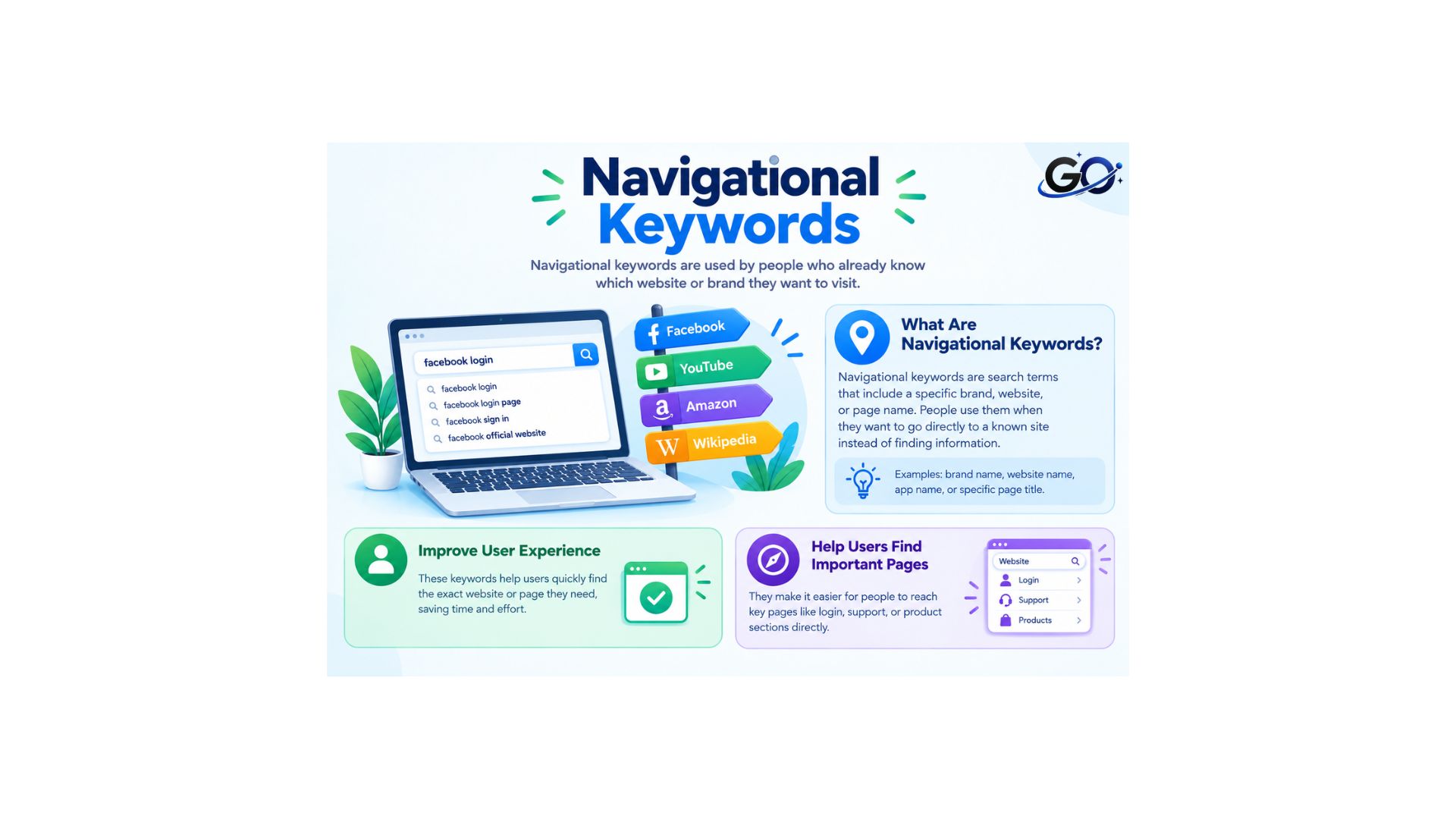
A navigational search query is one that aims to locate a certain webpage or website. Forexample, typing “Spotify” into Google is an example of a navigational search query. This is because, rather than utilising a bookmark or typing a URL in the browser, the searcher is attempting to locate Spotify’s website.
For example, let’s say you know where you want to travel on a road trip. You need directions to get there, but you know the address. To a search engine, a navigational search query is similar to that. It occurs when a user searches for the exact name or something very similar to a website, brand, or page they wish to visit.
How Do Navigational Keywords Work?
By linking users to websites or pages they are already familiar with, navigational keywords function. After analysing the question, search engines attempt to deliver the most pertinent result.
When someone searches for a brand, search engines usually display the official website of that brand among the top results. The extra results may include important pages like the login, contact, support, and pricing pages.
Why Are Navigational Keywords Important in SEO?
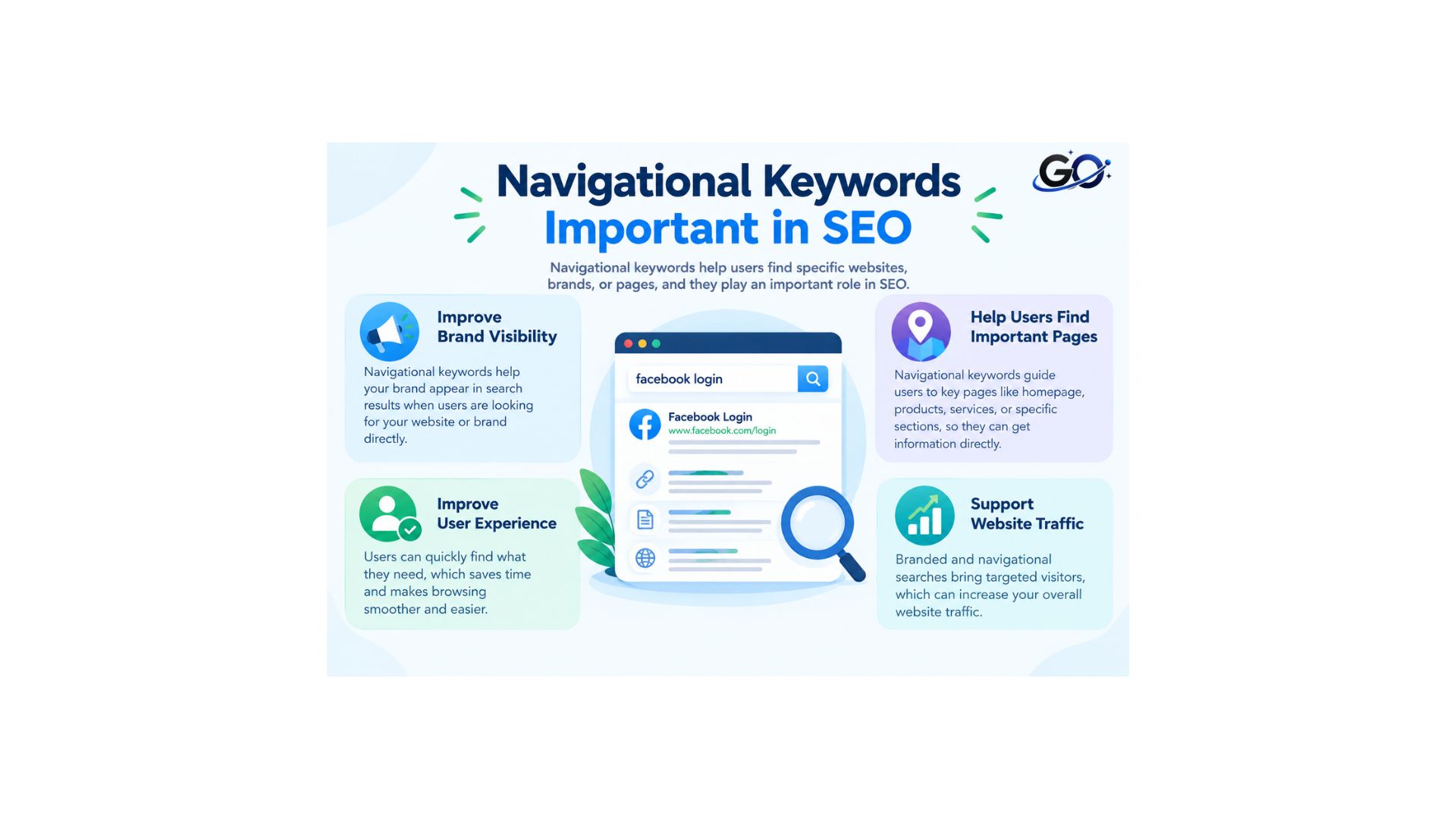
Navigational keywords can support a website’s overall SEO strategy. They often reflect brand awareness because users already recognize the business or website.
Improve Brand Visibility
Navigational keywords play a crucial role in reinforcing brand visibility and recognition in search engine results pages (SERPs). When users search for a brand name or product directly, the presence of relevant navigational keywords ensures that the brand’s website appears prominently in search results, increasing brand exposure and driving traffic.
Help Users Find Important Pages
Navigational keywords help users quickly find important pages on a website. They make it easier for visitors to reach specific products, services, contact pages, or other useful resources. This improves navigation and helps users find the information they need with less effort.
Improve User Experience
Improving user experience helps visitors navigate a website easily and find the information they need quickly. A clear layout, fast loading speed, and mobile-friendly design can make browsing more enjoyable. A better user experience can also increase engagement and encourage visitors to spend more time on your website.
Support Website Traffic
By optimizing for navigational keywords associated with their brand or products, SaaS companies can attract highly targeted traffic consisting of individuals already familiar with their offerings. This targeted traffic is more likely to convert into leads or customers, as users actively seeking a specific website or solution are often in the later stages of the buyer’s journey.
Types of navigational queries
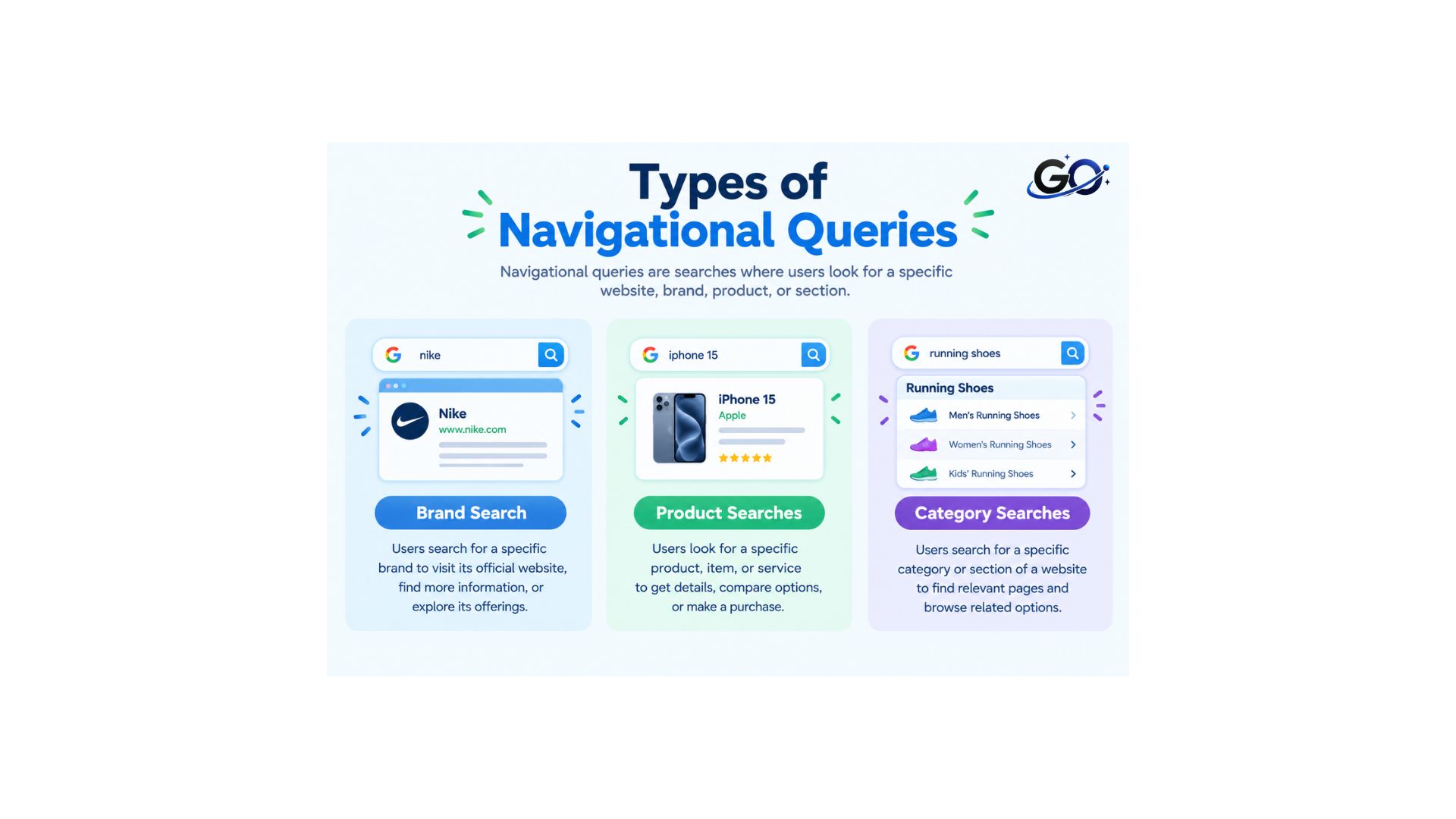
There are no one-size-fits-all navigational enquiries. Let’s examine the three primary categories:
Brand search
The mainstay of navigational queries is a brand search. A clear search intent to reach your website, platform, or location is demonstrated when someone types in your brand name. It’s similar to when someone says they want to visit “Starbucks” rather than just a coffee store. They want Starbucks coffee, not just coffee.
Although it can be challenging to comprehend the connection between a brand’s value and search results, we are aware that brands are important both offline and online. Fortunately, Brand AuthorityTM, a Moz metric that provides you with information about your brand’s authority, your competitive environment, and possible growth prospects, allows you to assess the strength of your brand.
Product searches
Product searches are a little more focused. Users are seeking for a specific product that your brand sells, not the brand itself. When someone searches for “iphone” or “macbook air,” they are focusing on that particular product. They are searching for the quickest route to their destination since they know what they want.
This means that it’s critical for firms to optimise their product pages. You want to make sure that people can quickly and easily locate your page when they search for a certain product that your brand sells.
Category Searches
A more comprehensive type of navigational query is a category search. Here, consumers may not have a specific product in mind, but they are searching for a specific category of goods or services from a well-known brand. When someone searches for “Patagonia backpacks” or “Dyson humidifiers,” for instance, they are focusing on a particular category inside a reliable brand.
You can attract these customers who have a strong concept of what they want but may still be receptive to researching their options by optimising your category pages. It involves assisting customers in locating precisely what they require within the environment of your business.
Examples of Navigational Keywords
To understand how navigational queries operate, let’s look at a few real-world examples:
Blue Apron meal kits
When someone enters this into a search engine, they are looking exclusively for Blue Apron meal kits. The consumer has made it apparent that they want Blue Apron meal kits, and they are utilising the search engine to get straight to that section of the company’s website.
Madewell
This user intends to visit the Madewell website in order to peruse or buy from the brand’s assortment of apparel and accessories. This question demonstrates brand awareness and devotion by indicating a desire to visit Madewell’s website directly.
Amazon Prime Video
This user is seeking direct access to Amazon’s streaming service, bypassing any other video platforms..
REI hiking gear
This query shows a user looking for hiking gear specifically from REI, indicating they trust REI’s selection and expertise. This makes it a category-specific navigational query.
Whole Foods near me
This searcher is looking to find the closest Whole Foods location to them. The query is directly focused on locating a specific brand’s store.
Each of these examples reflects a user’s clear intent to navigate directly to a specific brand, product, or category, making them prime examples of navigational search queries.
What Is Navigational Search Intent?
The user’s intention to locate a specific website, brand, or webpage is described by navigational search intent.
Informational, navigational, commercial, and transactional intent are some of the broad categories into which search intent is classified.
For example:
- Navigational: “Instagram login”
- Informational: “What is SEO?”
- Commercial: “Best SEO tools”
- Transactional: “Buy SEO software”
The user’s goal is the primary distinction. Instead than finding generic information, navigational searches concentrate on getting to a particular location.
How to Optimize for Navigational Keywords
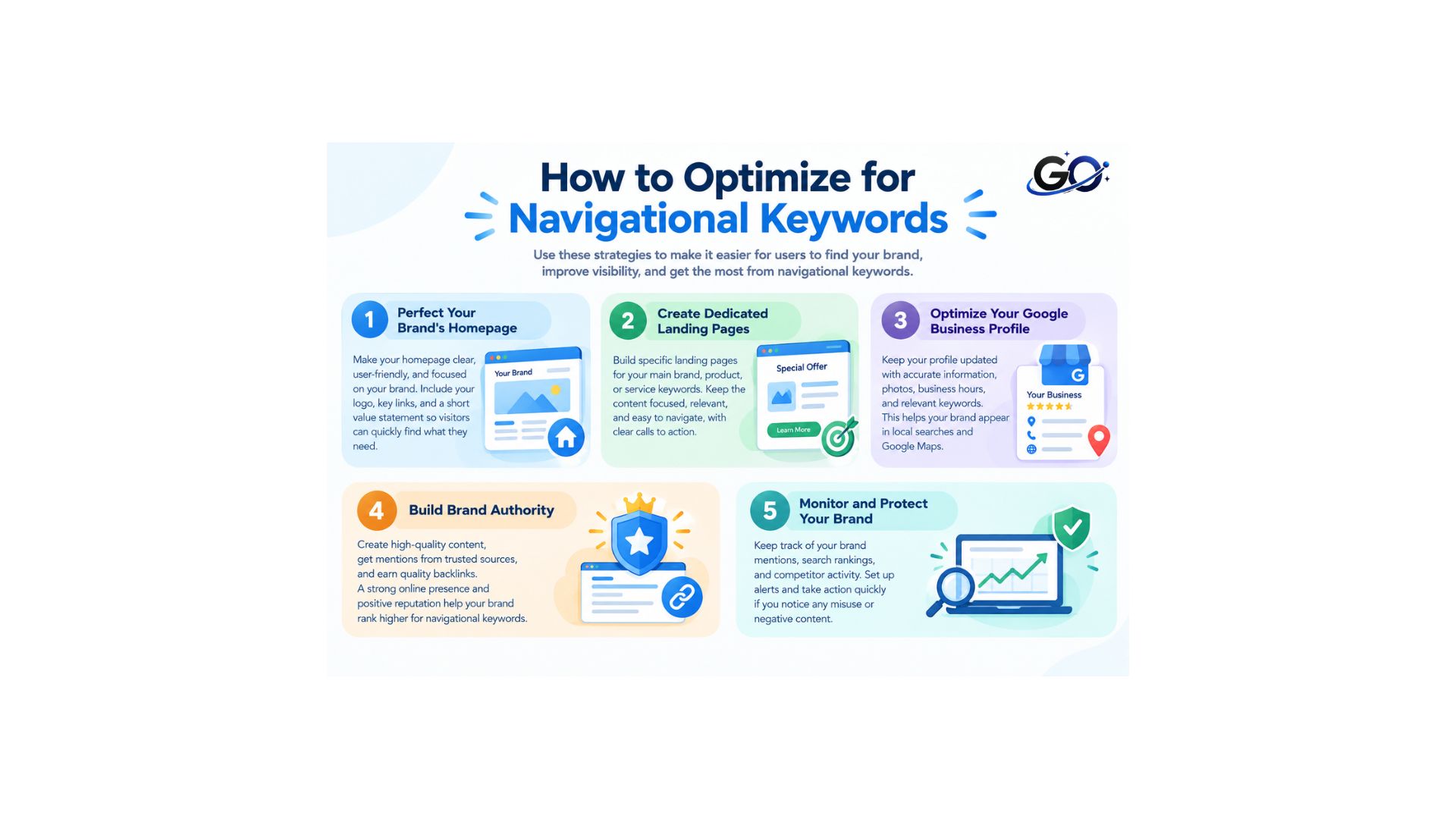
Compared to other forms of SEO, optimising for navigational keywords is frequently easier, but there are certain tactics that can help you dominate these searches:
Perfect Your Brand’s Homepage
The most crucial site for brand searches is your homepage. Make sure it accurately reflects your brand, is quick, and works well on mobile devices. Make sure the page offers easy access to your most crucial sections and include your precise company name in the title tag.
Create Dedicated Landing Pages
Make special landing pages that specifically answer popular brand + modifier searches (such as “your brand pricing” or “your brand support”). This raises your chances of obtaining sitelinks and enhances the user experience.
Optimize Your Google Business Profile
Your Google Business Profile frequently shows up for brand searches for nearby companies. Update it with correct data, images, and frequent updates. As a result, you occupy more space in the search results.
Build Brand Authority
Your chances of dominating brand searches increase with your overall domain authority. Prioritise obtaining high-quality backlinks, producing insightful content, and establishing a robust online presence on several platforms.
Monitor and Protect Your Brand
Look up your brand name and its variations on a regular basis to see what comes up. To detect any new mentions of your brand, set up Google Alerts. Have a strategy in place to deal with unfavourable content or competitors bidding on your brand terms.
Common Navigational Keyword Mistakes
Despite the seeming simplicity of navigational SEO, companies frequently make crucial mistakes:
- Ignoring Brand Variations: Optimise for more than simply your specific company name. Think of various variants, acronyms, and frequent misspellings.
- Poor Internal Linking: Make it simple for visitors to find what they’re looking for if they come to your site through a brand search by using internal links and straightforward navigation.
- Neglecting Mobile Experience: Mobile devices are used for a lot of brand searches. Make sure your website functions flawlessly on tablets and smartphones.
- Weak Brand Presence:You run the risk of competitors or unfavourable content showing up for your brand searches if your brand is not well-represented online.
- Not Monitoring Competitors:Observe whether rivals are attempting to show up for your brand phrases through sponsored advertisements or naturally.
Conclusion
Navigational keywords are a crucial part of search intent and SEO. They show that consumers already have a particular brand, website, page, or place in mind.
Navigational searches can help businesses build a clear website layout, optimise key pages, and increase brand visibility.
Think about the purpose of each search rather than just the keyword rankings. Users can swiftly get the information or page they desire with the use of a pertinent and user-friendly website.
Frequently Asked Questions
1. What are navigational keywords in SEO?
When consumers seek to locate a certain website, brand, webpage, or online destination, they utilise navigational keywords in their search searches.
2. What is an example of a navigational keyword?
“Facebook login,” “Nike official website,” “Canva login,” and “Amazon customer service” are a few examples. These searches display a certain location.
3. Are navigational keywords important for SEO?
Indeed. They can assist companies in increasing branded search presence and facilitating visitors’ access to key website pages.
4. What is the difference between navigational and informational keywords?
While informational keywords assist users in finding answers, explanations, or general information, navigational keywords assist users in reaching a specific location.
5. How can I optimize my website for navigational keywords?
On key website pages, make use of accurate information, straightforward navigation, consistent branding, detailed internal connections, and clear page names.