

Informational keywords play an important role in SEO because they help websites attract people who are looking for information, answers, or solutions. Users search these keywords when they want to learn about a topic rather than immediately buy a product or service.
You can produce helpful content that aligns with search intent, draws organic traffic, and establishes authority in your niche by knowing how informational keywords function in SEO.
What Are Informational Keywords?
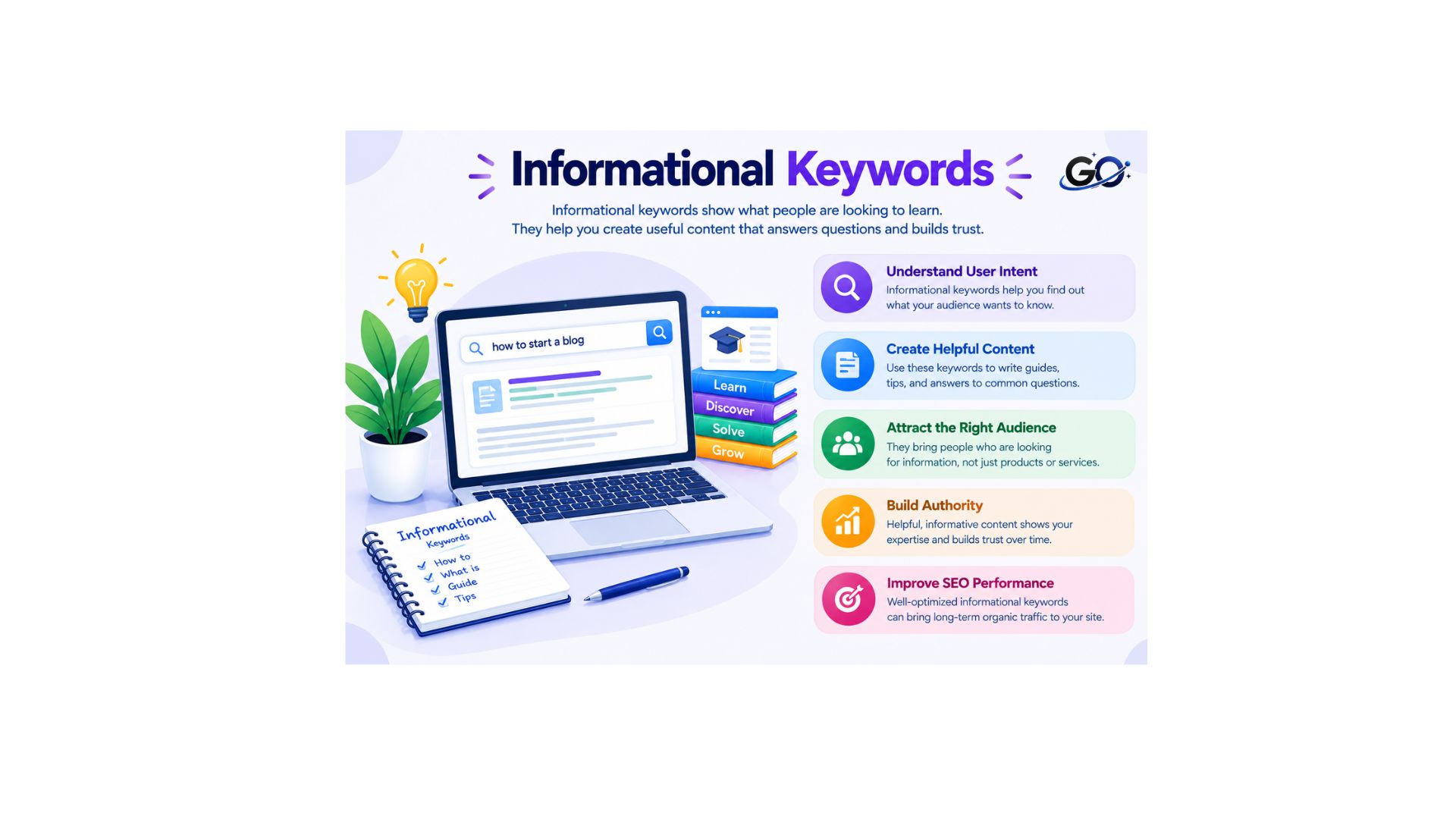
When searching for information, answers, or advice on a particular subject, consumers enter informational keywords into search engines. They usually begin with “who,” “what,” “when,” “why,” and “how,” and users are looking for advice, guidelines, directions, and lists.
For example, questions like “what planets can you see tonight,” “how to plant tomatoes,” and “benefits of meditation” show that a user is looking for information or answers.
Long-tail keywords, which are lengthier and more focused than broad ones, are frequently used for informational purposes. Users are usually obtaining information during the awareness stage of the buyer journey when they search for long-tail keywords.
How Informational Keywords Work in SEO
The way informational keywords function is by directing visitors to content that provides answers to their queries. After analysing the user’s query, search engines attempt to present pages that offer pertinent and helpful content.
For example, a person looking up “how to improve website speed” might not want to buy a service right away. Their initial goal is to comprehend the procedure and identify workable options.
If your website provides a clear and useful guide for that request, visitors may find your page through organic search. By bringing users to your website, this traffic can eventually aid in building trust.
Why Are Informational Keywords Important for SEO?
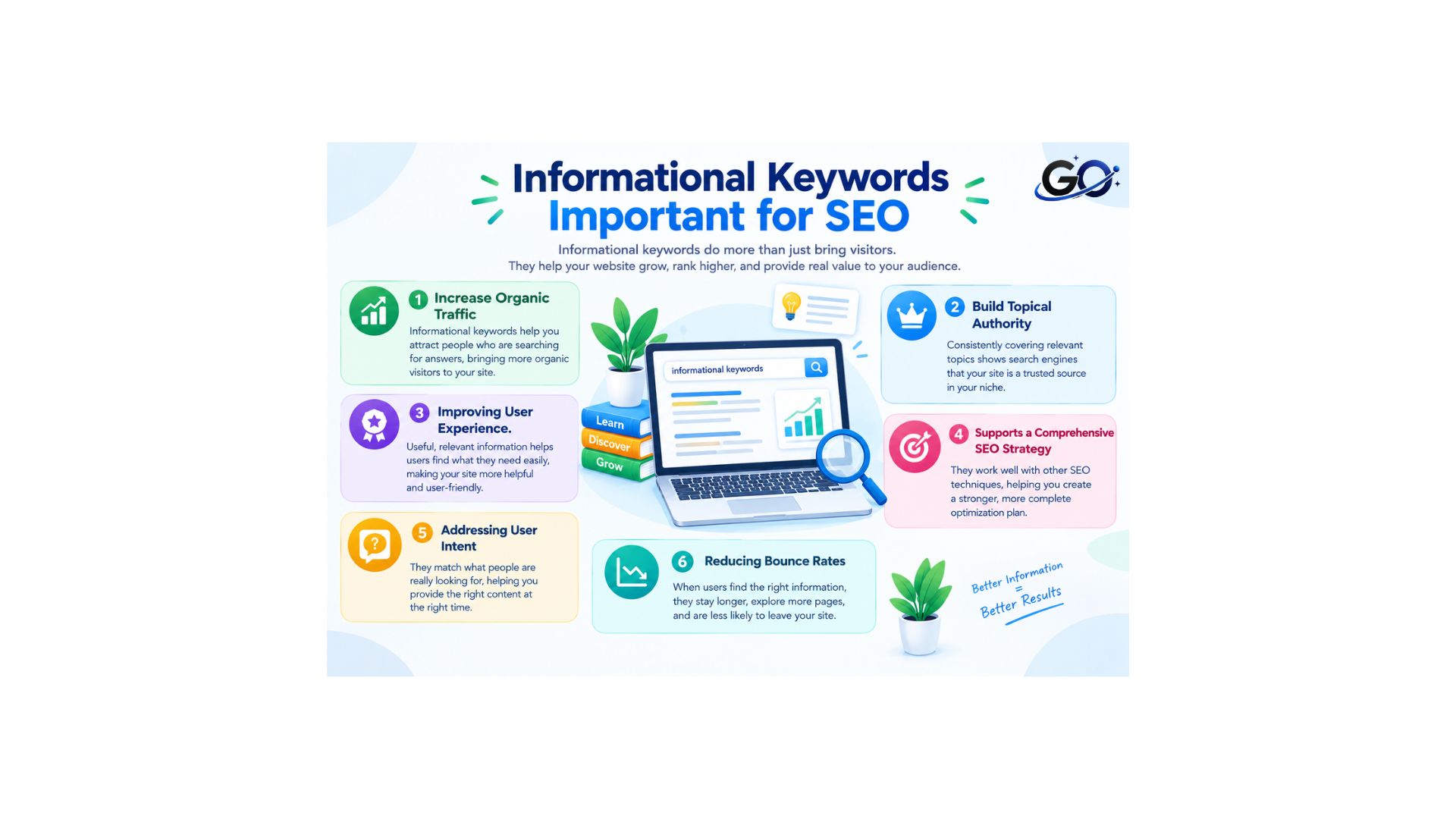
Informational keywords can help achieve a number of crucial SEO objectives. They assist websites in reaching consumers during the customer journey’s research phase.
Increase Organic Traffic
Numerous subjects are covered by informational searches. You may target more search queries and draw in organic traffic by producing informative content centred around pertinent keywords.
Users in the early phases of the purchasing cycle who are searching for knowledge and answers to their issues are frequently targeted by informational keywords. By focusing on these keywords, brands may become more visible at the top of the sales funnel and reach a wider audience.
Build Topical Authority
You can demonstrate your market knowledge by producing insightful content centred around informational keywords, which generates leads.
Users are more inclined to trust your brand when they find useful and thoroughly researched material on your website. This trust can result in enduring connections and devoted customers.
Improving User Experience
Websites that offer pertinent and helpful information are valued by users. You may improve your website’s overall user experience (UX) and possibly boost conversion rates by optimising for informational keywords.
Answer User Questions
Specific queries or issues are frequently represented by informational keywords. Your website’s usefulness can be increased by producing material that directly addresses these questions.It is also simpler for readers to locate the information they require when the responses are clear.
Addressing User Intent
In SEO, it’s critical to comprehend and respond to user intent.
Informational keywords correspond with people who are looking for clarification, understanding, or instruction. You may improve your search engine rankings by aligning with user intent by producing content that meets these objectives.
Supports a Comprehensive SEO Strategy
Targeting various keywords, such as transactional, navigational, and informational, is part of a comprehensive SEO plan. A balanced strategy that serves customers at different stages of their online journey is created by incorporating informative keywords.
Reducing Bounce Rates
Users are inclined to stay and continue exploring your website if they find pertinent information that answers their questions.
By lowering bounce rates, you may tell search engines that your content is worthwhile and interesting.
Examples of Informational Keywords
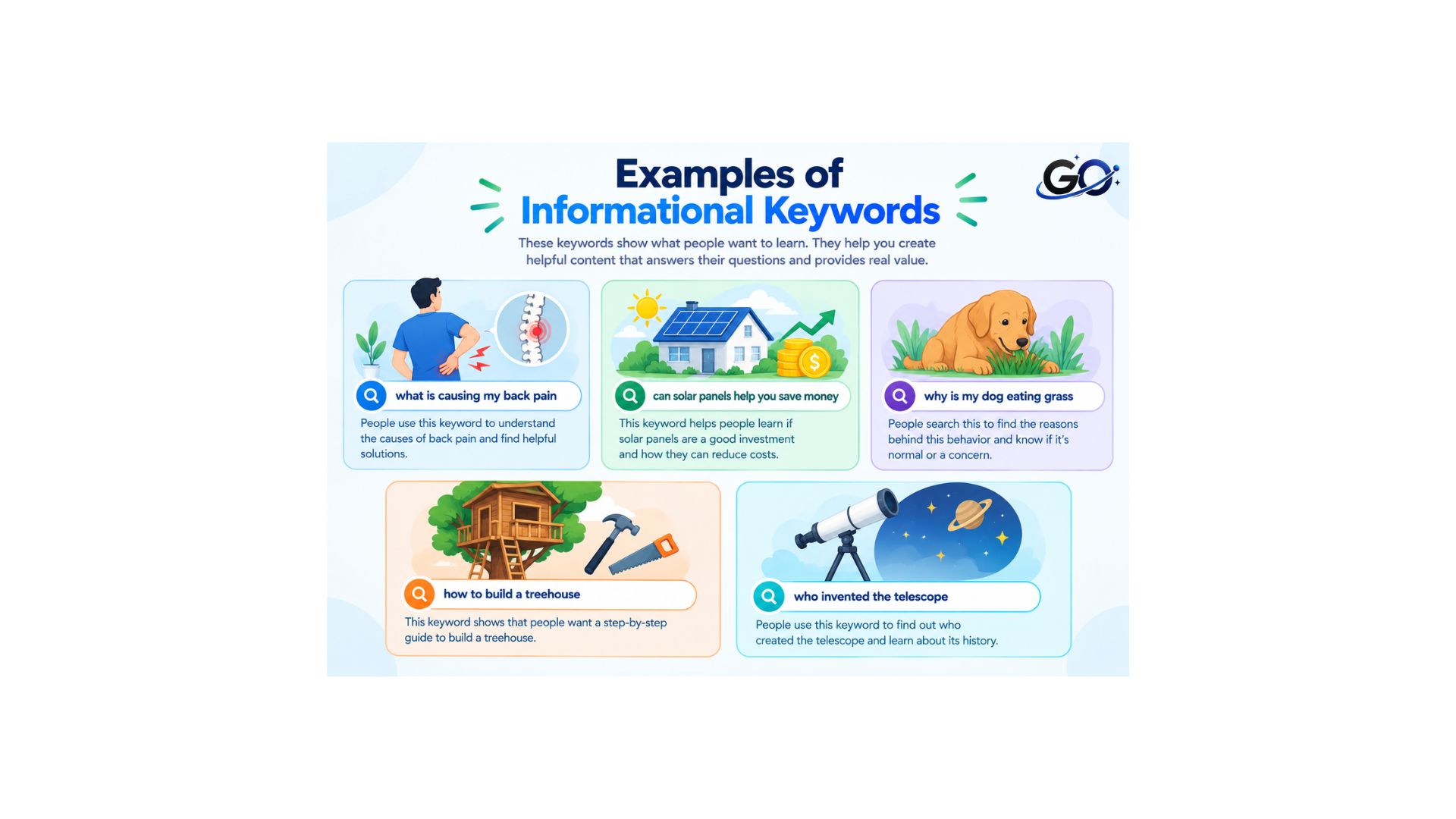
Here are some examples of informational keywords:
what is causing my back pain
- This keyword suggests that the user is looking for potential causes or diagnoses for back discomfort. The customer wants to learn more about the reasons behind back pain.
can solar panels help you save money
- This keyword suggests that the user is looking for potential causes or diagnoses for back discomfort. The customer wants to learn more about the reasons behind back pain.
why is my dog eating grass
- This question indicates that the user wants to know why their dog is consuming grass. The objective is to learn more about the causes of this behaviour.
how to build a treehouse
- The searcher is trying to find comprehensive instructions and advice on building a treehouse. The purpose of this term is to inform the user about the procedures and resources required.
who invented the telescope
A person’s interest in historical details on the development of the telescope is reflected in this keyword. They want to know the history of this technology and who invented it.
Have you noticed a recurring theme in this list? These search terms show a desire to learn more about a topic, find a solution, or accomplish a certain task.
As you can see, these terms do not indicate that a user intends to research or compare goods or services (commercial keywords), visit a particular website (navigational keywords), or act instantly (transactional keywords).
How to Find Informational Keywords
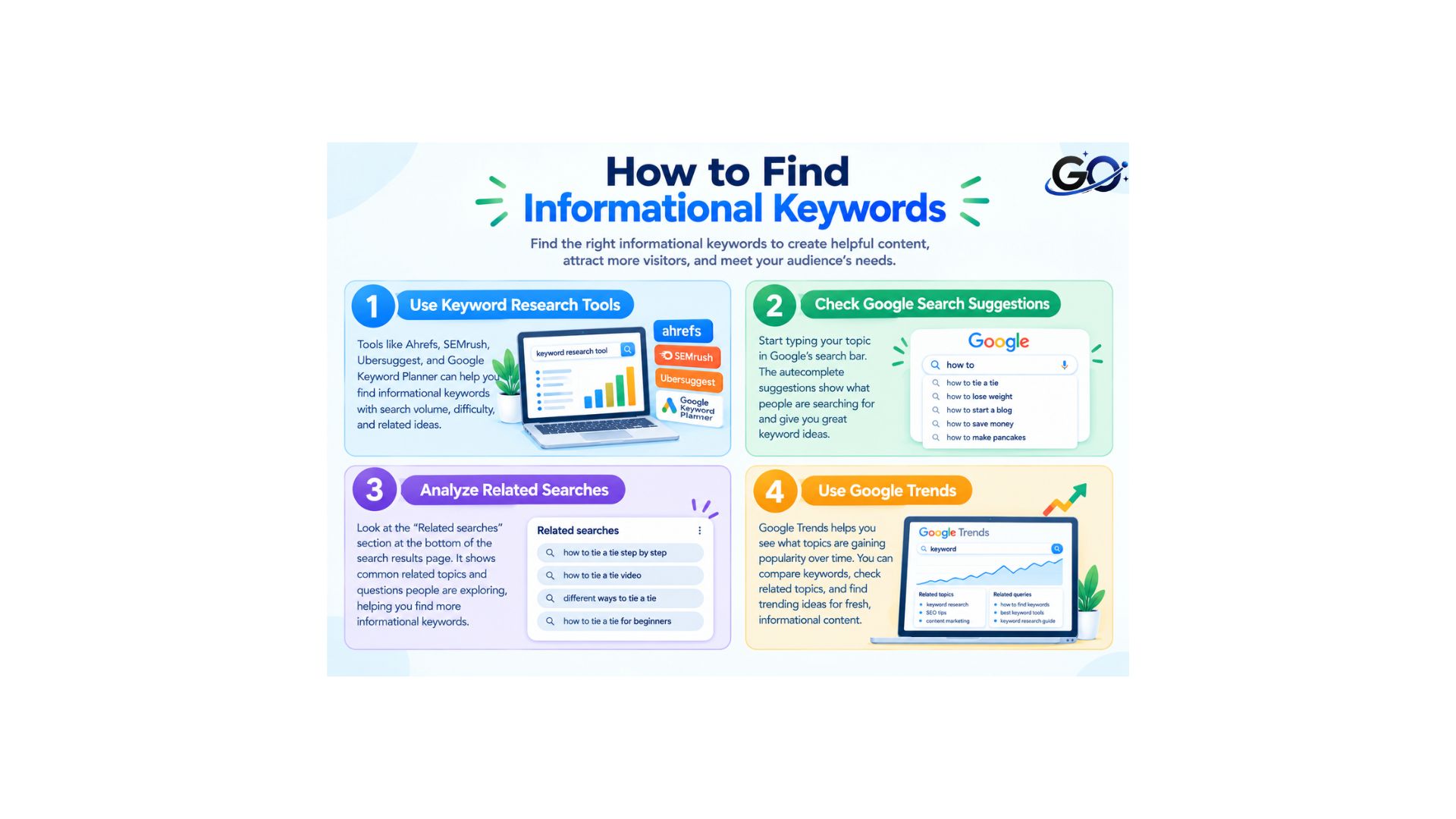
Your content strategy might be enhanced by selecting the appropriate informational keywords. Finding pertinent search phrases can be done in a number of ways.
Use Keyword Research Tools
You can find questions and informational queries about your issue with the use of SEO keyword research tools.
The program will show many pertinent keywords associated with your primary keyword once you enter your seed keyword.
By examining competitors’ keyword strategy, spotting fresh prospects, and projecting anticipated traffic numbers, the tool also aids in competitive analysis.
Check Google Search Suggestions
Start a Google search with a seed keyword or query, then look at the autocomplete options. These recommendations provide insightful information about typical informational searches people do.
For instance, Google presents a number of autocomplete suggestions about utilising a CRM for various use cases when I type the term “how to use a CRM for.”
Analyze Related Searches
For more informative term suggestions, look for “Related Searches” at the bottom of the Google search results page.
These connected searches provide a wealth of data that sheds light on the subtleties and variances in user search behaviour.
You may increase your reach and make sure that your content closely matches the varied interests and questions of your target audience by incorporating these related keywords into your content strategy.
Use Google Trends
Enter your main term into Google Trends to start your keyword research journey and track its search interest over time.
Use location, time, or category options to narrow down your search. Examine the tool’s recommendations for more prospects and compare your keyword with comparable terms.
How to Optimize Content for Informational Keywords
After finding relevant keywords, you need to create content that satisfies the user’s search intent.
Create Helpful Content
Instead than adding keywords only to boost keyword density, concentrate on offering helpful information.
Clearly explain the subject and offer useful details that aid readers in comprehending or resolving their issues.
Use Clear Headings
Use descriptive headings to divide your information into logical sections. This format facilitates readers’ scanning of the material and simplifies the content.
Include Related Keywords
Throughout your writing, make use of natural variants and related terms. By doing this, search engines are better able to comprehend the larger subject without being forced to use the same term over and over.
Answer Questions Directly
Provide a concise response at the beginning of the text if your target keyword poses a query. After that, you can elaborate on the subject with clarifications, examples, and helpful advice.
Add Internal Links
Informational content on your website can be linked to other pertinent sites through internal links. This strengthens the structure of the website and aids consumers in finding more content.
Common Mistakes With Informational Keywords
The efficacy of informational content can be diminished by some typical errors.
Ignoring search intent: For a consumer who merely wants information, producing promotional content could not meet their needs.
Keyword stuffing:Excessive repetition of the same keyword might make content hard to read. Make natural use of keywords.
Writing shallow content:Enough information should be included in the content to adequately address the user’s query.
Using unclear headings: It may be challenging to locate helpful information if it is poorly organised.
Ignoring related topics: You might not be able to meet the user’s more general needs if you only cover one specific phrase.
Conclusion
Informational keywords help websites connect with users who want to learn, research, or solve problems. They can attract organic traffic and introduce your website to potential customers during the early stages of their search journey.
You may produce content that aligns with search intent and offers real value by comprehending how informational keywords function in SEO. To create a successful informational SEO strategy, concentrate on concise responses, helpful details, pertinent keywords, a solid content structure, and internal linking.
FAQs About Informational Keywords
1. What are informational keywords in SEO?
Search terms that people use to learn more about a subject, find a solution, or solve an issue are known as informational keywords.
2. Are informational keywords good for SEO?
In addition to supporting long-term content plans, informational keywords can assist websites create topical authority, draw in organic traffic, and respond to user enquiries.
3. What is an example of an informational keyword?
Because the user wants to understand what keyword research is, “What is keyword research?” is an example of an informational keyword.
4. How do I find informational keywords?
Keyword research tools, Google search recommendations, related searches, audience enquiries, and rival content analysis can all help you uncover informative keywords.
5. What type of content works best for informational keywords?
Because they offer thorough responses to customer enquiries, blog posts, tutorials, manuals, how-to articles, FAQs, and educational resources typically do well for informational keywords.