

A portfolio is a compilation and professional materials your beliefs, skills, qualifications, education, training, and experiences. It provides insight into your personality and work ethic.
Choosing the most relevant academic and professional experiences and putting them in an easily understood format will show an employer proof of your organizational, communication, and tangible career-related skills.
If you’re ever struggling with what work samples to choose, how to organize your collection, or other career-related concerns, reach out to our Career Services Office for one-on-one help and support.
What Is a Portfolio?
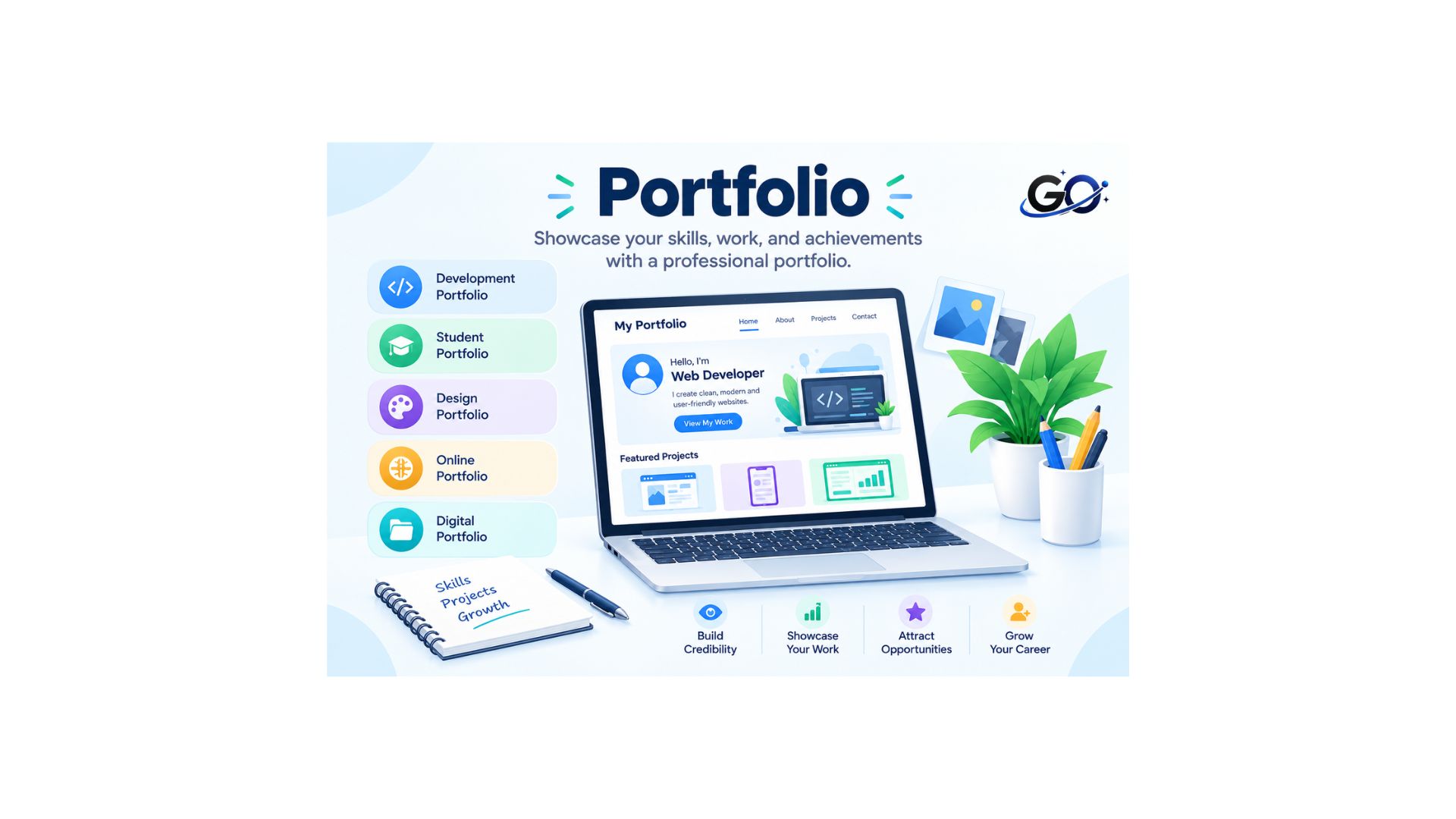
A portfolio can go under various names, such as career collection, work collection, or professional showcase, depending on your profession. Think of it as a curated collection of your best work that you want to show recruiters and potential employers. You can also use an online professional showcase to develop your personal brand and promote your products.
Its purpose is to demonstrate your abilities through real examples. For instance, a writer can showcase articles and blog posts, while a designer can display logos, branding projects, and other creative work.
How Does a Portfolio Work?
A portfolio displays your abilities and prior work in an understandable and structured manner. After reviewing your work, prospective employers or clients can determine whether your skills meet their needs.
A portfolio usually works through these steps:
- Select your best work: Choose projects that demonstrate your strongest skills.
- Organize your projects: Group related work into clear categories.
- Add project details: Explain the purpose and outcome of important projects.
- Highlight your skills: Show the services or abilities you offer.
- Add contact information: Make it easy for visitors to reach you.
- Update regularly: Add new work and remove outdated projects.
Why Is a Portfolio Important?
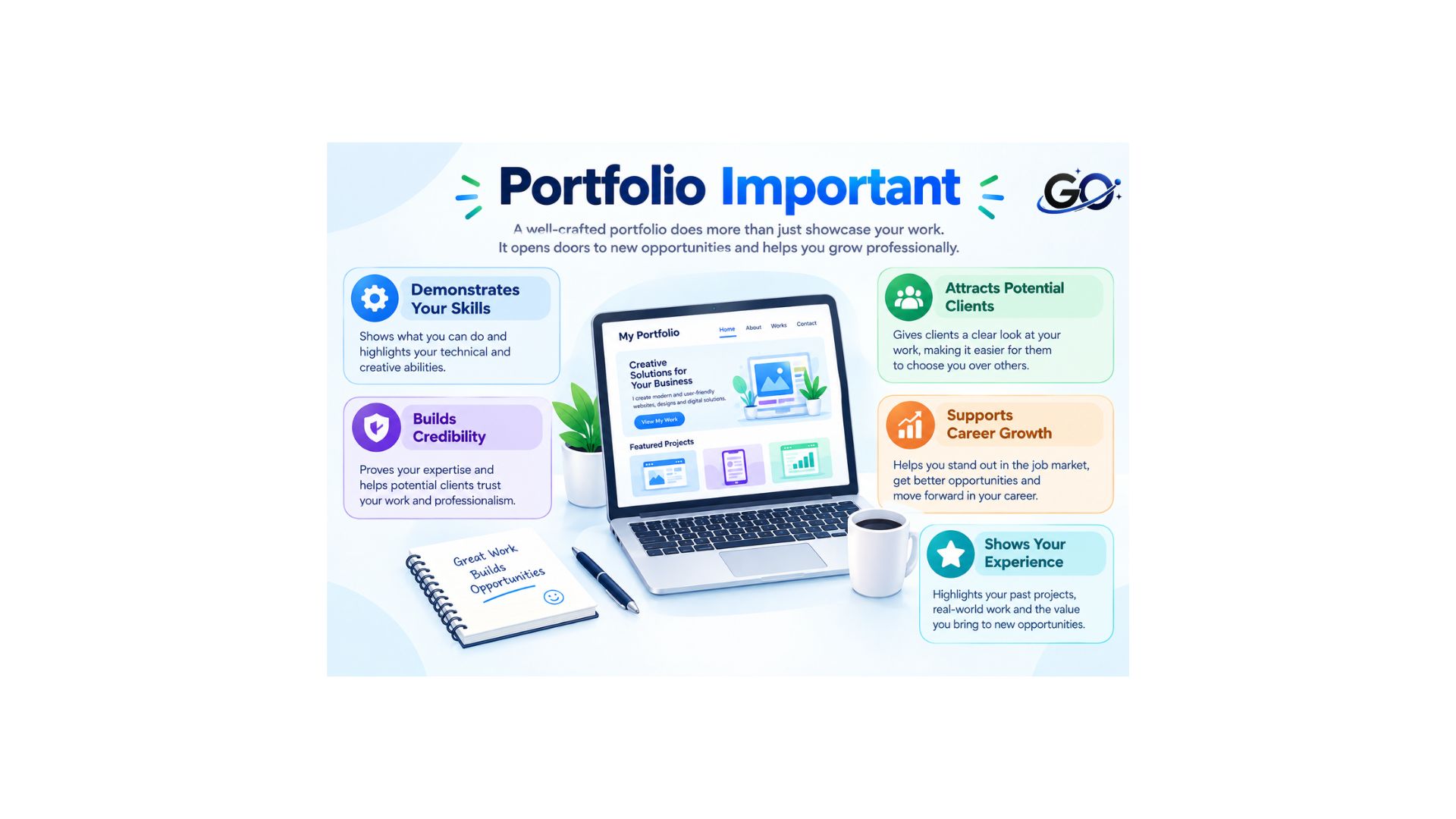
A portfolio helps professionals demonstrate their skills and establish credibility. It gives potential clients and employers evidence of what they can expect from your work.
Demonstrates Your Skills
A portfolio shows your abilities through actual projects instead of simple claims. This can make your professional presentation more convincing.
Builds Credibility
High-quality work samples can help create a positive first impression. A well-organized portfolio also shows professionalism.
Attracts Potential Clients
Freelancers can use portfolios to showcase their services and attract clients who need their specific skills.
Supports Career Growth
A portfolio can complement your resume when applying for jobs, internships, or freelance opportunities.
Shows Your Experience
People with limited professional experience can include personal, academic, or practice projects to demonstrate their abilities.
Types of Portfolios
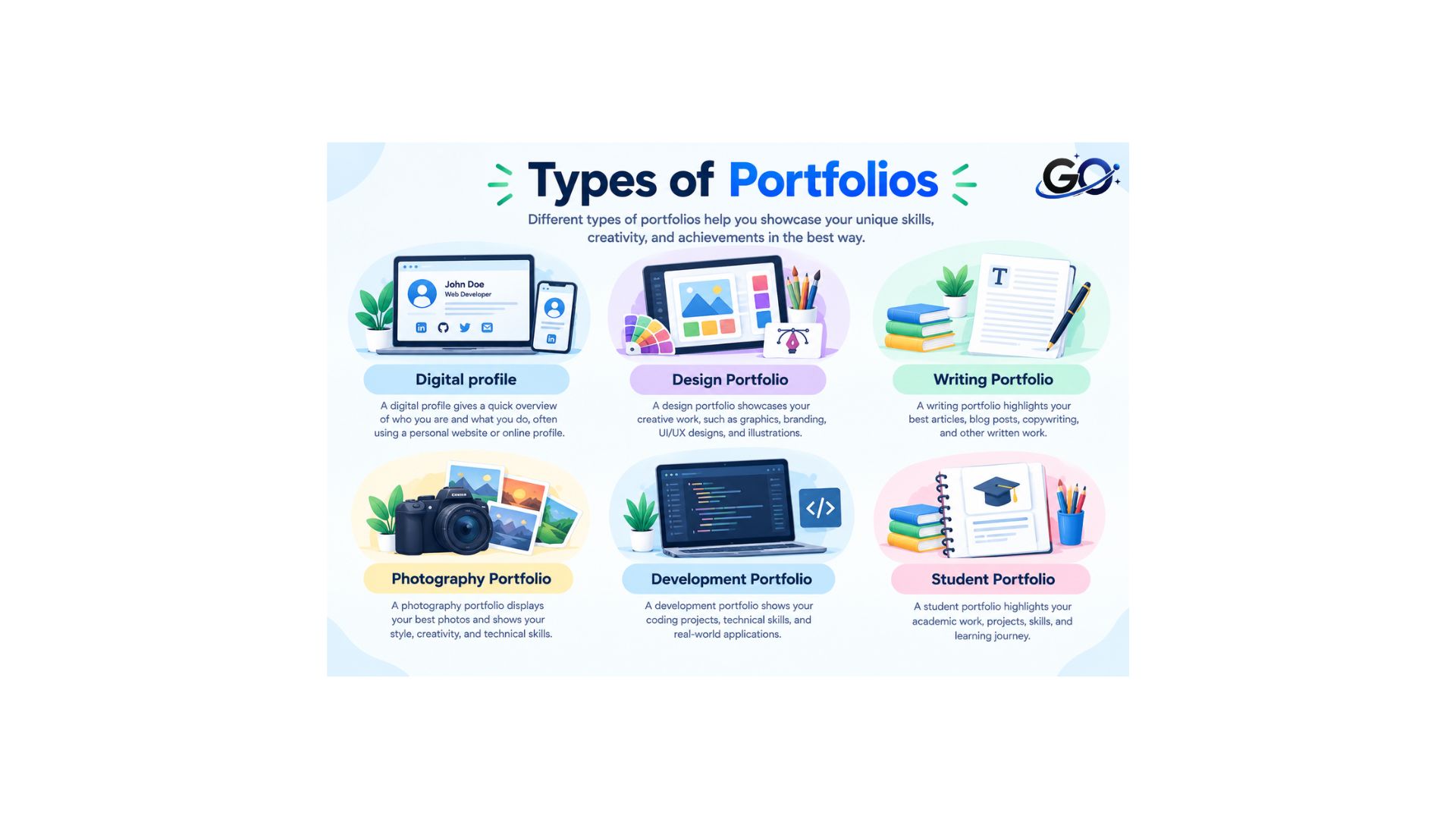
Different professionals use different types of portfolios based on their goals and industries.
Digital profile
An online compilation of your abilities, projects, accomplishments, and professional work is called a digital portfolio. It offers a practical way to showcase your knowledge and skills in an organized and transparent manner. Work samples, certificates, project details, and contact information can all be included. This collection builds credibility and makes it easier for employers or clients to assess your skills.
Design Portfolio
A designer’s professional work, abilities, and creativity are displayed in a design portfolio. It can include projects such as branding, illustrations, visual concepts, graphic designs, and website layouts. A strong collection highlights creative problem-solving, attention to detail, and high-quality design. It helps prospective clients and employers understand a designer’s style, experience, and skills.
Writing Portfolio
A writer’s resume may not adequately reflect the number of pieces they have written or published. It is best for authors to have a more comprehensive portfolio so that a customer or hiring manager may view their work. It can highlight the clients they’ve written for, show off their abilities to write on a variety of subjects, and promote their expertise in writing about specialised subjects. A portfolio could demonstrate a writer’s abilities and lend credibility, whether they are a blogger, copywriter, or screenwriter.
Photography Portfolio
Photography portfolios are used to showcase images that cannot be included in a resume. A photographer’s portfolio can showcase their expertise in portraiture, weddings, food photography, and wildlife photography. A photographic portfolio demonstrates to clients that they can rely on their photographer to take the greatest pictures. It also shows the wide range of possibilities available to the client and how the photographer employs various lenses, perspectives, and techniques to take pictures.
Development Portfolio
Your technical abilities, projects, and software and web development experience are displayed in a development portfolio. It demonstrates your capacity to develop practical, adaptable, and user-friendly digital solutions. Project specifics, the technology employed, and significant accomplishments can all be included in a well-designed portfolio. It also makes it easier for prospective employers or clients to comprehend your skills and growth possibilities.
Student Portfolio
A student’s academic accomplishments, abilities, projects, and learning experiences are displayed in a student portfolio. Coursework, credentials, extracurricular activities, and individual achievements can all be highlighted. A well-structured portfolio aids in showcasing development, originality, and useful expertise. Additionally, it can help students apply for scholarships, internships, and other prospective educational opportunities.
What Should a Portfolio Include?
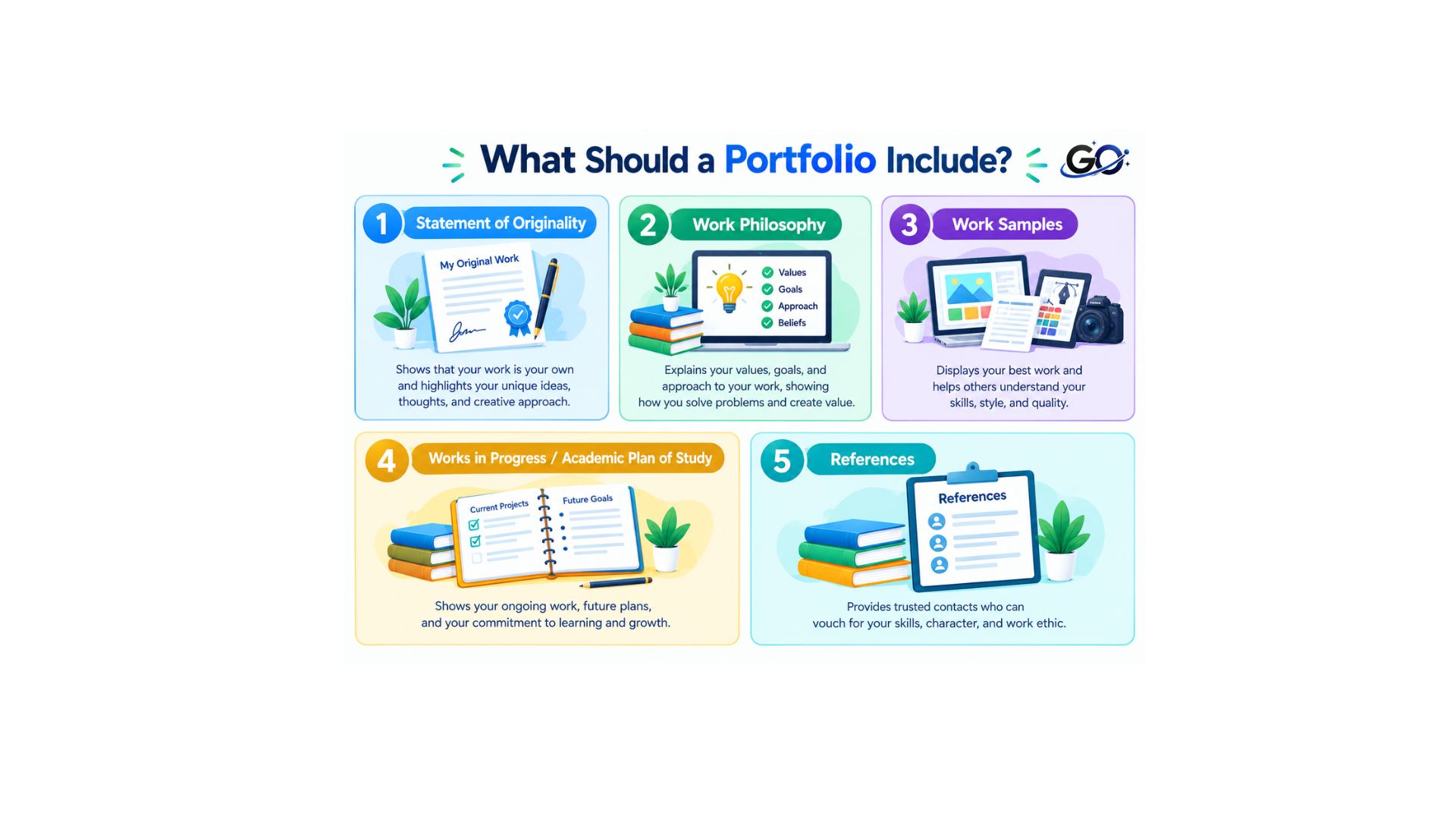
Save whatever you produce first, then choose what you want to add to your portfolio at a later time. Having a variety of samples is helpful because some products can be more pertinent to the work you’ll conduct in one position than another. These are some of the best things to add when presenting your materials in your own unique way:
- Statement of Originality: a paragraph declaring that this is your work and that it is private. Additionally, it should specify which portfolio components shouldn’t be duplicated.
- Work Philosophy: A succinct explanation of your own views and the field you want to work in.
- Resume:Employers can get a summary of your experience, education, and talents from an updated resume. Additionally, it facilitates the connection between your professional past and your portfolio examples. To ensure consistency, make sure your CV reflects the work you highlight.
- Work samples:Work samples demonstrate the calibre of your output and the kinds of projects you have finished. Writing pieces, design files, spreadsheets, lesson plans, presentations, and code samples are a few examples of these. Select products that complement your desired career and showcase your strengths.
- Works in Progress:Enumerate current tasks or endeavours that are relevant to your career and would enhance your list of abilities and credentials for that field of work. .
- Academic Plan of Study: Along with a list of the classes you intend to attend, you can include a copy of your transcript, which details the classes you have taken and the grades you have received in them.
- References: A list of three to five individuals who can attest to your credentials. Faculty members, internship supervisors, employment supervisors, and supervisors of other activities like community service projects are examples of professional references.
How to Create a Professional Portfolio
Choose your portfolio’s primary goal first. You might want to advertize services, apply for positions, draw in customers, or highlight your professional growth.
After that, pick your best work and arrange them into distinct categories. Give brief explanations of each project’s goal and your role.
Keep the layout simple and intuitive. Make sure your online portfolio is compatible with both desktop and mobile devices.
Conclusion
A portfolio is a valuable tool for showcasing skills, experience, and professional achievements. It gives clients and employers practical evidence of your abilities.
Whether you operate as a freelancer, student, designer, writer, developer, or photographer, pay attention to pertinent work, precise descriptions, and polished presentation. Make sure your portfolio reflects your current abilities and objectives by keeping it up to date.
Frequently Asked Questions
1. What is the main purpose of a portfolio?
A portfolio’s primary goal is to use actual examples of your work to highlight your abilities and experience. It assists employers and clients in assessing your skills.
2. What ought to be in a portfolio?
An introduction, an about section, work samples, project descriptions, abilities, services, testimonials, and contact details are all possible components of a portfolio.
3. Where can I host a digital portfolio?
A lot of job searchers use file-sharing software, portfolio platforms, or personal websites. Select a choice that is straightforward for employers to use and easy to update.
4. Can beginners create a portfolio?
Indeed. Beginners can use volunteer activities, practice projects, academic work, personal projects, or other pertinent examples that showcase their abilities.
5. Can I build a portfolio with little experience?
You can incorporate volunteer activities, school assignments, individual projects, or self-made samples. Even in the early stages of your career, employers may appreciate your effort and potential.